The latest GRAF® weather model improvements
Continue reading


Key takeaways
- The Weather Company believes in the power of client collaboration to continuously improve our technology.
- The proprietary Global Resolution Atmospheric Forecasting (GRAF®) system updates hourly and provides high-resolution forecasts down to 4 kilometers, enabling prediction of small-scale events like thunderstorms.
- Collaborative GRAF task force meetings turn client reports from real-world scenarios into tangible fixes and model enhancements.
- Client input has led to notable, specific enhancements, including better prediction of wind gusts in Southern California, improved visibility forecasts in Louisiana, and corrected snowfall parameters in the Columbia River Basin.
For decades, advancements in weather forecasting have been driven by increasingly sophisticated technology and the relentless pursuit of more accurate data. But at The Weather Company, we’ve found that the most powerful engine for progress isn’t just technology – it’s people. Specifically, a dedicated group of meteorologists and scientists who have been meeting monthly for the past four years to refine and enhance the Global Resolution Atmospheric Forecasting (GRAF) modeling system.
But first, a closer look at GRAF.
What is GRAF? High-resolution atmospheric forecasting explained
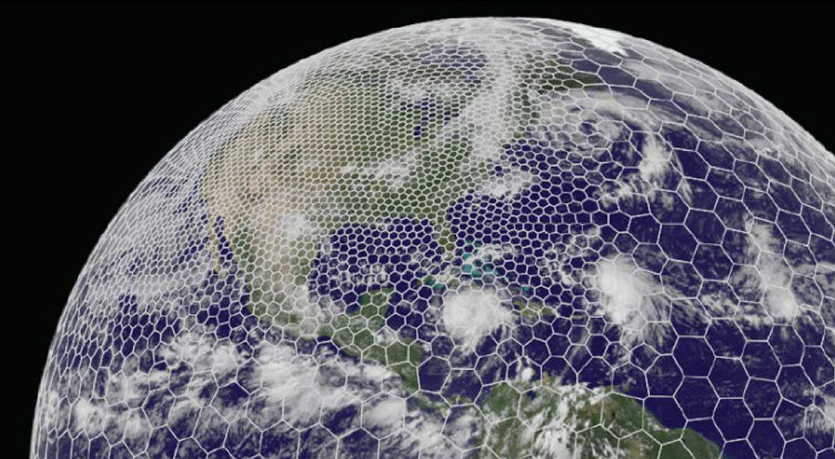
The GRAF modeling system is a proprietary, physics-based, high-resolution, rapidly updating global weather forecasting system. Unlike conventional global models that update every six or more hours and operate at a resolution too wide to capture many weather phenomena, GRAF updates hourly and offers high-resolution forecasts down to 4 kilometers. This enables it to predict something as small as a thunderstorm, making it a critical tool for everything from daily planning to severe weather preparedness.
Behind the forecast: The GRAF task force in action
This isn’t your typical corporate task force. The GRAF team is a dynamic forum where The Weather Company technical experts, who build and maintain the model, directly engage with clients around the country who use it every single day on the front lines of forecasting. This collaborative approach has become a cornerstone of our commitment to excellence, so that the weather model data we provide meets the real-world needs of broadcast meteorologists, news stations, and, most importantly, the communities they serve.
In a recent meeting, the conversation covered everything from the finer points of radiational cooling to the nuances of tropical storm modeling. Friendly dialog is based on mutual respect and candid feedback. The Weather Company weather science team shares what they’re working on and what challenges they’re facing, while clients offer crucial, boots-on-the-ground insights as they work with GRAF data in their Max platform.
Direct impact: How client feedback shapes our technology
This unique and collaborative partnership is truly a “two-way street.” It’s not about top-down directives; it’s a living dialogue where every piece of feedback, whether a bug report or a suggestion for a new parameter, is heard and considered.
Our clients’ input is invaluable. They are the ones seeing how GRAF performs in a wide variety of real-world scenarios, from snow in Portland to tornadoes in Mississippi. This direct feedback loop results in targeted improvements which – along with our advanced models, techniques, and meteorological expertise – helps secure our title as the world’s most accurate forecaster.¹
From report to resolution
The results of this collaboration are already evident. Task force members have seen firsthand how their feedback has led to direct improvements in the model. Patrick Bigbie, a meteorologist and task force member, recalled a specific instance where a bug in an ice parameter was fixed after he reported it. “There was a very noted difference once he put in the correction for it,” he said.
Another member, Mark Nelsen, a broadcast meteorologist in Portland, Oregon, shared how the group’s discussions helped him understand why a snow forecast was too high during a specific event. “The model was actually seeing ice pellets, too,” Nelsen explained. “I was able to spread that around and put it in my blog so others in Portland would be aware of that too.” This kind of information sharing extends beyond the meeting, directly benefiting a broader audience.
In addition, notable enhancements have also included:
- Improvements to the forecasting of shallow cold air and snowfall across the Columbia River Basin. Other models were picking up on upcoming snowfall in that area up to a few days faster than GRAF. Using The Weather Company’s lab environment of high-performance compute resources, a few weeks of research and development allowed for improvements to the PBL and orographic wave drag physics. These changes had a positive impact not only for the Columbia River Basin, but also across other parts of GRAF’s global domain. This was a great example of one GRAF user’s observation impacting GRAF development beyond a local use case.
- Better prediction of wind gusts across southern California. The GRAF model had overpredicted wind speeds in that area by as much as 40 mph at certain times. The Weather Company added new wind gust algorithms that significantly improved GRAF’s wind gust forecasts.
- Improvements to visibility forecasts across Louisiana. GRAF’s forecast visibility was too low during radiational cooling events. The Weather Company implemented new algorithms and improved the visibility product across a wide range of atmospheric conditions.
- Better prediction of freezing rain and snowfall across Mississippi. GRAF users reported excessive freezing rain and snow forecasts. This was quickly resolved in three days with land surface model updates.
More than a meeting: A commitment to continuous improvement
These exchanges are not just about fixing problems – they’re about innovating and looking ahead. The team is consistently exploring how to incorporate new data, new visualization capabilities, and new forecast parameters that make the product more useful and powerful. The conversation often touches on emerging technologies like AI and machine learning to keep the GRAF modeling system evolving with the industry.
“It’s a testament to our team’s deep commitment to customer-centric innovation,” said Sheri Bachstein, President of The Weather Company. “By bridging the gap between our weather science experts and the broadcast meteorologists who rely on our products daily, we are not only building more robust and reliable forecasting tools but also fostering a community of shared knowledge and continuous improvement. This collaboration is a core part of our continued efforts to deliver the most trusted and reliable weather information in the world.”
Innovating through shared expertise
In a world where weather events are becoming more frequent and more severe, the need for accurate, timely, and hyper-local forecasts has never been greater. The GRAF task force is a testament to how the best technology is only as good as the collaboration behind it. By empowering our clients to be partners in our product’s evolution, we’re not just building a better model – we’re helping to create a safer, more informed world.
Let's talk
To learn more about our professional weather and traffic software solutions for the media industry, contact our media experts today.
Contact us1 ForecastWatch, Global and Regional Weather Forecast Accuracy Overview, 2021-2024, commissioned by The Weather Company