The latest GRAF® weather model improvements
Continue reading


Key takeaways
- Our weather intelligence platform, Weather Agent™ for Indices & Triggers, provides insurers with a robust weather data feed and real-time and forecast-driven insights to support proactive weather risk management.
- Predictive weather analytics and real-time weather monitoring help reduce claims by guiding timely, preventive actions ahead of impactful weather.
- Data within our weather intelligence platform uncovers weather risk patterns, helping insurers refine underwriting and improve overall performance.
Proactive protection through weather intelligence
Imagine being able to warn your policyholders before damage occurs – not after. Weather Agent for Indices & Triggers, The Weather Company’s premier weather intelligence platform, provides insurance companies with a high-fidelity weather data feed and timely insights. The system offers insurers custom weather indices and triggers to monitor real-time and forecasted weather conditions 24/7. By combining continuous weather monitoring with predictive weather analytics, insurers can transform their customer relationship from reactive claim processing to proactive asset protection. When weather risk data indicates a threat to homes, vehicles, businesses, or other property, insurers can then send notifications to policyholders precisely when they need them most.
Benefits to policyholders: safety and security
When you leverage a weather intelligence platform, you offer more than just a policy; you provide a shield. By using predictive weather analytics to reach out before hazardous weather, you offer:
Increased trust and loyalty
Alerting clients to approaching severe weather demonstrates that their safety matters. This proactive care builds deep emotional trust. In an industry often seen as transactional, this transforms you into a trusted partner who’s genuinely looking out for their best interests.
Asset protection
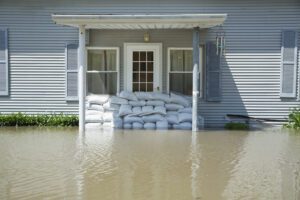 Early warnings give clients precious time to act – securing outdoor furniture , moving vehicles to covered areas, preparing properties for flooding, or taking measures to prevent frozen pipes. These simple actions, enabled by timely notifications, can prevent thousands of dollars in damage.
Enhanced safety
Beyond property protection, weather monitoring can help save lives. Timely weather emergency warnings about tornadoes, severe thunderstorms, floods, extreme heat, or dangerous winter weather allow families to seek shelter, adjust plans, or take health precautions.
Reduced stress
Insurance anxiety is real. Knowing you offer an early weather warning system monitoring conditions 24/7 provides immense peace of mind, especially when away from home.
Benefits to your insurance company: smarter business
Using weather data analytics isn’t just about information; it’s about transformation. By integrating advanced weather analytics into your workflow, your company gains a competitive edge:
Increased client satisfaction and retention
 Policyholders who receive proactive protection feel valued beyond their premium payments. This emotional connection can lead to an increase in satisfaction scores, brand reputation, and policy renewal rates. Clients simply don’t leave insurers who actively protect them.
Reduced insurance claims
This is the transformative financial impact of predictive weather analytics: claims prevention at scale. When thousands of policyholders take protective action, aggregate claim volume drops. Even a 5-10% reduction in weather-related claims can translate to millions in savings annually.
Improved loss ratios
Lower claims frequency directly improves your loss ratio, enhancing profitability and competitive positioning. Better loss ratios create flexibility for premium adjustments, market expansion, and improved shareholder returns.
Differentiation in a commoditized market
Proactive weather protection is a tangible value-add that prospects can understand and appreciate. This becomes a powerful acquisition tool and justifies premium positioning.
Data-driven weather risk management
Our weather monitoring system generates valuable intelligence about which weather conditions trigger the most protective actions and which result in fewer claims. This weather risk data informs underwriting models and geographic exposure management.
Recommended weather triggers for asset protection
Based on analysis of our trigger catalog and broader weather data analytics, here are the most relevant weather conditions supporting insurance notification campaigns:
Severe Weather-Based Triggers (Immediate Action Required)
| Trigger | Recommended Use | Notification Timing |
| Tornado Warning | Immediate life-safety alert. for policyholders in affected areas. Directive: Seek shelter immediately. | Real-time when active |
| Severe Thunderstorms | Alert about dangerous winds, hail, lightning. Actions: Secure outdoor items, move vehicles to garage, unplug electronics. | 30-60 minutes before arrival |
| Flood Warnings | Immediate notification for low-lying properties. Actions: Move valuables, prepare sandbags, consider evacuation. | Real-time when active |
| Hurricane | Multi-day preparation sequence. Actions: Property securing, evacuation planning, documentation. | 72 hours advance + updates |
| Severe Winter Weather | Ice and snow warnings. Actions: Prevent frozen pipes, stock supplies, avoid travel. | 24-48 hours advance |
Note that the above severe weather alerts are NOT meant to be used for public safety.
Preventable Damage Condition Triggers (Preparation Window)
| Trigger | Recommended Use | Notification Timing |
| Forecast: Heavy Snow | Alert to clear drains, check roof load limits, prepare for power outages. | 24-48 hours before |
| Forecast: Heavy Rain | Check sump pumps, clear gutters, move vehicles from flood-prone areas. | 12-24 hours before |
| Very Windy | Secure trampolines, patio furniture, remove dead tree branches. | 6-12 hours before |
| Extreme Temperatures | Heat: Check AC, stay hydrated. Cold: Insulate pipes, protect plants. | 24 hours before |
| Below 32°F (Freezing) | Critical for pipe protection: Drip faucets, insulate exposed pipes, open cabinet doors. | Evening before overnight freeze |
High-value asset protection triggers
| Trigger | Recommended Use | Notification Timing |
| Fire Alerts | Wildfire warnings for properties in fire zones. Actions: Create defensible space, prepare evacuation. | When alerts issued |
| Smoke Alerts | Air quality warnings. Actions: Close windows, check HVAC filters, limit outdoor exposure. | Real-time |
| Hail (Heavy Snow proxy) | Vehicle and property protection. Actions: Move vehicles to covered parking. | 1-3 hours before |
| Unseasonably Hot | HVAC strain alert, heat damage to materials, vulnerable occupants. | 24 hours before extended heat |
Seasonal property maintenance reminder triggers
| Trigger | Recommended Use | Notification Timing |
| First Snow Forecast | Prepare property for winter: check heating, insulate, winterize sprinklers. | 1 week before |
| Seasonal First Fall | Fall prep: clean gutters, check roof, trim trees. | At seasonal transition |
| Seasonal First Spring | Spring maintenance: check for winter damage, test sump pump, inspect roof. | At seasonal transition |
Custom weather triggers: AI-powered solutions
While our catalog contains hundreds of pre-built triggers — each built on a specific weather index — we can also create custom triggers for your unique risk profile in days, not weeks, with AI.
Example: Extended freeze and frozen pipe risk
The challenge: Frozen pipes are among the most expensive and preventable claims in homeowners insurance, averaging $5,000-$10,000 per incident. Standard “below freezing” alerts aren’t sufficient because pipes typically freeze during extended periods of cold, especially overnight lows combined with daytime temperatures that don’t allow thawing.
Custom trigger solution: “Extended freeze – pipe burst risk”
This custom trigger activates when multiple conditions align:
- Overnight low below 20°F for 2+ consecutive nights
- Daytime highs remain below 32°F (no thaw period)
- Wind chill factors indicating increased exposure
Preventive notification to policyholders: Send a notification 24 hours before the extended freeze period begins, with a follow-up reminder the evening before the coldest night.
With this level of predictive weather analytics, you provide value that a standard weather app simply cannot match.
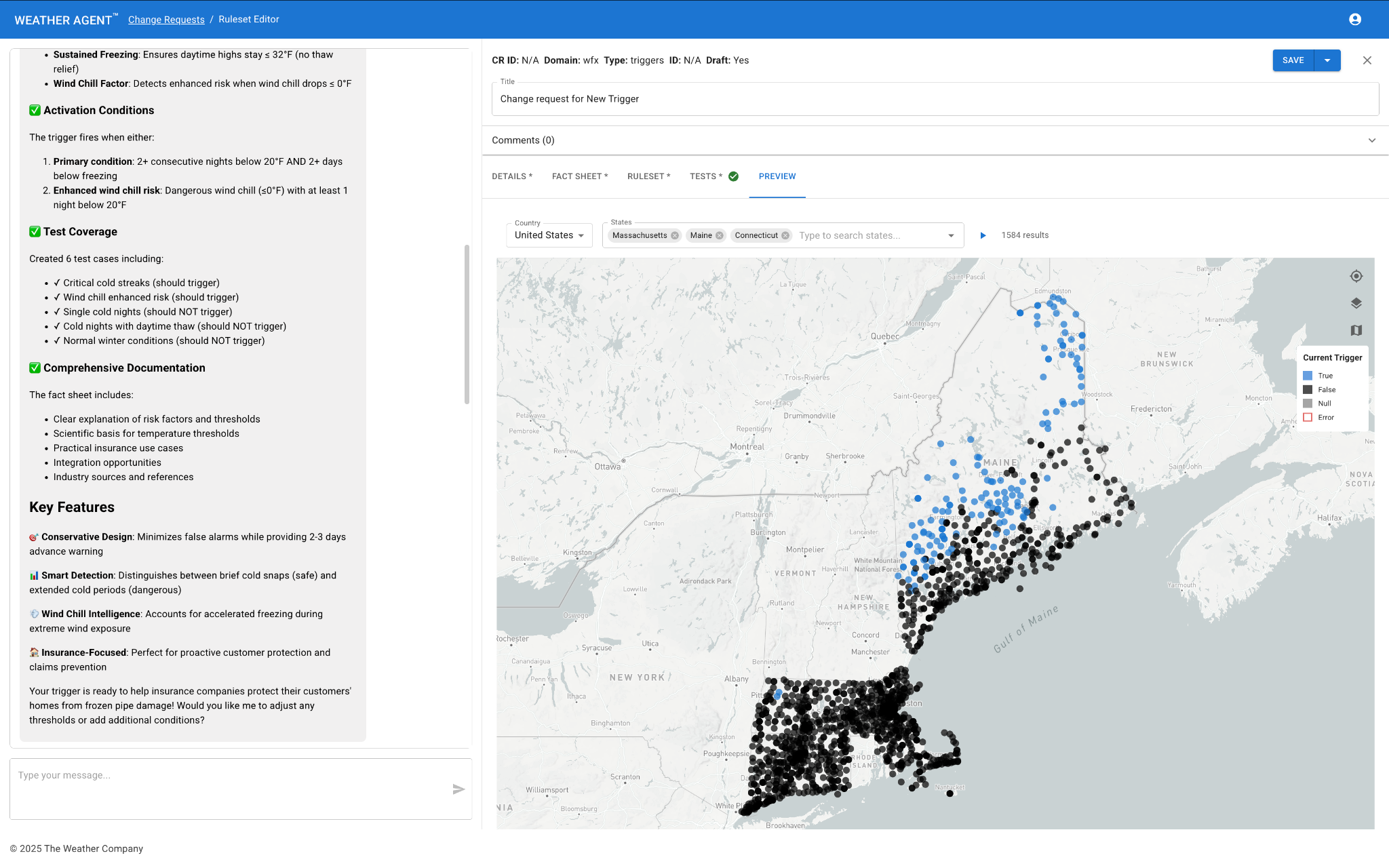
Sample visualization from Weather Agent for Indices & Triggers showing the areas to monitor based on the custom trigger criteria.
Additional custom trigger examples for insurance
“Roof ice dam formation risk”
- Combines snow depth and temperature cycling (freeze-thaw)
- Triggers preventive notifications about clearing snow from roof edges
“Basement flooding risk index”
- Integrates soil saturation levels, forecast rainfall, and historical flooding in the area
- Weather-focused on rainfall intensity, duration, and soil conditions
“Wildfire ember zone alert”
- Monitors wind speed, direction, humidity, and active fire locations
- Focuses on weather variables like wind shifts and extreme dryness
“Heat-related property damage”
- Extended periods above 95°F that stress HVAC systems and building materials
- Alerts about checking AC function, protecting landscaping, and monitoring vulnerable structures.
The economics of prevention
The ROI behind a weather intelligence platform is compelling. Weather-related claims account for nearly 50% of homeowners insurance losses annually.
The math: If your notifications prevent just 100 claims at an average of $12,000 each, that’s $1.2 million in direct loss prevention.
The retention: Customers who receive proactive protection are 2.5x more likely to renew.
The question isn’t whether weather-triggered notifications work — it’s how much revenue is lost by not implementing a weather intelligence platform.
Getting started: Three simple steps
1. Integration
Our API integrates with your existing CRM and communication platforms. Standard implementation: 1-3 weeks. We provide technical support throughout.
2. Trigger selection
We’ll work with your claims and risk teams to identify which weather triggers align with your highest-cost claim types and geography-specific risks.
3. Messaging & deployment
We’ll help craft clear, action-oriented notification messages. Pilot with a segment of policyholders, measure results, then scale.
Transform insurance from reactive to proactive
The insurance industry is evolving from simply paying for losses to actively preventing them. By implementing a weather intelligence platform, your company can protect policyholder assets before damage occurs, reducing claims costs through prevention at scale. This shift not only improves your loss ratios but also differentiates your brand as an innovative, client-focused partner.
With Weather Agent for Indices & Triggers and an extensive data library, you gain a competitive advantage through:
- Unmatched accuracy: Proven weather risk data from The Weather Company.
- Rapid customization: Custom AI-driven triggers built on a specific weather index in days, not weeks.
- Seamless scalability: Real-time weather monitoring that scales from local pilots to enterprise-wide deployment.
Your path to proactive risk management
- Schedule a demonstration: Explore our trigger catalog and visualize historical trigger patterns across your markets. Discuss custom trigger development tailored to your unique risks – built with AI in days, not weeks.
- Launch a targeted pilot: Select a high-risk geographic region to test messaging, measure impact, and build your business case..
- Scale across your portfolio: Once ROI is validated, expand to additional regions and weather scenarios. Leverage proven messaging and trigger configurations to accelerate deployment across your entire policyholder base.
Contact us today to integrate the industry’s leading weather monitoring system and start protecting what matters most: your clients and your bottom line.
Let's talk
Contact our experts today for a custom demo. See how Weather Agent for Indices & Triggers can improve your operations, customer satisfaction, and bottom line.
Contact us