
The latest GRAF® weather model improvements
Continue reading

Key takeaways
- End the “logistics hangover”: Move from reactive “Acts of God” excuses to predictive data that stops a one-day storm from causing a ten-day backlog.
- Slash WISMO (Where Is My Order) calls: Use weather data to trigger proactive customer alerts, which can reduce customer complaints by 50-70%.
- Protect your bottom line: Proactive routing can reduce operation costs by 15–25% and prevent the loss of competitive market positioning.
- Unmatched scale: Leverage a platform that ingests 75+ billion terabytes of data daily with a 99.95% uptime SLA.
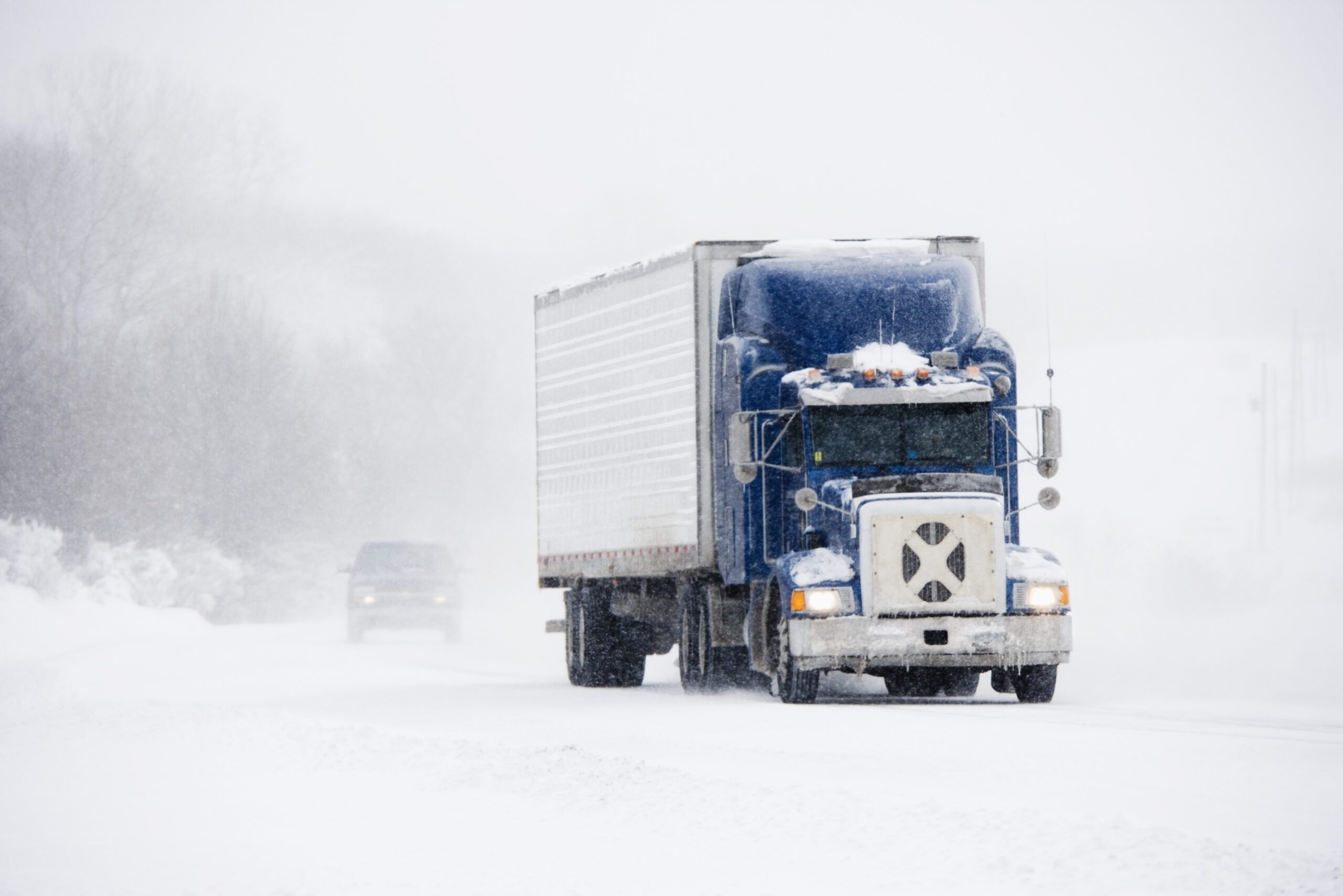
If you spend five minutes in customer forums and subreddits, you’ll see a common thread of frustration. Customers waiting for a delivery often post screenshots of tracking pages showing a “weather delay” when the sky is clear at their front door. To the customer, it feels like a generic excuse, not realizing the downstream effects of weather elsewhere. To the logistics provider, it’s a sign of a “logistics hangover” — the chaotic ripple effect where a single storm in a hub city paralyzes operations for a week.
The cost of being reactive is no longer just “the price of doing business.” In 2024, the U.S. experienced record-breaking climate volatility, with total economic damages from major weather events reaching $182.7 billion.1 For the logistics sector specifically, weather-related roadway delays cost the trucking industry an estimated $3.5 billion annually.2 Beyond the immediate waste, 78% of high-volume e-commerce sellers report that shipping delays directly impact their profitability and “Buy Box” status.3
Why reactive logistics is failing your customers
Customers value transparency over perfection. For too long, logistics providers have relied on “Acts of God” as a blanket justification for disruptions. But when a business sends a “weather delay” notification only after a package is already late, it’s a data failure, not an unavoidable miracle. In the eyes of the modern consumer, an “Act of God” without an accompanying plan of action feels like an excuse for poor planning.
- The transparency gap: Customers want to know why a delay happened. If your system knows a hub in Memphis is iced over, you should tell them before their package misses its scan.
- The “one-strike” rule: In today’s hyper-competitive landscape, 65% of customers will abandon a retailer after just two or three late deliveries.4
- The visibility demand: A storm doesn’t just delay one truck; it triggers a surge in anxiety. With 91% of consumers now actively tracking every shipment they order,5 a “weather delay” without a proactive explanation leads to a massive spike in “Where Is My Order” (WISMO) inquiries.
Moving from “what happened” to “what’s next” with predictive weather APIs for logistics
When operations are disrupted, the most critical question a business faces is, “How can we stop weather from ruining our delivery ETAs?” Traditionally, the answer was, “We can’t.” But by integrating predictive weather APIs for logistics directly into your operational workflow, you shift from damage control to strategic prevention.
Combining predictive data with Weather Agent™ for Indices & Triggers enables you to build customized triggers to help keep your fleet moving smoothly and efficiently. Our meteorologists work with you to evaluate multiple weather variables, score them on a 0–100 scale, and send instant alerts when a defined condition is met. The managed service model means those same weather experts are with you from setup to documentation and ongoing optimization, eliminating the need for additional headcount.
- Automated route optimization: Instead of reacting to a closed highway or a grounded flight, use predictive data to reroute freight 48 hours before the first snowflake hits. This helps keep ETAs reliable, even when the climate is volatile. Logistics leaders using these predictive analytics see an average 15–25% reduction in operating costs.6 By knowing exactly which routes are “workable,” you also eliminate the fuel waste of dry runs and the high cost of emergency, last-minute rerouting.
- Proactive “pre-storm” communication: Send a “heads up” alert before the customer even thinks to check their tracking number. By notifying a customer that you’ve moved their ship date up by 12 hours to beat an incoming storm, you turn a potential delay into a demonstration of reliability. Predictive notifications about delivery status and potential delays reduce customer complaints by 50-70%7 while simultaneously improving on-time delivery performance by 35%.8

Why The Weather Company is the choice for enterprise logistics
Building a resilient supply chain requires more than just a 5-day forecast; it requires dense, global data. The Weather Company provides:
- Accuracy & reliability: Trusted by 2K+ businesses globally, our consistent accuracy is the product of pioneering technology and the expertise of our meteorologists, making us one of America’s most trusted brands.
- Massive data volume: We ingest over 75+ billion terabytes of weather data daily, sourced from satellites, radar, and a global network of over 390,000 personal weather stations. This equips your team with high-resolution data for both rural corridors and dense urban ‘last-mile’ deliveries.
- Scale you can trust: We handle 6 trillion API calls per month with a guaranteed 99.95% uptime SLA, ensuring your data is available when the storm is at its worst.
Make weather your competitive advantage
The future of logistics isn’t about avoiding the storm — it’s about seeing it coming. By adopting predictive weather APIs for logistics, you can stop using weather as an excuse and start using it as a reason for your customers to trust you more.
- Explore our API offerings: Visit the API hub to see our full catalog of data layers available.
- Test it yourself: Ready to build? Start your weather data API free trial today.
Get started
Contact our experts today to discover how Weather Data APIs can empower your decision-making and strengthen your business resilience. Let us help you transform weather data into a strategic asset.
Contact us1 NOAA National Centers for Environmental Information (NCEI): U.S. Billion-Dollar Weather and Climate Disasters
2 US National Science Foundation: Analysis of Weather Incident Effects on Commercial Vehicle Mobility in Large U.S. Cities conducted by Mitretek Systems in partnership with the Federal Highway Administration (FHWA)
3 AMZ Prep: How Shipping Delays In 2025 Are Impacting Amazon FBA Sellers
4 Procurement Tactics: 70 Key Supply Chain Statistics for 2025/2026
5 Businesswire: Verte Research Reveals Consumers Are Obsessed With Order Tracking, Visibility
6 SR Analytics: Supply Chain Predictive Analytics: Cut Costs 25% & Improve Forecast Accuracy
7 8 Deliberate Directions: Logistics Analytics: How Data-Driven Decisions Transform Supply Chain Operations