
Weather intelligence for the future: Crafting a strategic enterprise approach to changing environmental conditions
Continue reading

Key takeaways
- System virtualization gives weather operations greater flexibility, resilience, and scalability while reducing the need for on-site IT support and maintenance.
- Virtualization lowers hardware dependency, helping stations cut costs tied to electricity, cooling, and physical infrastructure.
- Managed virtualization services handle updates, security, and system management, shifting operational burden away from station teams.
- As media technology trends evolve, broadcasters are rethinking legacy systems so weather teams can focus more on content production and less on infrastructure management.
Modern broadcasting moves at a breakneck pace – a reality that leaves little room for the legacy systems of the past. Stations must now meet rising viewer expectations while navigating the latest media technology trends. This creates a high-stakes balancing act, especially as operational belts continue to tighten. Such a demanding landscape requires a new kind of resilience to keep newsrooms agile and responsive.
That’s why the industry is shifting toward system virtualization. As newsrooms invest in more advanced, software-driven workflows, pressure is building to modernize legacy systems – including weather operations. Virtualization strengthens weather operations with the flexibility and stability needed when the stakes are highest.
Rethinking media tech from the ground up
Progressive broadcast technology leaders are moving beyond traditional, hardware-bound systems. Instead, they’re adopting cloud-based tools that improve collaboration, lower costs, and increase uptime. From newsroom automation to audio infrastructure, many functions are already virtualized. Now, stations are asking for the same progress in weather operations – and for good reason.
The expectation is clear: If every other part of the media tech stack is evolving, weather technology should keep pace.
What virtualization really means for weather teams
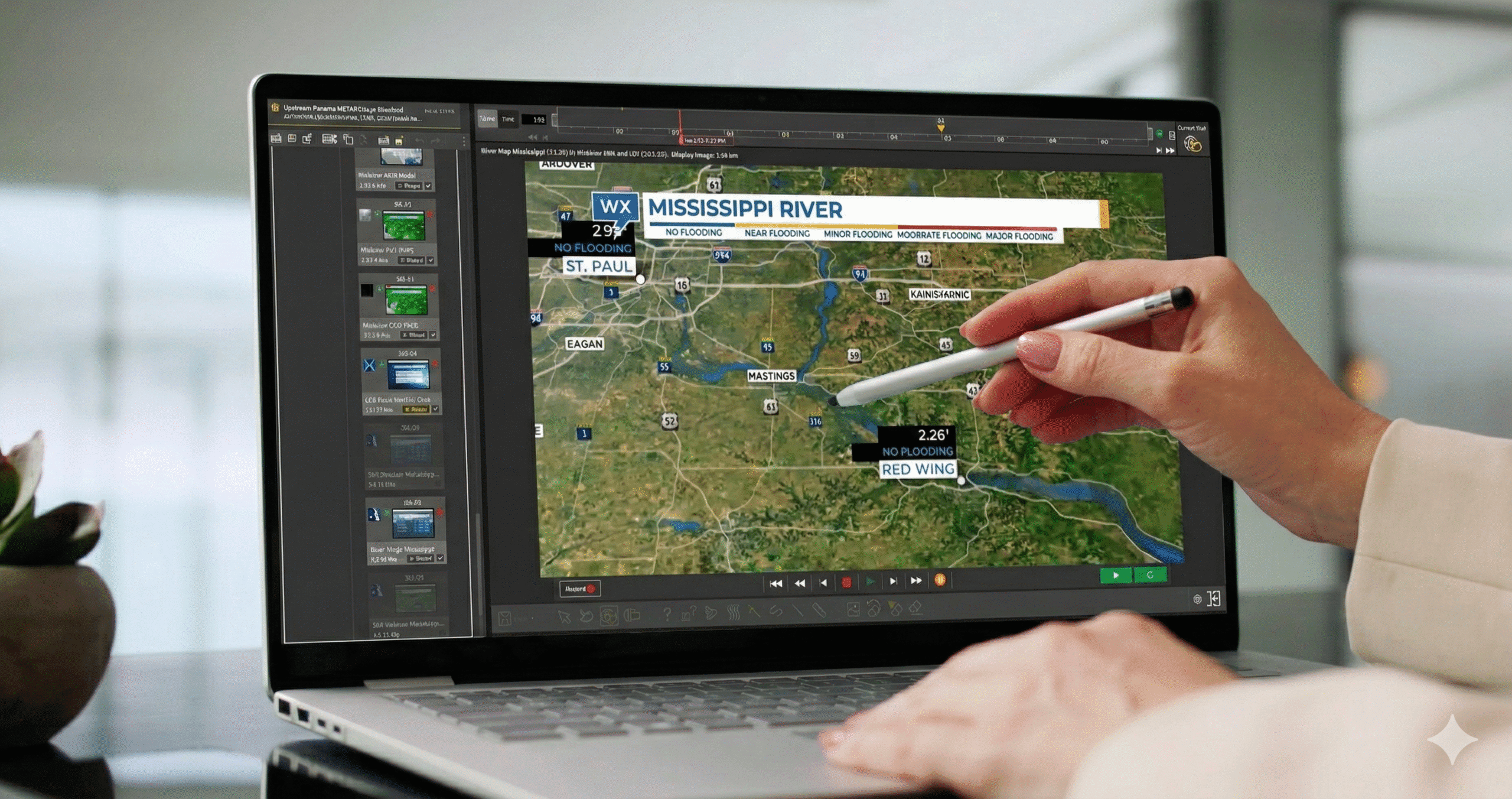
System virtualization replaces on-prem, physical infrastructure with cloud-hosted, software-defined systems. In a weather context, this means meteorologists and producers can access forecasting tools, create graphics, and manage digital publishing workflows from virtually anywhere. Instead of relying on a fixed location or dedicated workstation, teams can collaborate and deliver coverage through browser-based access. The virtual environment integrates seamlessly with other newsroom systems, supporting the flexibility modern broadcasters need.
Such flexibility comes from decoupling weather workflows from dedicated hardware. Virtualized systems allow teams to scale resources on demand, centralize management, and reduce the long-term costs associated with maintaining, upgrading, and eventually replacing physical infrastructure. For weather teams, this shift supports faster collaboration, simpler operations, and greater resilience during high‑pressure moments without adding technical overhead.
Flexibility that matches the speed of news

Weather stories break quickly – and don’t always follow a 9-to-5 schedule. Virtualization allows stations to adapt in real time. Whether it’s scaling up during severe weather or extending reach during major events, virtual systems flex with demand.
This flexibility allows stations to support new storytelling formats without rebuilding their infrastructure. Virtualized environments make it easier for weather teams to access tools remotely, collaborate across locations, and adapt workflows as production needs evolve.
By moving content creation and publishing workflows into the cloud, stations reduce reliance on fixed workstations and local systems. Weather teams can prepare shows, update graphics, and support coverage from any connected location. The result is better operational continuity during severe weather, staffing constraints, or high-pressure news cycles.
Resilience you can rely on
Continuity is critical in weather operations, especially when conditions are severe. System virtualization helps reduce downtime by shifting away from single points of failure. With cloud-based redundancy, stations can continue delivering weather coverage even if local infrastructure is compromised.
Disaster recovery workflows, remote handoffs, and shared rendering capabilities across stations all contribute to more reliable operations. Operational resilience has been tested and trusted in real-world scenarios. Distributed rendering supports shared processing power to help stations avoid bottlenecks and reduce downtime during peak demand.
Scalable, sustainable, station-friendly
Transitioning to a virtual environment does more than modernize the workflow; it fundamentally reshapes the economics and efficiency of station operations.
Cost control without compromise
Virtual systems offer another critical advantage: cost control. The growing concern around total cost of ownership (TCO) has made broadcasters more selective about new tech investments. Virtualization shifts spending away from large upfront hardware investments and toward more flexible, usage-based operating costs, reducing reliance on underused on-prem systems.
It also reduces capital and maintenance costs by removing the need to manage on-prem systems. A pay-as-you-use model gives broadcasters more control over expenses and reduces the burden of daily system management.
A managed model that reduces IT strain
System virtualization centralizes weather workflows into a highly available managed service, reducing IT complexity and freeing up teams to focus on content rather than infrastructure. Cloud-based updates keep the platform current without requiring hardware replacements, helping stations avoid obsolescence while staying aligned with evolving tech standards.
As stations reevaluate their infrastructure, virtualization offers a path to simplify operations, reduce overhead, and prepare for future formats without locking teams into expensive, aging hardware systems.
Building the future: Infrastructure for next-generation weather experiences
As storytelling formats evolve, broadcast infrastructure must evolve with them. System virtualization provides the flexible, cloud-based foundation stations need to support emerging tools, technologies, and formats – even as those continue to change.
By investing in flexible, cloud-based infrastructure today, broadcasters can better prepare for what’s next, including support for emerging formats such as the virtual weather map and VR weather forecasts. With system virtualization, teams can adapt faster, without overhauling their tech stack every time workflows or audience demands evolve.
Strategic positioning for the next era of weather tech
Virtualization is not a quick fix. It’s a foundation for how weather teams will operate and innovate in the years ahead. Stations that begin the transition now will be better equipped to adapt to emerging formats, cover complex weather events, and maintain continuity no matter the conditions.
As The Weather Company prepares to introduce new virtualization capabilities, we remain focused on helping stations meet today’s challenges while building for tomorrow. We’re committed to delivering solutions that are as reliable as they are forward-looking, and, as always, powered by the world’s most accurate forecaster.1
Next steps for virtual weather operations
System virtualization delivers on three essential fronts: flexibility, resilience, and scalability – all baseline needs for modern weather operations.
Broadcasters who rethink their infrastructure today will be best positioned for what’s ahead. The Weather Company is working with select partners to help define the next chapter of virtualized weather operations.
Connect with our team to explore design partner opportunities.
Let's talk
Ready to move beyond the rack room? Contact our media experts today to see how virtualization can lean out your operations while leveling up your storytelling.
Contact usFrequently asked questions
System virtualization in weather operations refers to replacing physical, on-prem infrastructure with cloud-based tools. This allows weather teams to work remotely, scale on demand, and integrate seamlessly with other newsroom systems.
Virtualization helps reduce broadcast costs by eliminating the need for costly hardware and on-site maintenance. It supports a pay-as-you-use model and keeps systems up to date with cloud-based updates, all while improving operational efficiency.
Broadcasters can deploy virtualization in their own private cloud. However, doing so requires managing infrastructure within their own AWS account, which adds upfront and ongoing costs. It also limits access to enterprise-level pricing and economies of scale. For many stations, a managed model is more cost-effective and easier to operate.
Yes, meteorologists can create high-quality weather visuals remotely using cloud-based content creation tools. With access to centralized workflows, teams can build immersive, on-brand graphics from any connected location.
The Weather Company’s approach to virtualization is different because it combines advanced modeling, cloud-native platforms, and a managed service model to deliver broadcast-quality weather technology with the economics of the cloud.
Virtualization is secure and reliable enough for live weather coverage due to system redundancy, distributed rendering, and disaster recovery workflows. These safeguards help operations stay resilient during peak demand or extreme events.
Related resources



1 ForecastWatch, Global and Regional Weather Forecast Accuracy Overview, 2021-2024, commissioned by The Weather Company