
Weather intelligence for the future: Crafting a strategic enterprise approach to changing environmental conditions
Continue reading

Key takeaways
- U.S. agriculture is navigating a “bridge” period in 2026, relying on federal assistance to offset high input costs and negative margins.
- Cumulative weather losses reached $20.3 billion in 2024, but the hidden cost is equipment damage and soil compaction from mistimed field operations.
- The Weather Company’s APIs provide hyperlocal precision, enabling proactive protection of machinery and precision yield management.
- Strategic weather intelligence can help reduce operating costs and protect against the “uncovered loss” gap that insurance cannot fully bridge.
In 2026, predictability is a relic of the past. As agricultural leaders navigate shifting trade policies and volatile weather, the margin for error has hit zero. Success now depends on transforming weather from a source of uncertainty into a strategic asset by integrating high-fidelity weather forecast APIs directly into your operational DNA.
For large-scale farm operators, the mission has evolved. It’s no longer enough to monitor the skies; you must proactively manage a high-stakes portfolio of environmental and economic risks where a single mistimed decision can cost millions. Implementing precision agriculture strategies is no longer optional — it is a requirement for survival.
The economic weight of the volatility tax
The financial toll of weather is a line item that can break a balance sheet. According to the American Farm Bureau Federation (AFBF), weather-related disasters caused over $21.9 billion in crop and rangeland losses in 20231 and an additional $20.3 billion in 2024.2
Critically, over $9.4 billion of those losses were not covered by insurance.3 While the USDA’s $11 billion Farmer Bridge Assistance program4 provides a temporary shield, it cannot fully offset the compounding pressures of 2026:
- A 10% spike in equipment repair costs: Farmers are forced to extend the life of aging fleets while battling record inflationary pressure on parts and service.5
- A 46% surge in farm bankruptcies: Multi-year climate strain has pushed Chapter 12 filings to their highest level in years.6
This underscores the urgent need for robust agricultural risk management to protect the bottom line.
Why precision agriculture requires precision data
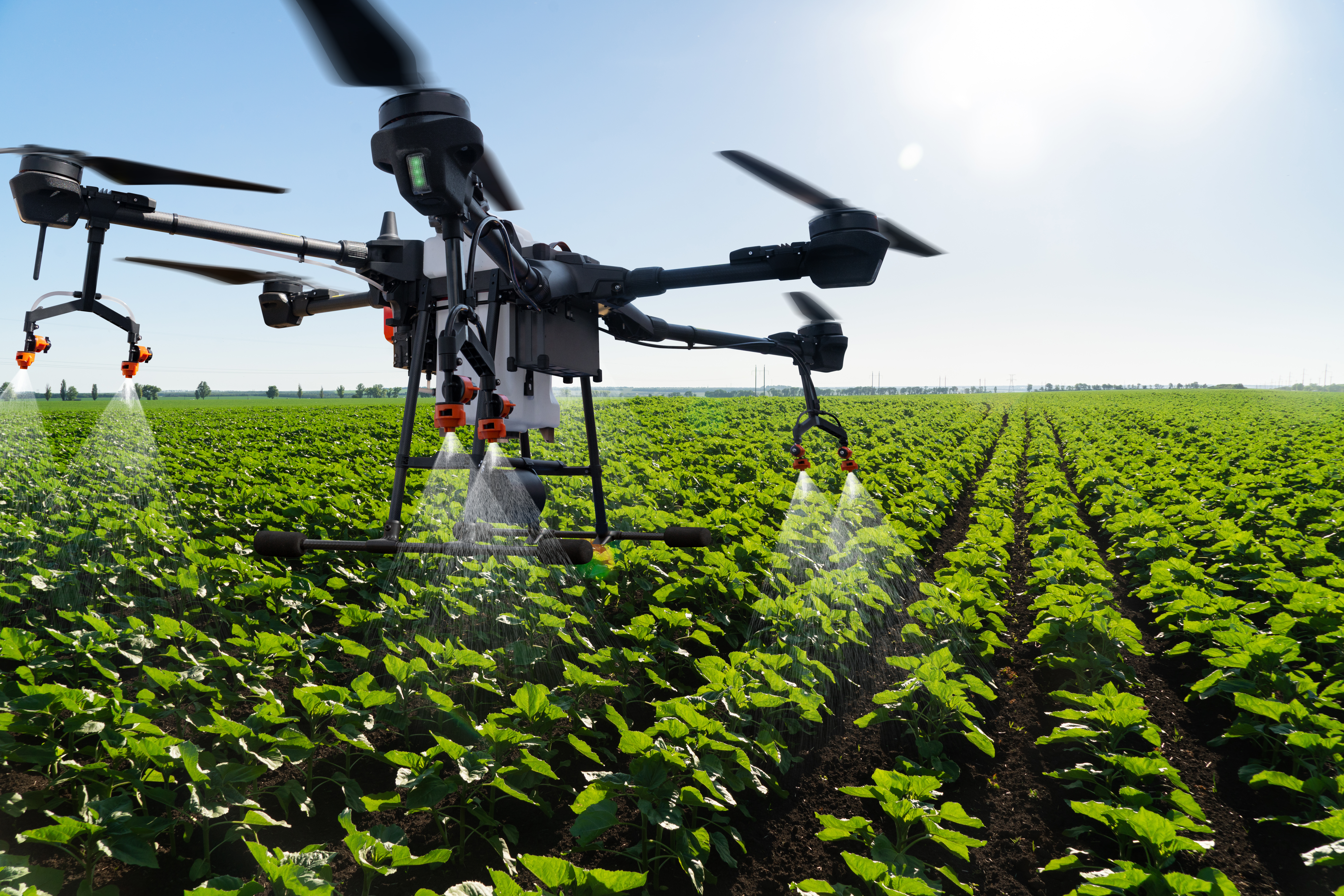
The precision agriculture market is projected to reach $10.54 billion this year.7 This explosive growth isn’t just about cool tech; it’s a response to the rising costs of fertilizer, fuel, and labor. By adopting precision farming techniques, enterprises can move away from “blanket” farming to site-specific management.
Leading farm management software now uses GPS-guided machinery and IoT sensors to apply the exact amount of seed or fertilizer needed for every square meter of a field. However, this high-cost hardware is only as effective as the data feeding it. If your weather data API isn’t providing minute-by-minute updates, your precision agriculture hardware is just an expensive guess. To achieve true crop yield prediction accuracy, the “brain” of the operation must be as sophisticated as the machinery.
Find out why top-performing enterprises trust us for weather intelligence that moves business forward
Read the white paperHardening your yield against climate volatility
Protecting the crop requires more than a standard forecast; it requires agronomic intelligence. When your software provides site-specific updates via a real-time weather API, you move from a reactive posture to a defensive one that hardens your yield against a changing climate. Industry research shows that precision weather data can yield:
- Optimized spray windows: Wind speed and humidity APIs inform application timing so that expensive chemicals stay on the crop and don’t drift, improving efficacy by up to 15%.8
- Smart irrigation: By integrating Evapotranspiration (ET) data, your irrigation pivots can automatically skip cycles before predicted rain — boosting water efficiency by 40–60%9 and improving crop yields by up to 30%10 while preventing nutrient leaching and soil degradation.
- Pest and disease nowcasting: Using growing degree days and moisture data, our APIs flag the exact windows that trigger fungal outbreaks. This helps to enable surgical, preventative spraying rather than costly “blanket” applications.11
Protecting your high-value assets
In 2026, the real-world payoff of an accurate weather data API is measured in asset protection. Through weather data integration, you gain tools to help avoid common causes of multi-week operational shutdowns:
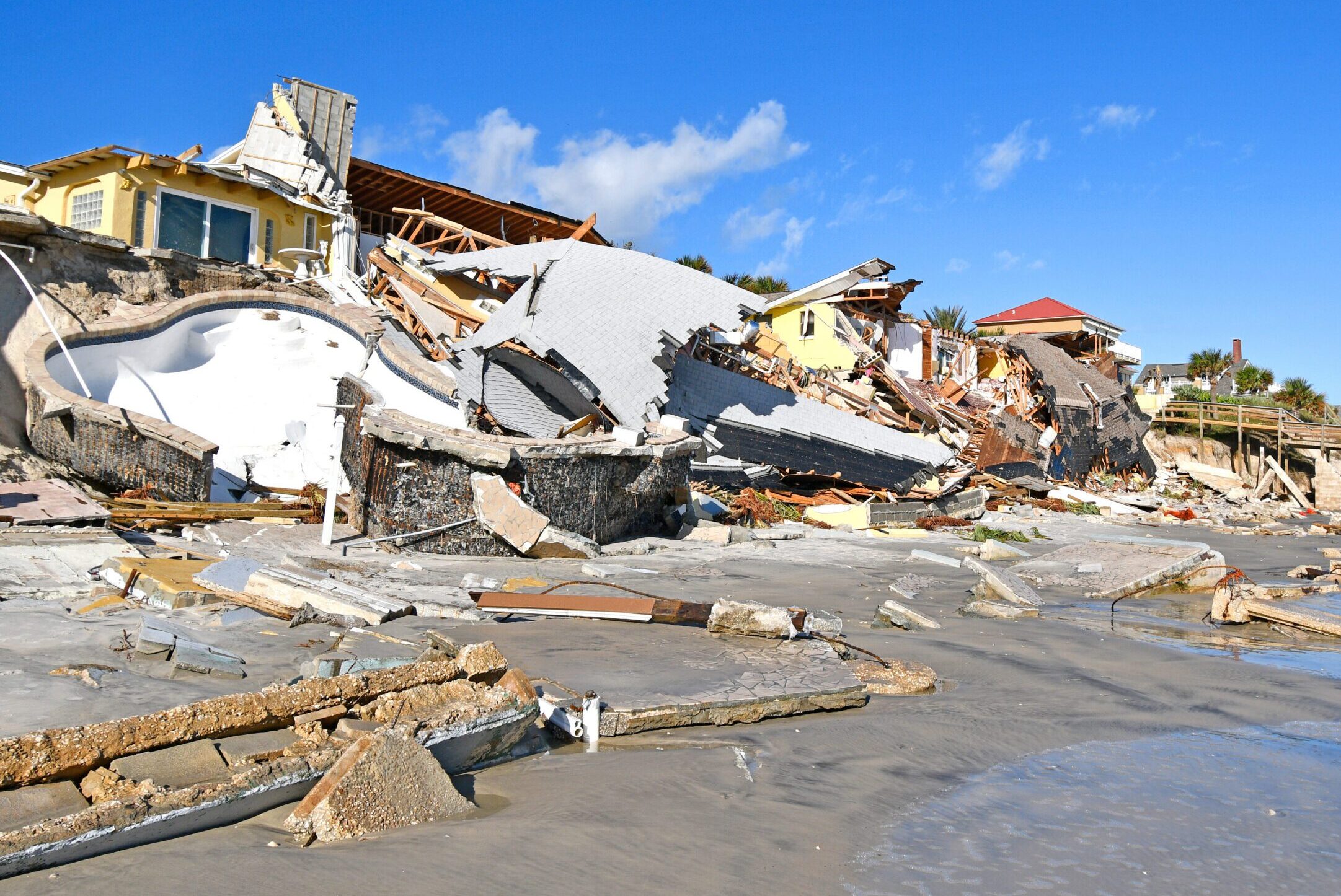
- Equipment damage: Real-time alerts for flash flooding or high-intensity hail allow operators to move expensive fleets to safety before disaster strikes.
- Soil compaction: Operating heavy equipment on waterlogged soil causes long-term yield decline. Our soil moisture indices tell you exactly when a field is “trafficable,” preventing permanent soil compaction.12
- Engine and component wear: By scheduling operations during optimal temperature windows, you reduce heat-load on engines, lowering long-term maintenance costs for your most expensive assets.
Why the world’s leading agri-tech firms choose The Weather Company
When you’re managing millions of acres and billions in equipment, “good enough” data is a liability. The Weather Company’s APIs are built for the level of scrutiny required by enterprise-scale agriculture:
- Unmatched accuracy: We are nearly 4x more likely to be the most accurate than our closest competitor13 so that your field-level decisions are based on reality, not regional averages.
- Global scale & reliability: Our enterprise API infrastructure is designed to support mission-critical autonomous fleets and global supply chains without interruption. We power over 200 billion API calls per day with a guaranteed 99.95% uptime SLA.
- REST weather API flexibility: Our AI-driven WxMix technology delivers high-resolution insights that are easily integrated into any modern software stack.

Performance-first practices for scalable, accurate, weather data delivery.
Get your copyEfficiency is the new growth
The outlook for 2026 is clear: efficiency is the priority. For those committed to climate-smart agriculture, this means using every available data point to mitigate risk. Stop treating weather as a source of uncertainty. By embedding world-class weather APIs into your systems, you protect your crops, your equipment, and your bottom line.
Ready to see how weather data from the world’s most accurate forecaster14 can protect your yield? Start a free trial of The Weather Company Data APIs today.
Let's get started
Contact our experts today to discover how Weather Data APIs can empower your decision-making and strengthen your business resilience. Let us help you transform weather data into a strategic asset.
Contact usFrequently asked questions
Hyper-local weather data provides kilometer-level precision, whereas public stations are often at distant airports. The Weather Company uses over 390,000 global stations (191,000 in the U.S. alone) to help calibrate your irrigation scheduling and harvesting decisions to the exact conditions of your specific soil.
Weather APIs provide high-fidelity indices like Growing Degree Days (GDD) and Evapotranspiration (ET). Integrating these into automated systems allows agronomists to predict crop maturity with precision and optimize irrigation cycles, typically reducing energy-intensive pumping hours by 15–20%15 while simultaneously preventing nutrient runoff.
Yes, weather APIs for agriculture flag high-risk windows for pests and fungal infections based on temperature and moisture. This allows agricultural enterprises to shift from broad, reactive chemical applications to targeted, preventative treatments.
Integrating a REST weather API requires standard RESTful protocol support and JSON parsing. For enterprise-scale operations, prioritize providers with a 99.95% uptime SLA and high request limits to handle global fleet management.
Related resources




1 AFBF Market Intel, Major Disasters and Severe Weather Caused Over $21 Billion in Crop Losses in 2023, February 2024
2 3 Indiana Farm Bureau/AFBF, Analysis shows that in 2024, farmers lost $20.3 billion to weather disasters, March 2025
4 USDA, USDA Announces Enrollment Period for Farmer Bridge Payments, February 2026
5 AFBF Market Intel, Declining Farm Economy Continues to Pressure Profitability, October 2025
6 AFBF Market Intel, Farm Bankruptcies Continued to Climb in 2025, February 2026
7 The Business Research Company, Precision Agriculture Global Market Report 2026, February 2026
8 MDPI Agriculture, A Review on Spraying Efficiency and Pesticide Drift Control, April 2025
9 10 PMC/NCBI, The role of modern agricultural technologies in improving agricultural productivity and land use efficiency, September 2025
11 Climate.ai, Pest and Disease Early Diagnosis: Using AI to Optimize Inputs and Protect Yields, November 2025
12 SDSU Extension, Accounting for Soil Wetness Prior to Conducting Farm Operations to Minimize Compaction, April 2024
13 14 ForecastWatch, Global and Regional Weather Forecast Accuracy Overview, 2021-2024, commissioned by The Weather Company
15 Intel Market Research, Irrigation Control Systems Market Outlook 2026-2034, February 2026