
Weather intelligence for the future: Crafting a strategic enterprise approach to changing environmental conditions
Continue reading

Editor’s note: This article reposted with permission from PulsePoint.®
Weather is always a hot topic, even when it’s cold outside.
Regardless of current weather patterns, the weather has thoroughly permeated our lives from water cooler small talk in offices to heated debates on climate change in the global arena.
Extreme weather events are increasingly impacting us, affecting our commutes, vacations, where we choose to live, and our health. Weather is also a proven predictor of consumer behavior and purchase intent. Different local weather conditions drive demand for specific products, even if it’s as simple as a change in wind speed.
According to the British Retail Consortium, weather remains the most significant influence on consumer behavior, second only to the economy. It affects consumers’ emotional state, purchase decisions, and spending willingness. Even commonplace, minor fluctuations in weather can impact the food we buy, what type of clothes we wear, the car we drive, and even the homes we buy.
For example, supermarkets look at the forecast daily and alter stock requirements and pricing accordingly, knowing that a 1-degree rise in the temperature can lead to a 22% boost in demand for fizzy drinks, a 60% decrease in porridge, and a 90% increase in demand for garden furniture. Research by Weather Trends International found that by matching weather and sales history from the same period, they could quantify the relationship between specific categories and weather. For example, a -1°F YoY change in weekly average temperature would translate to a +2% increase YoY for cold and flu medication sales.
Ad targeting based on weather allows advertisers to predict consumer needs and deliver timely, relevant messaging to target audiences. Real-time weather data can inform adaptive advertising campaigns, which have the potential to engage consumers and drive conversions by marketing specific products at optimal times for purchase.
What is weather based advertising?
Weather-based ad targeting helps marketers optimize their campaigns by aligning ads with local weather conditions down to the ZIP code level, enhancing ad effectiveness and ROI.
Weather based advertising uses real-time weather data to place brand media when and where they are most relevant. While some basic solutions simply use location data, more robust weather based advertising solutions – such as that from The Weather Company – use a mix of location data, weather data, sales data, and de-identified health and demographic data. This advanced methodology helps to better influence contextual and customized targeting that drives consumer engagement and purchase intent. By leveraging target ZIP code populations proven or predicted to be clinically affected by weather, marketers can reach healthcare providers (HCPs) and condition-relevant consumer populations when and where they’re likely to take clinical action influenced by weather. Targeted weather-based ads provide several critical benefits to pharma marketers, including:
- Increasing brand relevance during clinically influential moments, as influenced by near real-time and predicted weather changes
- Maximizing hyper-local exposure and relevant reach before and when weather-related symptoms are activated
- Customizing messages for HCPs and consumer populations without the use of digital identification, like cookies
- Boosting the likelihood of conversion, therefore improving campaign ROI
Benefits of using weather forecasting tools for advertising and selecting the right solution
Weather forecasting tools help inform adaptive advertising campaigns that resonate with HCPs and consumer populations based on the weather conditions they experience. This is possible with predictive analytics underpinned by artificial intelligence, which enables highly personalized ads that more effectively engage consumers—several weather-targeting tools in the market use AI. However, marketers should consider certain features when looking for the best one for their business.
AI-powered weather data enhances campaigns’ precision and marketing ROI, instilling confidence in pharma brands to make better data-driven decisions. When combined with accurate forecast data, AI helps pinpoint where, when, and how the weather affects health symptoms, purchasing habits, and prescription behaviors. It does this by predicting how the weather “feels” by ZIP code to determine how likely weather changes will influence specific symptoms or activities.
Using AI tools to analyze weather data and predict consumer behavior, pharma brands can also overcome several advertising challenges related to weather based advertising. These include adapting to fluctuations in seasonal norms and climate variability, ensuring accurate weather data to make informed advertising decisions, and accessing accurate location data crucial for effective weather-based targeting.
The best weather-forecasting tools possess strong capabilities in these areas:
- A data foundation that combines real-time weather data and anonymized health information to determine the weather by ZIP code and how changes impact symptoms and clinical activity
- Artificial intelligence modeling that anticipates when consumers may be likely to need symptom relief or medical aid based on real-time weather influence
- A future-proofed solution not reliant on third-party cookies, but first-party data
Weather-based ad targeting relies on symptom and activity signals to determine when to target audiences in ZIP codes where weather conditions are optimal for causing specific behaviors. For instance, a pharma brand could use weather-based geolocation advertising to promote cold medicine in winter and allergy medicine in the spring based on local pollen counts. They could also use this approach to reach local doctors likely to prescribe a solution to symptomatic patients. Other weather based advertising strategies include activity signals, such as shopping outdoors versus online on a nice day, or increasing doctor visits and OTC treatment sales during weather-induced symptom flare-ups.
PulsePoints’ weather signals
Pharma brands can partner with PulsePoint for near real-time weather based advertising solutions. Our award-winning Weather Signals solution leverages The Weather Company’s most accurate forecast data and industry-leading AI to pinpoint where, when, and how the weather affects health symptoms, purchasing habits, and prescription behaviors.
With PulsePoint, you can reach HCPs and condition-relevant consumer populations when and where they’re most likely to take clinical action due to the weather. For HCP targeting, Weather Signals can help brands reach local doctors who will likely prescribe a solution to symptomatic patients. For DTC targeting, brands can reach consumer populations before and while they may be symptomatic.
Marketers can then activate campaigns against these signals in an omnichannel way across display, TV/ video, DOOH, audio, social and EHR.
The overall benefits of using these weather signals in advertising campaigns include increased brand relevance during clinically influential moments, maximized hyper-local exposure, and relevant reach before and when weather-related symptoms are exacerbated, as well as customized messaging for HCPs and consumer populations (no cookies required!).
In beta tests, we’ve seen a 66% TRx (total prescription) increase for exposed prescribers using Weather Signals and a 30% TRx increase for exposed HCPs using Clinical Behavior bidding optimization, demonstrating the proven success of partnering with PulsePoint for weather based advertising campaigns. In fact, Weather Signals has recently been recognized as one of the best data solutions in the industry, and was the recipient of the 2024 MM+M Silver Award alongside The Weather Channel and CMI Media Group for a weather targeting campaign.
PulsePoint provides in-platform access to over 500 Weather Signals within the following categories:
- Absolute weather: The measurement of specific weather conditions at the ZIP code level based on observed within The Weather Company’s first-party weather data.
- Activity: Seasonal weather conditions detected at a ZIP code level, as observed within The Weather Company’s first-party data, that are conducive to driving people to take part in a specified activity.
- Emotion: Connections identified between weather condition mixes and motivation that align with desired consumer emotional context or actions at a ZIP code level.
- Health: Weather conditions present at a ZIP code level that historically have caused symptoms to flare or prescriptions to be refilled, as observed within The Weather Company’s first-party data.
- Predictive health: Machine learning generates a “risk of illness” probability for targeted ZIP codes, anticipating when consumers may require symptom relief or medical care for a specific condition based on weather patterns, anonymized demographic data, and deidentified health claims at a ZIP code level.
- Product: Targets consumers within ZIP codes currently experiencing an optimal mix of weather conditions that historically drive incremental sales lift, according to third-party data sources, such as NielsenIQ POS consumer sales data, and correlating weather conditions that were present at time of purchase.
- Relative weather: Select whether the weather condition listed has occurred within the last 3 days, is currently occurring, or is projected to occur within the next 3 days in a specified ZIP code, as observed within The Weather Company’s first-party weather data.
- Severe weather: Reaches audiences facing extreme weather conditions at the ZIP code level, as detected by alerts, advisories, watches, and warnings issued by the National Weather Service (NWS) and National Oceanic and Atmospheric Administration (NOAA).
Below is a high-level view of how the data methodology behind Weather Signals works:
The platform-accessible data segments contain unique insights, such as The Weather Company’s first-party weather and geo-based historical and seasonal averages, anonymized medical claims, licensed prescription sales data, and five years of in-store OTC sales data provided by Nielsen.
AI technology backed by advanced modeling and machine learning combines this data to predict how the weather “feels” by ZIP code and determines how likely weather changes will activate symptoms. By combining real-time weather data with other health-related insights, the model can anticipate when consumers are likely to need symptom relief or medical aid based on real-time weather influence.
The data in each segment is refreshed every 15 minutes to accommodate changes in weather by ZIP code and how those changes impact real-time symptoms and clinical activity. By leveraging The Weather Company’s enhanced first-party data for campaigns, brands don’t have to rely on third-party identifiers, making the solution future-proofed and not reliant on cookies.
Conclusion
Weather based advertising offers significant opportunities to deploy more relevant and engaging marketing when pharma marketers seek more advanced ways to reach HCPs and consumer populations without needing third-party identification.
Since localized weather data can serve as indicators of purchasing habits and online behavior, personalized ad strategies using weather marketing stand to play an influential role in the future of healthcare advertising. With performant, privacy-forward, and The Weather Company’s first-party weather data, marketers can drive advertising effectiveness and consumer engagement now and in the cookieless future.
If you’d like to utilize Weather Targeting through our partner PulsePoint, contact us below.
Let's talk
What’s your weather strategy? To learn more about harnessing the power of weather to increase engagement and drive growth, contact our advertising experts today.
Contact usRelated resources






Weather drives decisions
Marketers, it’s time to stop planning by dates and let weather-driven mindsets be your guide for holiday marketing campaigns. Our new research shows that aligning your messaging with these weather-driven behaviors significantly boosts engagement, especially when marketing to Gen Z.
%
adjust holiday activities – including shopping – based on the forecast1
%
of consumers use The Weather Channel Digital platforms during the holiday season, and half check the weather more frequently when making holiday plans2
Download your playbook today
Inside, you’ll discover:
- Real data on how weather influences holiday shopping
- Creative strategies to reach consumers beyond Black Friday
- Weather-driven case studies from top brands
- Tips to extend campaigns across social, CTV, search, and DOOH
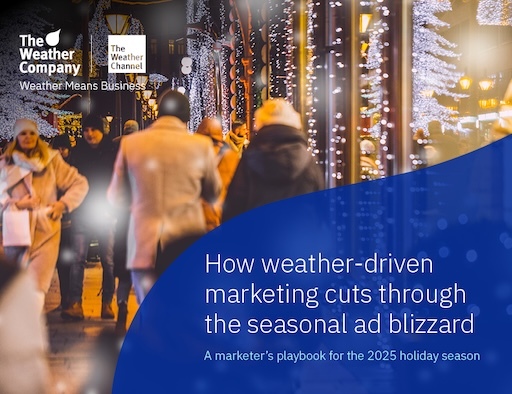
2025 Holiday Marketer's Playbook
Download playbookStand out in retail’s most wonderful – and cluttered – time of the year
See how weather can go from background forecast to front-row strategy – fueling decisions, emotions, and action all season long. Don’t let your brand get buried in the advertising avalanche. Tap into real-time weather moments that spark action, emotion, and lasting impressions. Download your playbook today.
Let's talk
What’s your weather strategy? To learn more about harnessing the power of weather to increase engagement and drive growth, contact our advertising experts today.
Contact usRelated resources
1 2 TWC Holiday Consumer Behavior Survey, December 2024
Key takeaways
- Weather targeting in advertising helps brands reach consumers at the right time using real-time weather data.
- Efficiency and scale in programmatic advertising improve when media buyers gain better control over inventory and audience targeting.
- Programmatic curation boosts ad quality and brand safety while improving efficiency, performance, and privacy in a cookieless future.
- As the world’s most accurate forecaster,1 The Weather Company equips advertisers with predictive, real-time insights to optimize campaigns.
The digital advertising market has nearly doubled its revenue over the past 5 years.2 This proven ecosystem brims with opportunity — but also complexity. Media buyers have an overwhelming number of choices, from DSPs and SSPs to countless data providers, making it more challenging than ever to reach the right audience, efficiently and effectively. While programmatic promises automation-driven precision, the reality is often fragmented inventory, wasted spend, and inconsistent performance.
Programmatic curation solves this challenge by pre-packaging premium inventory with quality filters, giving you streamlined access to better placements without the chaos of the open marketplace.
What elevates your curation strategy? Weather data. As one of the strongest predictors of consumer behavior, weather intelligence transforms standard targeting into precision marketing — connecting your campaigns to real-world moments when consumers are most receptive to your message.
Why programmatic curation is rising (and what it fixes)
Programmatic advertising was built for scale, but it came at a cost. Media buyers have grappled with simultaneously securing premium inventory while applying precise audience targeting — often forced to compromise on one to achieve the other. Buyers attempted to fix these issues through DSP filtering, but the approach was limited. It only worked within individual platforms, lacked full supply chain visibility, and couldn’t guarantee high-quality placements.
Programmatic curation fundamentally changes this dynamic. Rather than simply streamlining the buying process, sell-side curation pre-packages high-quality inventory with valuable audience data into a single, actionable Deal ID. This strategic approach:
- Gives buyers significantly greater control over where ads appear and who sees them, without third-party cookies.
- Creates efficiency at scale by eliminating manual inventory-to-audience matching.
- Ensures brand safety through pre-vetted premium placements.
- Delivers stronger ROI by optimizing the complete supply path.
This shift from post-purchase filtering to pre-packaged curation represents a fundamental evolution in how media is bought programmatically — putting control back in buyers’ hands while maintaining the scale that programmatic was designed to deliver.
Weather: The game-changing layer in curation
What truly transforms curated deals from good to exceptional is integrating weather data. As the most accurate weather data source, The Weather Company provides a Weather Targeting solution unlike any traditional digital signal. Unlike targeting methods that rely on third-party cookies or personal identifiers, weather data is universal, scalable, and has been shown to influence what people buy, when, and why. This isn’t merely an enhancement to existing targeting — it’s an entirely new intelligence layer that connects digital advertising to real-world moments.
The weather advantage in programmatic curation:
- Predictive consumer signals: Weather conditions reliably forecast behavior shifts, allowing brands to anticipate demand, whether it’s allergy medication sales at the start of spring or sunscreen on a high-UV day.
- Hyperlocal precision: Weather is both a global force and a personal experience. Curation powered by ZIP code level forecasts ensures brands reach audiences experiencing specific conditions in real-time.
- Universal reach: Weather affects everyone, everywhere, creating a scale that fragmented digital signals cannot match, reaching consumers when they are most engaged.
- Privacy-forward design: Weather Targeting functions without personal identifiers, future-proofing campaigns against regulatory changes.
- Premium context alignment: Weather-activated deals ensure ads appear in quality environments when external conditions drive the highest intent.
Activating weather intelligence in curated deals
Weather Targeting can be seamlessly combined with multiple data sources in curation platforms to create highly precise targeting strategies:
- The Weather Company Weather Targeting: Our proprietary weather signals are the foundation, activating your campaign when and where specific conditions occur that are proven to drive behavior.
- Contextual targeting: Partners like Comscore provide additional content categorization to ensure a brand-suitable environment.
- Audience segments: Both first and third-party audience data can be layered with Weather Targeting for enhanced precision.
Through new strategic partnerships with Index Exchange and Microsoft Curate, in addition to existing relationships with Magnite and Audigent, brands can scale weather signals across programmatic channels — all in a single transaction.
High-performance Weather Targeting activation strategies include:

- Conditions-based targeting: Promote seasonal products when temperature thresholds are crossed.
- Activity-based targeting: Align outdoor recreation or online shopping at home messaging with ideal weather conditions.
- Product-based targeting: Connect product relevance to anticipated consumer need based on the weather.
- Health and wellness targeting: Deliver proactive and reactive health remedies when consumers need them most.
- Emotion-based targeting: Leverage the weather’s psychological impact to promote the right product at the right time.
Weather-powered curation: Smarter, more efficient, and built for the future
Weather targeting within programmatic curation delivers the precise balance media buyers have been seeking:
- Control over inventory quality and brand safety
- Efficiency in reaching audiences at scale
- Precision in targeting based on real-world conditions
- Transparency throughout the supply chain
- Privacy compliance that works in today’s regulatory environment
Advertising is changing, and marketers need better, privacy-safe ways to reach audiences. By integrating the most accurate weather data source with premium curated inventory, advertisers gain a strategic advantage that transcends traditional programmatic limitations. This isn’t just an incremental improvement to existing processes — it’s a fundamentally better approach to programmatic media buying.
Let's talk
What’s your weather strategy? To learn more about harnessing the power of weather to increase engagement and drive growth, contact our advertising experts today.
Contact usRelated resourcs
1 ForecastWatch, Global and Regional Weather Forecast Accuracy Overview, 2021-2024, commissioned by The Weather Company
2 IAB/PwC Internet Advertising Revenue Report 2024
Key takeaways
- A second back-to-school shopping season emerges as temperatures drop, influencing clothing and school supply purchases.
- Back-to-school marketing strategies are more effective when aligned with real-time weather data.
- Parents, educators, and students frequently check the weather for school-related purposes, creating prime ad opportunities.
- Weather-related advertising increases engagement, with parents being an exceptionally responsive audience.
Editor’s note: All data sourced by The Weather Company Back to School Consumer Behavior Survey, September 2024, except where noted.
Why smart back-to-school marketing strategies don’t end in August
A second back-to-school season? It’s real. While many campaigns focus on the early back-to-school rush in the summer, changing temperatures as fall weather arrives create a second wave of shopping demand. Weather-related advertising solutions from The Weather Company can help brands anticipate and prepare for it. So, get out your pencils and take notes as we share how to optimize campaign message timing, boost engagement, and drive better back-to-school marketing results this year.
How fall weather influences parents, students, and educators back to stores
When it comes to back-to-school shopping trends, most marketers focus on discounts, must-have items, and hitting the August shopping peak. Here’s where it gets interesting: The traditional back-to-school shopping season isn’t the whole story. Parents and students often make additional purchases as cooler fall weather arrives in September and October.
%
of parents purchase a second round of school supplies and clothing when weather starts feeling like fall.
Picture this: A mom checks her weather app first thing in the morning and sees an upcoming cold snap. Those jeans and sweaters from last year are likely outgrown. Probably need a new winter coat, too. Not to mention a bigger pair of snow boots. Suddenly, her back-to-school shopping list springs back to life.
This isn’t hypothetical. It’s relatable. For retailers, this back-to-school season revival is an opportunity that may be overlooked. Back-to-school advertising campaigns that account for seasonal weather changes can capture late-season demand and keep brands top-of-mind as parents and students adjust their wardrobes, meal plans, and daily routines.
%
of back-to-school shoppers consult weather forecasts specifically when buying school clothing and supplies.
Weather: Shaping what to buy and where to buy it
“Will I shop online or in-store today?” For 87% of back-to-school shoppers, the weather directly influences their decision. Hot, rainy, or otherwise unpleasant conditions drive shoppers online, while pleasant weather sends them to physical stores.
%
prefer in-store shopping during good weather.
%
shop online to avoid hot or unpleasant conditions.
This provides savvy marketers with a perfect opportunity to adjust their messaging in real-time. When storm clouds gather, your ads can highlight the convenience of online shopping. When sunshine returns, your messaging can highlight in-store exclusives and experiences.
Eyes on the weather: an essential part of the school day routine
Parents and educators aren’t casual weather watchers – they’re weather-obsessed from morning until evening throughout the school year. In fact, 87% of parents check the weather at least once a day.
Getting out the door: Morning (5-9 a.m.)
A staggering 73% check the weather first thing every morning. These early checks help inform decisions about transportation, clothing, and food for the day.
The after-school planning sweet spot: Mid-day (noon-3 p.m.)
Is ultimate frisbee practice still on? About 40% check in during this timeframe to see if the weather might impact after-school activities.
Tomorrow’s planning happens tonight: Evening (5-11 p.m.)
As homework wraps up and night falls, about 23% of parents are buying clothing and school supplies (5-8 p.m.) while many are deciding what food to pack or purchase for the next day: 24% from 5-8 p.m. and 20% from 8-11 p.m. In fact, around 54% say checking the weather is one of the last things they do before going to bed.
Weather-driven advertising drives results
The link between weather and consumer decisions is clear. By leveraging real-time and forecasted weather data, brands can optimize the impact of their back-to-school marketing campaigns and connect with consumers in a meaningful and memorable way.
%
of parents are more likely to notice or remember brands or products using weather-related advertising.
When brands incorporate weather signals into their back-to-school advertising strategies, they create a more relevant and engaging experience – leading to stronger performance and higher ROI.
Success story
A leading retailer captured parents’ attention on The Weather Channel app home screen as they were actively planning for the new school year. The weather-timed approach dynamically aligned promotions during this back-to-school planning period. The results: a 69% higher CTR compared to the brand’s benchmark.1
Practical ways to implement weather-smart marketing
Ready to incorporate weather intelligence into your back-to-school campaigns? Here are some A+ strategies:
- Develop a weather-responsive creative that adapts to local conditions
- Target morning and evening weather check times when purchase planning peaks
- Extend campaigns beyond August to capture the temperature-driven “second wave” of shopping
- Adjust online vs. in-store promotion based on forecast conditions
- Allow for regional weather variations in your messaging to provide hyper-local relevance
Back-to-school + The Weather Company ad solutions = success
Weather shapes nearly every back-to-school purchase. Our ad solutions help you appear at exactly those critical decision moments.
Eye-catching creative: Put your back-to-school advertising directly in front of 330+ million monthly The Weather Channel users2 when they’re planning their day. Our dynamic Integrated Marquee premium ad creative automatically adjusts to show the perfect message based on local weather, time of day, and location.
Weather smarts anywhere you advertise: Take weather intelligence beyond our channels with Weather Targeting that works across your entire digital campaign. AI-powered technology and hyperlocal weather data from the world’s most accurate forecaster3 can activate your ads based on the specific weather patterns that influence back-to-school shopping behaviors.
School your competition with weather intelligence
Don’t just capture the first wave of back-to-school shoppers. Be there when temperatures drop, and those summer purchases no longer make the grade. From fall clothing restocks to snow day preparations and after-school planning, the weather influences decisions throughout the entire school year. With The Weather Company advertising solutions, your back-to-school marketing campaigns will be at the top of the class.
Let's talk
What’s your weather strategy? To learn more about harnessing the power of weather to increase engagement and drive growth, contact our advertising experts today.
Contact usRelated resources
The Weather Company Back to School Consumer Behavior Survey, September 2024. The Weather Channel App users | US A18+ | Education Audience = Parents of Pre-K-High School (51%), Educators (33%), Students 18+ (14%) | N=1121
1 The Weather Company internal campaign reporting, 7/29/24-8/25/24
2 Based on the average of the total monthly (non-unique) users for January – December 2024 across The Weather Company digital properties and consumer products, according to internal, global data
3 ForecastWatch, Global and Regional Weather Forecast Accuracy Overview, 2021-2024, commissioned by The Weather Company
Key takeaways
- Spring’s first warm days spark a surge in consumer optimism, spending, and engagement.
- Home improvement, health, and travel brands see major spikes in demand as spring weather arrives.
- Gen Z is 80% more likely than other generations to buy personal care products at the first sign of spring weather.1
- The Weather Company’s advertising solutions reach consumers at key seasonal moments when they’re most receptive.
Spring isn’t just a season – it’s a powerful marketing catalyst. After enduring winter’s hibernation, shoppers emerge with refreshed mindsets and open wallets, ready to engage, explore, and spend. This spring buying season psychology is remarkably predictable: 45% of consumers report spring as the time they’re most likely to experiment with new products and experiences.2
For marketers, this season represents a golden opportunity. Spring advertising campaigns capture audiences when they’re naturally more social, less price-sensitive, and actively seeking fresh experiences – whether planning warm-weather travel, refreshing their homes, or recommitting to wellness goals. The Weather Company’s advertising solutions provide the contextual targeting and high-impact creative that advertisers need to capitalize on this seasonal momentum. We connect your brand with consumers at the perfect weather moment, when seasonal mindsets drive engagement and boost conversions.
Spring buying behavior: Why timing matters
When it comes to spring advertising campaigns, timing isn’t just important – it’s everything. From the moment spring weather enters the forecast, consumer psychology fundamentally changes. In fact, even just the forecast of spring weather in the days ahead is enough to drive behavior. For example, 58% of consumers make a plan to garden or do yard work once spring weather is in the forecast.3
Research confirms that seasonal behavior shifts create distinct consumer patterns, including:
- Spending surge: 69% of consumers report spring weather makes them more social4 – which translates to increased in-store shopping and dining experiences. This behavioral transition creates prime opportunities for weather-based advertising that connects with consumers in these social mindsets.
- Enhanced mood: A remarkable 90% of consumers experience improved mood and reduced stress after getting outside to enjoy spring weather.5 This positive emotional state creates the perfect psychological environment for brand discovery and purchase decisions.
- Optimism: 61% of consumers feel optimistic or energetic when spring appears in the forecast6 – making them more receptive to brand messages and new products.
These weather-influenced behavioral changes aren’t just interesting data points – they’re actionable intelligence for your spring advertising strategy. By synchronizing your seasonal advertising campaigns with these predictable consumer patterns, you transform ordinary marketing into precisely targeted moments of maximum impact.
Unlocking spring buying season: Industry-specific strategies for weather-based marketing
Spring’s unique energy translates into predictable spending behaviors across multiple sectors – creating prime opportunities for seasonal advertising campaigns.
Home & garden
When leaves start to bud, new DIY projects aren’t far behind. The spring months represent the ultimate sweet spot for home improvement marketing, as project planning and execution peak:
- 43% of consumers make home and lawn improvement products their first purchase of the season.7
- 86% report spring weather impacts their gardening and landscaping plans.8
Brands in home improvement, gardening, lawncare and landscaping, home organization, and beyond can leverage these predictable behavior patterns by deploying seasonal advertising campaigns that align with local weather signals – delivering messaging precisely when consumers begin planning spring projects.
Health & wellness
Without question, spring’s bloom brings a predictable spike in health-related purchases. As pollen counts rise, so does consumer demand for specific health and wellness products. Gen Z’s shopping habits in particular reflect an awareness of, and reliance on, weather to inform their allergy purchase activity:
- 42% of Gen Z say their first purchase of spring is allergy medication, compared to 26% of the general population.9
- Gen Z is 80% more likely than other generations to buy personal care products at the first sign of spring weather.10
This seasonal change presents a prime opportunity for health and wellness brands to create Gen Z advertising strategies alongside broader campaigns that reach all allergy sufferers exactly when symptoms begin.
Travel & hospitality
After months of cold weather, consumers are ready to get outside, explore, and reward themselves for surviving the holidays. The spring buying season heats up travel planning for spring break and beyond:
- 35% initiate trip planning when spring weather appears in forecasts.11
- 47% of Millennials report favorable weather forecasts inspire spontaneous road trips, creating perfect opportunities for last-minute promotional campaigns.12
Travel marketers who implement seasonal advertising campaigns synchronized with weather can capture consumers during these high-intent planning moments and drive significant booking conversions through precisely-timed, contextual targeting.
Optimize seasonal advertising campaigns with weather-driven ad solutions
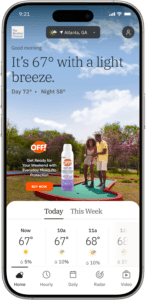
Integrated Marquee ad in The Weather Channel app
Reach consumers through The Weather Channel’s digital platforms or extend your weather-driven campaigns across the entire digital ecosystem using our powerful data signals.
High-impact creative: Premium Ad Formats on The Weather Channel digital properties showcase your brand to a highly engaged audience. These platforms reach 330 million monthly users across our digital properties.13 Imagine your message in a visually engaging Integrated Marquee on The Weather Channel app home screen, where the creative adapts dynamically based on the viewer’s real-time weather, location, and time of day.
Scalable weather data: Weather Targeting, developed with data from the world’s most accurate forecaster14 and advanced, AI-driven technology, helps brands align messaging with local weather patterns across the advertising ecosystem. A nuanced combination of weather factors – including real-time and forecasted local condition mixes, temperature, precipitation, and humidity – activates ads in tune with consumers’ seasonal mindsets and behaviors.
Spring ahead of the competition
The numbers tell a compelling story. With spring weather comes heightened consumer engagement. Weather-driven advertising delivers the right message to the right audience at the perfect moment. It expertly aligns your ads with real-time weather conditions that influence buying behavior. Make your spring advertising as influential as the season itself. Spring shoppers are ready to engage. Are you ready to reach them?
Let's talk
What’s your weather strategy? To learn more about harnessing the power of weather to increase engagement and drive growth, contact our advertising experts today.
Contact usRelated resources
1 4 5 7 9 10 12 The Weather Company Spring Outlook Survey, January 2023
2 3 8 The Weather Company Spring 2021 Retail Survey, February 2021
6 The Weather Company Spring 2022 Behavior survey, December 2021
11 12 The Weather Company Fall 2022 Behavior Survey, July 2022
13 Based on the average of the total monthly (non-unique) users for January – December 2024 across The Weather Company digital properties and consumer products, according to internal, global data
14 ForecastWatch, Global and Regional Weather Forecast Accuracy Overview, 2021-2024, commissioned by The Weather Company
Key takeaways
- More than 360 million people rely on The Weather Channel’s digital properties1 for decisions ranging from daily activities to major life choices, such as where to live and what vehicle to drive.
- Weather insights and data science offer businesses a competitive edge by enabling them to anticipate and influence consumer behavior and optimize operations.
- According to recent research, 100% of executives say weather intelligence can give their business a competitive edge.2
- Proactive weather strategies help businesses reduce environmental risks, capitalize on emerging revenue opportunities, and improve operational efficiency.
In an age where weather isn’t just small talk but instead, the headline, the impact of changing weather patterns on people and businesses is more significant than ever. From everyday weather conditions to extreme temperatures, the environment is now a critical factor driving strategic decision-making in everything from supply chain management to consumer engagement. As global temperatures continue to rise, businesses need to see the opportunity weather presents. At The Weather Company, we help businesses use weather intelligence to drive business resilience, growth, and competitive advantage.
Adapting at the speed of weather
We’ve all seen it. The world is witnessing unprecedented changes in weather patterns. This intensifying weather volatility is fueling more frequent extreme weather events and economic upheavals.
As a result, keeping tabs on the weather has made The Weather Channel digital properties a habitual touchpoint for over 360 million monthly average users1 worldwide. This widespread reliance shows the powerful influence of weather on consumer behavior. In 2023 alone, Adobe projected that weather would influence over $13.5 billion (about $42 per person) in U.S. e-commerce sales3 — the equivalent of an extra Cyber Monday.
The message is clear — businesses need to evolve from reactive to proactive, weaving weather data deeply into their strategic fabric.
Climate Week Spotlight
Thriving in the face of a changing climate
Sheri Bachstein, The Weather Company President, and Peter Neilley, The Weather Company SVP of Science & Forecasting Operations, share insights on how people and businesses can improve weather resilience in this Climate Week NYC 2025 interview.
The power of a weather strategy
So, what exactly is a weather strategy? A weather strategy is a savvy, data-driven approach that harnesses the power of cutting-edge weather data science and AI to optimize business processes, personalize marketing efforts, and gain an enterprise advantage. It’s about transforming weather from a risk factor into a strategic ally.
According to a recent research study of nearly 300 executives across the retail, CPG, pharmaceutical, insurance, and travel & tourism industries:
%
said that weather intelligence could give their company a competitive advantage2
%
believe that leveraging weather insights as a service provides greater value than relying solely on raw data2
%
say incorporating advanced weather analytics could enhance their ability to anticipate and respond to market fluctuations2
%
recognize enhanced weather insights as a powerful tool for driving revenue growth and reducing costs2
%
of pharma executives say using weather insights effectively can help them be better at their job2
%
of CPG executives will increase or continue their use of weather intelligence in the coming years2
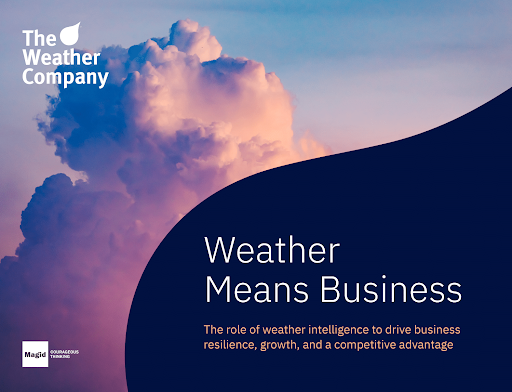
Download our free and exclusive Weather Means Business report to learn how smart businesses are transforming their enterprise strategies with innovative weather intelligence.
Get your copyFuture-proof your business with The Weather Company
As businesses look to the future, integrating weather intelligence into long-term planning is a must. At The Weather Company, we offer unparalleled forecasting capabilities and weather intelligence that enable businesses to thrive in the face of changing weather patterns. With over 40 years of expertise in weather data science, we’ve become the world’s most accurate forecaster,4 a distinction that sets us apart from other providers. Our commitment to innovation and accuracy has earned us the trust of consumers and businesses around the globe.5
Beyond accurate forecasts, we provide scalable, proven solutions for consumers and businesses alike. Businesses tapping into these weather insights will be better positioned to anticipate consumer needs and tailor their offerings.
- Our weather intelligence platform and AI provide the precision and scalability your business process optimization needs to stay ahead.
- Weather Targeting enables advertisers to deliver personalized, relevant messaging that resonates with their audience in real time across the digital ecosystem.
- Premium consumer experiences across The Weather Channel digital properties help marketers engage with consumers at scale in meaningful moments to help them live healthier, safer, smarter, and happier.
A robust weather strategy isn’t just a nice-to-have; it’s essential. Let’s work together to create a weather strategy that drives your business forward.
1 360M monthly active users based on the average of the total monthly (non-unique) users for Jan – June, 2023 across The Weather Company digital properties and consumer products (weather.com, The Weather Channel app, Weather Underground app, wunderground.com, Storm iOS app,) according to internal data
2 Weather Means Business report, October 2024, Magid for The Weather Company
3 Adobe Digital Economy Index 2023
4 ForecastWatch, Global and Regional Weather Forecast Accuracy Overview, 2021-2024, commissioned by The Weather Company
5 According to a Morning Consult Q1 2024 survey, The Weather Channel brand was the #13 most trusted brand in the U.S. The surveys were conducted from January 1, 2024 through March 31, 2024, among nationally representative samples of between 1,158 and 35,280 U.S. adults.
As football season kicks off, it’s not just fans gearing up in team colors – brands are also entering a high-stakes game of brand visibility and consumer engagement. In a crowded advertising landscape, how can your brand stand out? The answer lies in an often-underestimated factor: the weather.
Weather is the MVP in the consumer journey. It influences every aspect of the football experience, from pre-game planning to post-game memories, making it an invaluable asset in your marketing toolkit.

Big game, bigger reliance on weather
On game day, weather conditions can impact the win column. Wind, temperature, and precipitation can affect everything from altering player performance to shifting betting decisions. The fan experience can shift dramatically — from the regular season all the way into the playoffs. Even when games are held indoors, people rely heavily on The Weather Channel for weather checks. The scoreboard:
%
increase in forecast views for “Big Game” host cities vs. the 2024 average, even for indoor games4
Success story
A leading sports betting platform connected with fans in targeted states using The Weather Channel app. They promoted dynamic creatives on the home screen aligning incentives with real-time weather conditions. This strategic approach drove:
%
higher CTR compared to benchmarks5
%
higher CTR via sunny day and clear night creatives5
Weather’s secret: The unforgettable outdoors
But weather doesn’t just make outdoor entertainment events more enjoyable, it makes them more memorable. One-third of people are more likely to remember weather-aligned advertising at outdoor events, a figure that rises significantly among multicultural, millennial and parent audiences. And better weather isn’t always…better.
%
of Gen Z as well as men say that more extreme weather conditions make outdoor events more memorable1
%
of Gen Z sometimes actually hopes for rainy or stormy weather at a concert or outdoor entertainment event because it can make the show even better1
%
of both men and multicultural audiences are also most likely to believe that inclement, cold, or snowy weather gives their sports team(s) an advantage1
Here’s the real winning insight for brands: One-third of people are more likely to remember weather-aligned advertising at outdoor events, a figure that rises significantly among multicultural, millennial, and parent audiences.1
How to leverage weather data this season
- Pre-event targeting: Influence decisions on attendance, attire, and transportation on The Weather Channel app.
- During the event: Tailor messaging to current conditions, enhancing enjoyment and creating memorable moments across the digital ecosystem.
- Post-event: Analyze weather and performance data to uncover customer insights and strengthen brand loyalty even after the campaign ends.
Integrating weather into your marketing playbook this fall allows you to proactively shape the customer journey, transforming weather from a mere backdrop into a strategic advantage. With Weather Targeting and data, you can:
- Increase awareness through highly relevant, dynamic messaging
- Engage sports enthusiasts with privacy-compliant targeting solutions
- Foster brand loyalty in daily weather-influenced decision moments
Weather isn’t just a condition to be endured. It’s a unifying element that ties together every fan’s experience, from the die-hard tailgater to the casual at-home viewer.
To ensure your brand remains a significant part of the football experience, The Weather Company offers tailored solutions designed to make every campaign a winning one with weather-driven strategies.
Let's talk
What’s your weather strategy? To learn more about harnessing the power of weather to increase engagement and drive growth, contact our advertising experts today.
Contact usRelated resources
1 6 TWC Entertainment Behavior Survey, January 2024
2 The Weather Company Winter 2022-23 Behavior Survey, September 2022
3 The Weather Channel social poll, September 2023
4 Amplitude 2022-24
5 GAM, September 2022
The connection between weather and wellness is only becoming stronger. What does this mean for health marketers? Brands have the opportunity to leverage the power and influence of The Weather Channel digital platforms and weather signals across the advertising ecosystem to enhance engagement with health-conscious consumers.
Take a closer look at our “weather-to-wellness” infographic to learn how consumers use weather information to make proactive decisions that impact personal health decisions and purchases.

Your customers realize weather’s impact, so meet them where they are. A weather strategy with The Weather Company places your brand in the direct path of qualified audiences and their health decisions. Learn more about how to drive better engagement and campaign performance with advertising solutions that meet the unique needs of healthcare marketers.
Let's talk
What’s your weather strategy? To learn more about harnessing the power of weather to increase engagement and drive growth, contact our advertising experts today.
Contact usRelated resources
Health and wellness marketers have no shortage of challenges. Staying relevant with health-conscious consumers. Navigating strict compliance regulations. Finding ways to stand out and connect with the right consumer in a stacked marketplace – to name a few.
The rewards are there, though, for brands who can break through. The $1.8 trillion global health and wellness market1 only continues to grow. And many of those consumers are turning to the powerful influence of weather to make their health and wellness decisions. That’s one reason why we recently modernized and enhanced The Weather Channel app user experience as well as our AI-powered ad tech and back-end data modeling with an extra emphasis on health and well-being. Which brings health and wellness marketers a unique and relevant set of advertising solutions to fuel brand relevance and growth.
Unpacking the weather-wellness connection
The connection is clear: Habitually checking the weather informs more than how to dress for the elements. Recent research shows that weather inspires action to minimize illness, manage symptoms, and maximize time outside; offers a sense of control on quality of life; and guides purchases to maintain a healthy lifestyle. According to consumers in the study:
%
are focusing more on health and wellness in recent years2
%
use weather information to manage their health, up 33% since 20202
%
are more concerned this year than previous years about at least one health condition2
The go-to health and wellness marketing partner
Your customers realize weather’s impact, so meet them where they are. Trusted, accurate data, innovative AI in weather prediction, and brand-safe, contextually relevant content from The Weather Company, place your brand in the direct path of qualified audiences and their health decisions. Additionally, by understanding the effect of weather on consumer spending, we can better tailor our advertising strategies to influence purchasing decisions that are directly related to health and wellness.
Better accuracy, better engagement, better performance
A constant companion, weather influences daily habits and decisions, sunrise to sunset. But not all weather forecasts are equal. Or accurate. Not only are we the most accurate forecaster3 and one of America’s most trusted brands,4 The Weather Channel is the preferred weather source used by health-conscious consumers to manage health across all conditions.
%
choose The Weather Channel over a competitor2
Since launching new wellness features in The Weather Channel app, we’ve seen 3x higher clicks into our wellness forecast experiences.5 In fact, compared to the legacy app experience, we’re already seeing:
- 11% more stickiness5
- 10% more page views per visit5
- 8% increase in time spent per daily active user5
This preference for, and engagement with, our digital channels means more reach and a higher likelihood of campaign success. But beyond the lure of our new features, the instability and volatility of Mother Nature herself means more eyeballs, more often, on the forecast.
IQVIA-validated health audiences
IQVIA, a leader in healthcare intelligence, utilizes rich prescription data to provide insights into the types of visitors on digital platforms. Our new IQVIA partnership has validated that The Weather Channel’s platforms effectively reach qualified health audiences across over 60 health conditions. Notably, we connect with 47% of U.S. psoriasis patients, which over indexes the general population by 32%.6 This collaboration validates our ability to deliver health content to audiences most likely to be treating health conditions and wanting to learn about weather’s impact on their symptoms.
Brand-safe sponsorships
Get your brand seen in the well-placed context of weather information and health resources through sponsorships on our digital properties.
Content sponsorships: With the latest enhancements to The Weather Channel app, we’ve re-imagined the experience to emphasize the weather-to-wellness connection. New editorial sponsorship opportunities help you align your brand with premium, health-related articles and video content created by award-winning journalists and verified by medical reviewers. Trusted advice and resources cover psoriasis, eczema, weight loss, type 2 diabetes, asthma, COPD, arthritis, stress management, aches and pains, and migraines.
Forecast sponsorships: Health-conscious consumers have access to a range of customized forecasts and tools designed for allergies, skin care, colds and flu, headaches and migraines, body aches, and respiratory health. These forecasts use weather data, AI, and insights to help predict how symptoms might change in the coming days and week.
%
check weather proactively for preventative health measures2
We put weather into action to give your audience information and insights that help them ultimately live healthier, happier, safer, and smarter.

CVS reaches 42 million consumers in moments that matter with the Flu Insights Tracker
Read the case studyAnticipate consumer needs with actionable data signals
By using weather data to inform when and where consumers’ health will be impacted, health marketers can tap into unified, scaled, and predictive signals to help to find and connect with qualified audiences and influence health outcomes.
Weather Targeting
Deliver hyperlocal, targeted, personalized health ads by leveraging an intelligent mix of weather data and health data, including:
- OTC/prescription sales from IQVIA
- anonymized patient reports and aggregated insurance claims reports from Merative
- weather science to identify the optimal mix of environmental elements most likely to exacerbate health conditions at a ZIP code level
Audience Targeting
In healthcare marketing, privacy is paramount. Find and connect with your audience using demographic look-alikes with a propensity for specific conditions. These representative audience models are based on:
- behaviors and insights from The Weather Channel digital properties, including site interests and frequent locations viewed
- anonymized health claims data
- CDC and other third-party sources
M+
monthly global The Weather Channel app users6
Beyond the marketing department
Make weather your business. The Weather Company can help you improve strategies, operations, and profitability across the enterprise. Yes, the same company that uses meteorological expertise and technology to help keep millions of people safe and informed about the weather also helps thousands of businesses increase the bottom line.
Weather Data APIs
Integrate reliable weather data directly into your enterprise applications, business processes, or own custom models. Both weather data and insights are available via APIs with flexible integration services.
Competitive advantage is in the forecast
The influence of weather on daily health and wellness choices isn’t slowing down. Marketers need ways to stand out in a crowded, challenging market. Fortunately, as weather, data, and health continue to intersect, you can trust The Weather Company’s advertising solutions to help you create purposeful, relevant connections and better outcomes for both consumers and your business.
Let's talk
What’s your weather strategy? To learn more about harnessing the power of weather to increase engagement and drive growth, contact our advertising experts today.
Contact usRelated resources
1 The trends defining the $1.8 trillion global wellness market in 2024, McKinsey, January 16, 2024 Article
2 Weather and Health Impact Study, Sago for The Weather Company, health-affected consumers, March 2024
3 ForecastWatch, Global and Regional Weather Forecast Accuracy Overview, 2021-2024, commissioned by The Weather Company
4 According to a Morning Consult Q1 2024 survey: The Weather Channel brand was the #13 most trusted brand in the US. The surveys were conducted from 1/1/2024 through 3/31/2024, among a nationally representative sample of 1,158 and 35,280 U.S. adults
5 Amplitude, April-July 2024
6 According to Comscore, The Weather Channel was the largest provider of weather forecasts worldwide (web and app) in 2022 based on the average of the total monthly unique visitors. Comscore Media Metrix®, Worldwide Rollup Media Trend, News/Information – Weather category incl. The [M] Weather Channel, The, Jan-Dec. 2022 avg.
Contextual advertising uses various factors to determine which content is most relevant to users when placing an ad. It targets potential customers by relying on context such as the content of a webpage, location, or weather. Machine learning can apply data science to targeting and taking these pieces of information to deliver the right ad to users. For example, if a user reads an article about wedding planning, the user might see an ad for wedding dresses on the page.
While advertisers have traditionally practiced behavioral targeting, that is, using a potential customer’s data surrounding their browsing and shopping habits, rising concerns about privacy have led advertisers to find alternative options. By using insights surrounding the context of the ad, companies can still create messaging that resonates with audiences. Companies are beginning to make this shift in how they approach their advertising, with contextual advertising projected to reach over USD 376 billion1 by 2027.
Why is context important in advertising?
Context is important because it provides advertisers with helpful information about the type of content a user is interested in. Advertisers can then target them with an ad with user-related content and messaging.
While relevant behavioral data expires as consumers navigate an ever-changing environment, using context tells advertisers what users are interested in right now rather than relying on past behavior. Advertisers can use this to their advantage by delivering highly relevant and timely ads.
Companies may also struggle with ever-changing regulations and attitudes toward privacy and tactics that use cookies to inform them about a user’s online behavior. With this shifting attitude, advertisers are realizing they may not be able to collect data in the way they once did. In fact, four out of five technology challenges companies cite when trying to personalize their customer experience are related to data. Contextual advertising is a way forward for companies ready to embrace a cookieless world and an environment where consumer needs are constantly shifting.
How does contextual targeting work and how do you get started?
Contextual advertising uses AI and deep-learning algorithms to analyze content like text, speech, imagery, and geolocation in real time. Predictive advertising tools analyze all of this data and the content a user is browsing to determine if a user will take a particular action, like clicking your ad. The deep analysis provided by AI is like what a human brain would do when deciding where to place an ad manually. This helps ensure your ad placement is relevant, timely, and interesting to the user. This also creates a more personalized experience for consumers, which is becoming increasingly important to consumers when deciding what brands they want to align with.
To get started, each contextual ad needs a unique landing page to help ensure there is a central place for driving conversions. Contextual advertising requires a high level of creativity and relevancy.
The importance of contextual advertising in a privacy-forward world
Contextual ads are having a resurgence due to the impact of privacy laws like the GDPR and efforts made by Google to scrap third-party cookies—meaning advertisers may no longer be able to track users across multiple sites to target them in the future.
With a desire for greater privacy online, contextual advertising is increasingly becoming a better option for advertisers. It’s privacy-friendly and you can still collect compelling data consumer data without the use of cookies. It may also help keep advertisers compliant while allowing for greater personalized audience targeting—without being invasive.
What is the difference between contextual and behavioral advertising?
Contextual and behavioral advertising doesn’t need to be an either-or decision; there’s a place for both. The main difference between the two is that contextual advertising targets context, that is, the environment in which the user is browsing and the topic and content of the page they’re viewing. On the other hand, behavioral advertising is more focused on a user’s actions before reaching the web page, whether it’s clicking a particular link, product page, or article. Both kinds of advertising have their own benefits and can work together to achieve the desired result.
Benefits of contextual targeting in advertising
There are many benefits to contextual advertising for advertisers. Companies are beginning to implement tools to deliver higher levels of personalization based on the context of their advertisements, such as weather, content, and other factors. Below are some of the benefits of implementing contextual sponsorship across your organization.
Doesn’t require using cookies and personal information
It’s no secret that consumers are increasingly wary of giving out personal information. In fact, a recent survey from Startpage found that 72% of Americans are “very concerned” to “extremely concerned” about their online privacy. Contextual advertising doesn’t require cookies to deliver relevant ads, which can help you spend your budget more effectively while targeting the right people.
Easier to implement
Behavioral targeting is notorious for requiring vast amounts of data, which requires not only the right tools and technology to collect it, but a team to analyze it. On the other hand, contextual advertising focuses on predictions that AI makes based on trends and other insights that can make it an easier tool to implement.
Context can be more telling than behavior
Consumers are constantly adapting their habits to adjust to a new normal, from economic shifts and illness outbreaks to fleeting cultural trends. While advertisers may feel anxious to keep up with these evolving shopping habits, our weather triggers solution can help them adjust their strategy based on what’s happening now.
Changes in weather or other external factors can also affect purchasing decisions. For example, a snowstorm approaching the Northeast will influence purchase behavior. As a result, advertisers can highlight relevant products such as shovels, gloves, and hats to those in the geographic area where the snowstorm is approaching.
Advancements in AI have improved context accuracy
Due to technological advancements, AI has become increasingly savvy about analyzing page content and placing your ad in front of audiences who are more likely interested in seeing it, which can increase your number of leads and conversions. AI also removes the burden that your team is responsible for by virtually eliminating the manual work involved with segmenting audiences by identifying patterns and learning from past tasks.
Better weather targeting can drive sales
The weather is another important but sometimes overlooked component of contextual advertising. While the weather may seem trivial, you can gain much insight into how a consumer will behave based on location and weather. For example, a forecast of 50 degrees will drive a different behavior in Massachusetts than in Florida. Weather Targeting turns the relationship between weather location, consumer behavior, and complex data sets into actionable, proven solutions for advertisers without third-party cookies.
How does contextual advertising work?
There are a number of ways companies can use contextual advertising to reach their target audience better.
Weather triggered advertising
By combining location data, accurate weather information, and trusted third-party data, businesses can target their audiences based on specific trends. On warm days, an ice cream manufacturer may advertise its products to a specific location. On rainy days, a business may use contextual ads to increase foot traffic or showcase its umbrellas. Weather triggered advertising combined with location data can be a powerful tool in driving purchase decisions.
Dynamic Creative Optimization
Platforms leverage AI to understand consumer engagement and other relevant data signals to determine the best creative for each user. Dynamic creative optimization (DCO) can be used on a variety of platforms, including The Weather Channel’s digital properties, OTT, and video.
Google AdSense
One of the most well-known examples of contextual advertising is Google AdSense. Google robots serve ads automatically that are relevant to your users. For example, if you are running a movie review blog, AdSense may serve contextual ads that encourage users to buy movie tickets or sign up for movie streaming services.
In-game & in-video contextual advertising
Sony’s Wipeout HD was one of the first games containing in-game contextual advertising before the game loaded. Alternatively, an example of contextual video advertising would be YouTube ads for shampoo shown before video tutorials on cutting your own hair.
Native advertising
Native advertising uses sponsored ads that are designed to look like the native content on a website. This kind of advertising can use location and other data to personalize these ads.
Conversational marketing
Conversational marketing can be leveraged to deliver more personalized recommendations to customers. By leveraging a sophisticated solution, you can help customers find what they need while providing more relevant messaging.
AI advertising
Machine learning can take various inputs to determine how likely a user will take a specified action. This can be based on numerous factors, including weather data, location data, conversational insights, and the content of a page. AI can then determine how to engage the user to generate the best possible outcome.
Contextual advertising examples
CVS uses contextual ads to reach 42 million consumers in moments
CVS came to The Weather Company to engage with consumers in high-risk flu areas through contextual ads. The campaign’s goal was to drive flu-shot vaccinations to help prevent people from getting sick.
With millions of Americans at risk of contracting the flu, CVS’s sponsorship of the AI-enabled Flu Insights tool on The Weather Channel app was optimal for CVS to drive contextual relevance. Furthermore, the solution effectively connected with consumers when and where it mattered.
Through the Flu Insights sponsorship on The Weather Channel app, CVS reached millions of consumers in critical planning moments. Results included 42 million unique visitors, 644 million total ad impressions, and over 77% of module clicks via “Find Your Local CVS” messaging.
Final thoughts
The Weather Company offers a suite of advertising solutions designed to automate complex processes, predict future behavior and optimize employees’ time—without third-party cookies. Contact us to learn more about AI in advertising.
The performance data discussed herein is presented as derived under specific operating conditions. Actual results may vary.
All client examples cited or described are presented as illustrations of the manner in which some clients have used The Weather Company products and the results they may have achieved. Actual environmental costs and performance characteristics will vary depending on individual client configurations and conditions. Contact The Weather Company to see what we can do for you.
Let’s talk
What’s your weather strategy? To learn more about increasing campaign efficiencies and personalizing messages at the most relevant moments, contact our advertising experts today.
Contact usRelated resources
1Global Contextual Advertising Industry, January 2024.