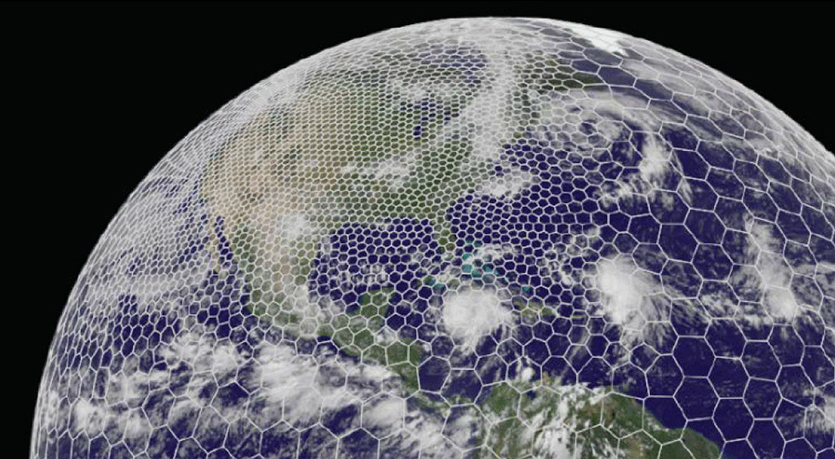
The latest GRAF® weather model improvements
Continue reading

Hope for the best. Prepare for the worst. EXPECT THE MOST LIKELY. Colonel USAF (Retired), Weather Officer and author, Bob Russell, breaks down how embedded meteorologists fuse weather data to understand how solar activity to acoustic signatures to moon illumination will affect a mission…and turn it into a tactical advantage en route to complete victory.
Read about our solutions for Government & Defense to learn how The Weather Company provides actionable environmental insights from the operations center to the tactical edge.
You know, as weather guys, we’re feeling pretty good about it — we prevented, you know, a bunch of important people from flying through a hail storm at low level in a helicopter, which generally turns out bad for a host of reasons. Right, I got out to Point B — was on the bus at the time with them and the staff as we were doing it. And it was the best ass-chewing I ever got.
Everybody knows about the weather — weather’s weather for everybody. I mean, if you read Sun Tzu, most of us have, right? I mean, it’s right up there in front: “Know yourself, know your enemy, and your victory will be certain. Know the terrain and know the weather, and your victory will be complete.”
For context, you can’t just go to the Iraq Weather Channel and say, “Hey, you know, what’s the forecast over there?” That’s not how it works, right? When you’re operating, you know, halfway around the world and you’ve got three observations for the whole country, it’s kind of hard to make a forecast without fusing a lot of data types. One of the big reasons to have a weather guy embedded with a unit is because you can make a guess as to what the weather’s going to be by looking at a lot of data, but you don’t know what it is unless you have somebody there.
You know, whether it’s solar weather — is that a legitimate environmental impact you would expect from a geomagnetic storm, or is that somebody messing with some of our on-orbit assets? You got to forecast the altimeter, the pressures, the temperatures. Visibility is specified in miles. Eye strain’s another good one, right? You know, the percent illumination on NVGs. Understand the wind, understand the air density. And if you’re going on helicopters, you’re going to be heard from a mile out, or under these conditions you’re going to be heard from four miles out. What can you live with? You know, which guy on your staff knows how to tell the difference? And again, you got to do both sides. You got to do the impacts on the bad guys, impacts on the good guys. What works to your advantage, then plan for that.
Without saying where or when, instead of doing helicopters in good weather, we chose a course of action that was: do a ground assault in bad weather. Took two days to do something on the ground, and after a second day, a rainy vehicle assault up. Moving through the bad weather, knowing the bad guys were going to be hunkered down, trying to stay dry. They’d be less vigilant, less prone to go out in the weather, and even when they do, they’d be in a hurry and paying less attention to stuff. Very little to deal with — bad guys were tired of being wet, tired of being sucky, and they didn’t put up much of a fight.
That’s why people come to us. The forecast is a means to an end. You know, you plan for the worst, hope for the best, and expect the most likely.
Let's talk
To learn more about our integrated weather planning, visualization, and execution platform for government and defense, contact our experts today.
Contact us