
The latest GRAF® weather model improvements
Continue reading

Subscribe
We’re glad you’re here! Subscribe today to receive expert insights, event details, and product news by email.By signing up, you consent to receiving communications from The Weather Company. You can unsubscribe anytime here or by clicking the unsubscribe link in each email. To learn more about how we handle your data, visit our privacy policy.
Key takeaways
- Predictive weather intelligence is becoming a critical part of modern airport and airline ground operations.
- Real-time lightning alerting and synchronized situational awareness help ground operations teams maintain safety while reducing unnecessary ramp closures.
- Unified operational visibility across mobile crews, duty managers, and network operations centers supports faster, more confident decision-making during weather disruptions.
- AI-driven insights and network-level weather visibility help aviation leaders anticipate operational impacts before disruptions escalate.
- Maverick Ground Ops™ combines high-fidelity alerting, predictive intelligence, and aviation forecasting expertise to help airports and airlines improve operational resilience.
A summer thunderstorm is building 20 miles from the airport. Ramp crews are monitoring lightning alerts. Duty managers are juggling gate changes. Airside operations and FBO teams are tracking incoming traffic to manage capacity and ground service equipment windows. In moments like these, every minute matters.
For airport and airline ground operations leaders, weather has always been part of the job. But today’s operational environment demands more than reactive monitoring. Teams need synchronized visibility, faster situational awareness, and predictive insights that help them act before disruptions escalate.
Introducing Maverick Ground Ops™: a modernized, situational awareness solution built to help airlines and airports move from fragmented weather workflows to unified, predictive operations.
The risks of siloed airside visibility
When legacy systems lack real-time synchronization, even the slightest disconnect can create significant operational friction. That fragmentation slows response times and creates avoidable confusion during irregular operations (IROPS). The operations center may see one set of weather alerts while ramp agents receive different information on mobile devices – or no information at all.
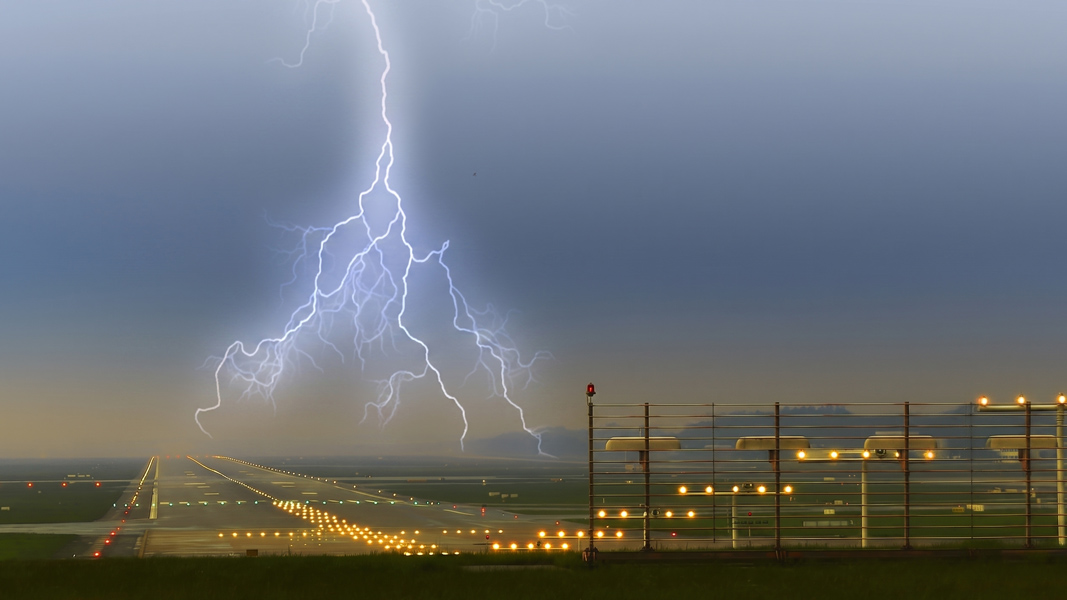
Lightning is one of the clearest examples of this hazard.
Ground operations managers face constant pressure to protect crews while minimizing unnecessary ramp closures. Close the ramp too late, and safety risks rise. Keep it closed too long, and delays cascade through the network, impacting turn times, gate availability, crew schedules, and passenger experience.
The challenge is rarely a lack of weather data. It’s a lack of contextual, operationally relevant intelligence delivered consistently across teams. Operating from disconnected systems means vital weather alerts can slip through the cracks. This airside fragmentation forces teams to work reactively, creating avoidable confusion during critical severe weather events and delaying the precise coordination needed to protect passengers and personnel.
One operational picture from the ops center to the ramp
Maverick Ground Ops was designed as an enterprise-grade SaaS platform with mirrored web and mobile functionality, helping everyone from duty managers to ramp leads access the same operational intelligence in real time.
That shared visibility becomes especially important during rapidly evolving weather events. A network coordinator may need a high-level risk outlook view of weather impacts across multiple hubs. Meanwhile, a station manager may need localized lightning proximity alerts and predictive insights into surface movement disruptions. Both perspectives matter. Both need to stay synchronized.
The shift from reactive monitoring to predictive operations
Ground operations leaders don’t just need to know what the weather is doing right now. True efficiency requires visibility into what weather conditions will mean for the operation 15, 30, or 60 minutes ahead.
Maverick Ground Ops was designed around that operational reality, converting raw predictive forecasting into clear operational intelligence. For ground operations teams, that translates into more confidence around cross-team decisions like:
- When lightning threats are approaching the airfield.
- When the trailing strike window has elapsed to safely declare an all-clear and reopen the ramp.
- Whether incoming convection could reduce arrival and departure rates.
- How FBOs can safely optimize fueling and staging timelines during volatile weather.
- Which hubs and stations across the network require immediate operational prioritization.
Inside the platform: Tools built for synchronized decision-making
To turn raw weather data into unified, actionable team intelligence, Maverick Ground Ops embeds key capabilities directly into the daily workflow:
- High-fidelity lightning alerts: Real-time proximity warnings delivered via visual banners, audio signals, and push notifications synched across web and mobile devices.
- Configurable safety range rings: Dynamic, color-shifting visual rings (Caution and Warning) configured globally using ICAO codes to eliminate localized setup errors.
- Global Surface Movement (GSM) mapping: Clear, interactive visual tracking of airside assets paired with critical surface-level context with the Smart NOTAMs overlay. .
- AI-driven predictive modeling: Built-in Terminal Airspace Convection Risk (TrACR) and Airport Arrival Rate (AAR) insights to project surface and capacity impacts up to an hour ahead.
- Risk outlook dashboard: A color-coded, network-wide weather risk summary, so you know where to position aircraft and resources across hubs and stations for faster recovery.
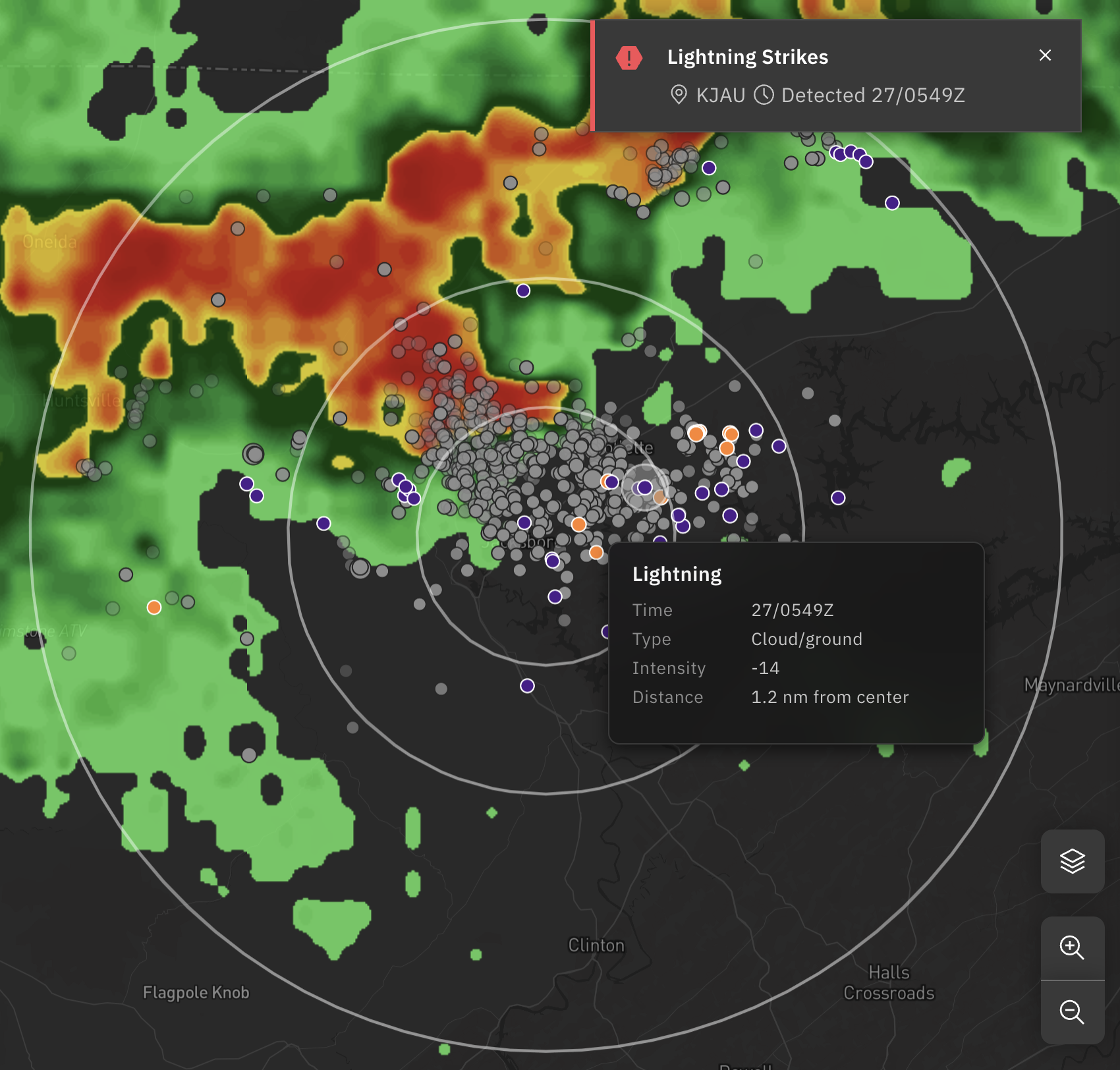
Interactive mapping visualizes cloud-to-cloud and cloud-to-ground temporal strikes.
Precision matters when every minute impacts throughput
Operational resilience depends on timing. A ramp closure that extends even 10 or 15 minutes longer than necessary can ripple across an entire hub operation. Aircraft utilization, baggage movement, gate sequencing, and staffing efficiency all begin to compress. That’s why forecast accuracy and update frequency matter so much in aviation environments.
Human expertise and rapid-refresh data layers
Our forecasting approach combines proprietary modeling, AI-enhanced forecasting systems, and human expertise to deliver continuous weather intelligence. Designed for the pace of airside operations – where conditions can shift in minutes – Maverick Ground Ops is supported by high-resolution GRAF technology, Forecasts on Demand (FOD), and rapid-refresh updates across precipitation, wind, and other critical parameters. For lightning specifically, alerts can reach operators within 12–30 seconds of a strike, giving ramp teams the reaction time they need to make safe, confident decisions.
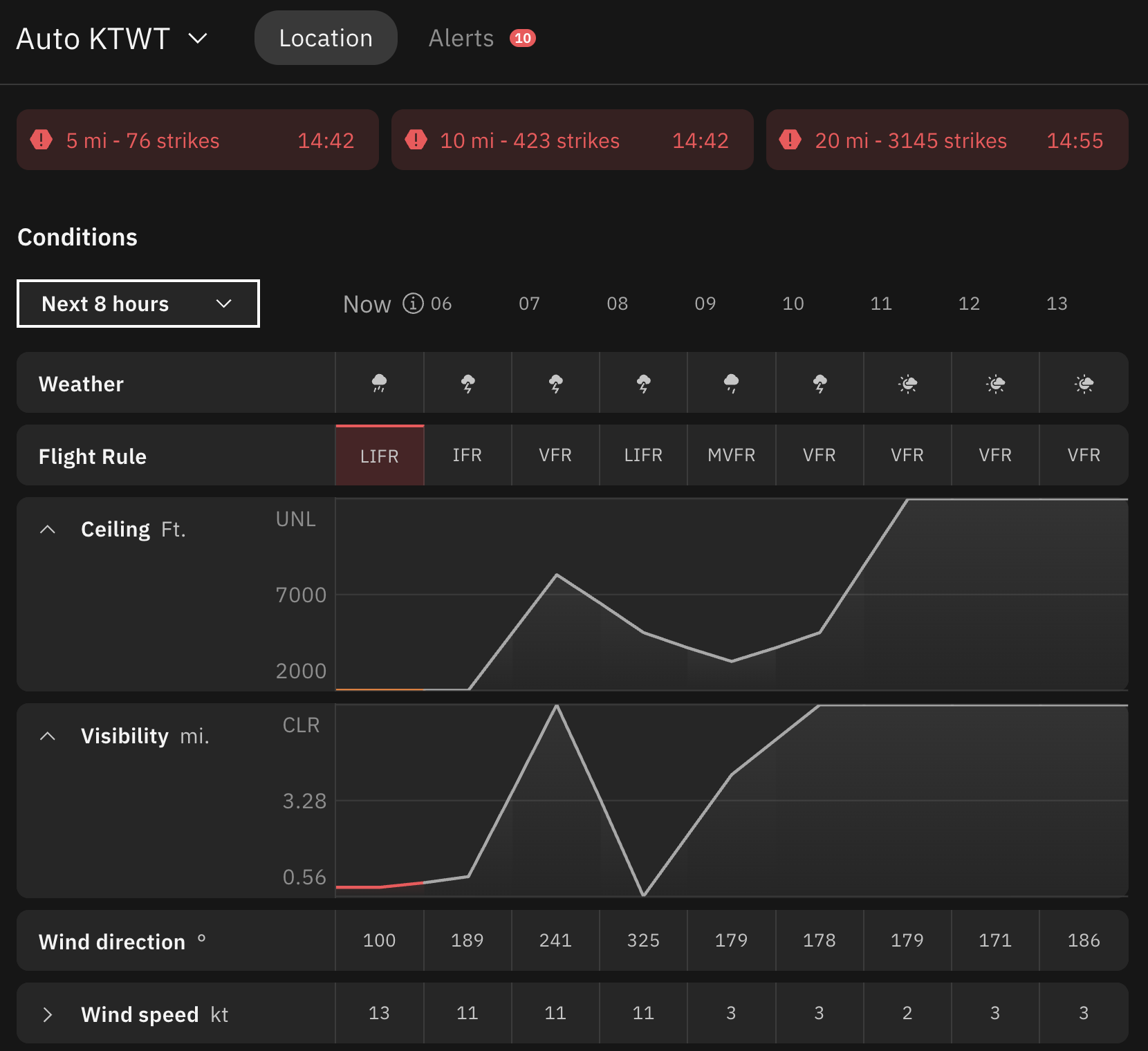
With Forecasts on Demand (FOD), users can quickly anticipate operational impacts.
Weather intelligence is becoming a competitive operational advantage
As aviation operations become more interconnected, weather intelligence is no longer just a safety function. It’s becoming a core operational performance driver. Backed by nearly 30 years of specialized aviation forecasting expertise, Maverick Ground Ops is built to deliver exactly that. By combining high-fidelity alerting, AI-driven insights, and mirrored web-and-mobile SaaS capabilities, the tool helps airlines, airports, and FBO footprints move faster, coordinate better, and protect their personnel with total confidence.
Airlines, airports, and FBO footprints that can better anticipate weather impacts may gain a distinct advantage in:
- Safeguarding personnel: Empowering safety officers and ground managers with real-time, context-specific thresholds to protect crews without manual guesswork.
- Maximizing throughput: Keeping aircraft, baggage, and fueling operations moving efficiently by confidently tightening operational windows.
- Reducing unnecessary ramp closures: Utilizing high-fidelity alerting to minimize cascading network delays and eliminate the cost of over-alerting.
- Optimizing turn times: Synchronizing web-to-mobile workflows so ramp leads and station managers stay completely aligned.
- Unified network resilience: Giving global network coordinators and executive leadership a single risk outlook view to prioritize resources across an entire footprint in seconds.
The ability to move from reactive response to predictive coordination may increasingly separate resilient operations from disrupted ones. That’s why platforms like Maverick Ground Ops are focused not only on visibility but operational foresight. Because if you can see operational impacts developing before they escalate, your teams have more opportunities to act decisively.
The future of ground operations is connected and predictive
The mission hasn’t changed — maximizing airside throughput with a proactive safety posture remains paramount. The difference is that now, modern aviation operations teams have the synchronized airside awareness and predictive network visibility to outpace disruptive weather before it impacts the network.
View the Maverick Ground Ops virtual launch recording to see how predictive weather intelligence is helping aviation operations move faster, coordinate better, and maintain safety across the network.
Let's talk
Don’t let the next storm catch your network off guard. Request a demo today to see how our airside airport operations software can deliver real-time, situational awareness and modernize your airline.
Contact us