
Weather intelligence for the future: Crafting a strategic enterprise approach to changing environmental conditions
Continue reading

Key takeaways
- U.S. agriculture is navigating a “bridge” period in 2026, relying on federal assistance to offset high input costs and negative margins.
- Cumulative weather losses reached $20.3 billion in 2024, but the hidden cost is equipment damage and soil compaction from mistimed field operations.
- The Weather Company’s APIs provide hyperlocal precision, enabling proactive protection of machinery and precision yield management.
- Strategic weather intelligence can help reduce operating costs and protect against the “uncovered loss” gap that insurance cannot fully bridge.
In 2026, predictability is a relic of the past. As agricultural leaders navigate shifting trade policies and volatile weather, the margin for error has hit zero. Success now depends on transforming weather from a source of uncertainty into a strategic asset by integrating high-fidelity weather forecast APIs directly into your operational DNA.
For large-scale farm operators, the mission has evolved. It’s no longer enough to monitor the skies; you must proactively manage a high-stakes portfolio of environmental and economic risks where a single mistimed decision can cost millions. Implementing precision agriculture strategies is no longer optional — it is a requirement for survival.
The economic weight of the volatility tax
The financial toll of weather is a line item that can break a balance sheet. According to the American Farm Bureau Federation (AFBF), weather-related disasters caused over $21.9 billion in crop and rangeland losses in 20231 and an additional $20.3 billion in 2024.2
Critically, over $9.4 billion of those losses were not covered by insurance.3 While the USDA’s $11 billion Farmer Bridge Assistance program4 provides a temporary shield, it cannot fully offset the compounding pressures of 2026:
- A 10% spike in equipment repair costs: Farmers are forced to extend the life of aging fleets while battling record inflationary pressure on parts and service.5
- A 46% surge in farm bankruptcies: Multi-year climate strain has pushed Chapter 12 filings to their highest level in years.6
This underscores the urgent need for robust agricultural risk management to protect the bottom line.
Why precision agriculture requires precision data
The precision agriculture market is projected to reach $10.54 billion this year.7 This explosive growth isn’t just about cool tech; it’s a response to the rising costs of fertilizer, fuel, and labor. By adopting precision farming techniques, enterprises can move away from “blanket” farming to site-specific management.
Leading farm management software now uses GPS-guided machinery and IoT sensors to apply the exact amount of seed or fertilizer needed for every square meter of a field. However, this high-cost hardware is only as effective as the data feeding it. If your weather data API isn’t providing minute-by-minute updates, your precision agriculture hardware is just an expensive guess. To achieve true crop yield prediction accuracy, the “brain” of the operation must be as sophisticated as the machinery.
Find out why top-performing enterprises trust us for weather intelligence that moves business forward
Read the white paperHardening your yield against climate volatility
Protecting the crop requires more than a standard forecast; it requires agronomic intelligence. When your software provides site-specific updates via a real-time weather API, you move from a reactive posture to a defensive one that hardens your yield against a changing climate. Industry research shows that precision weather data can yield:
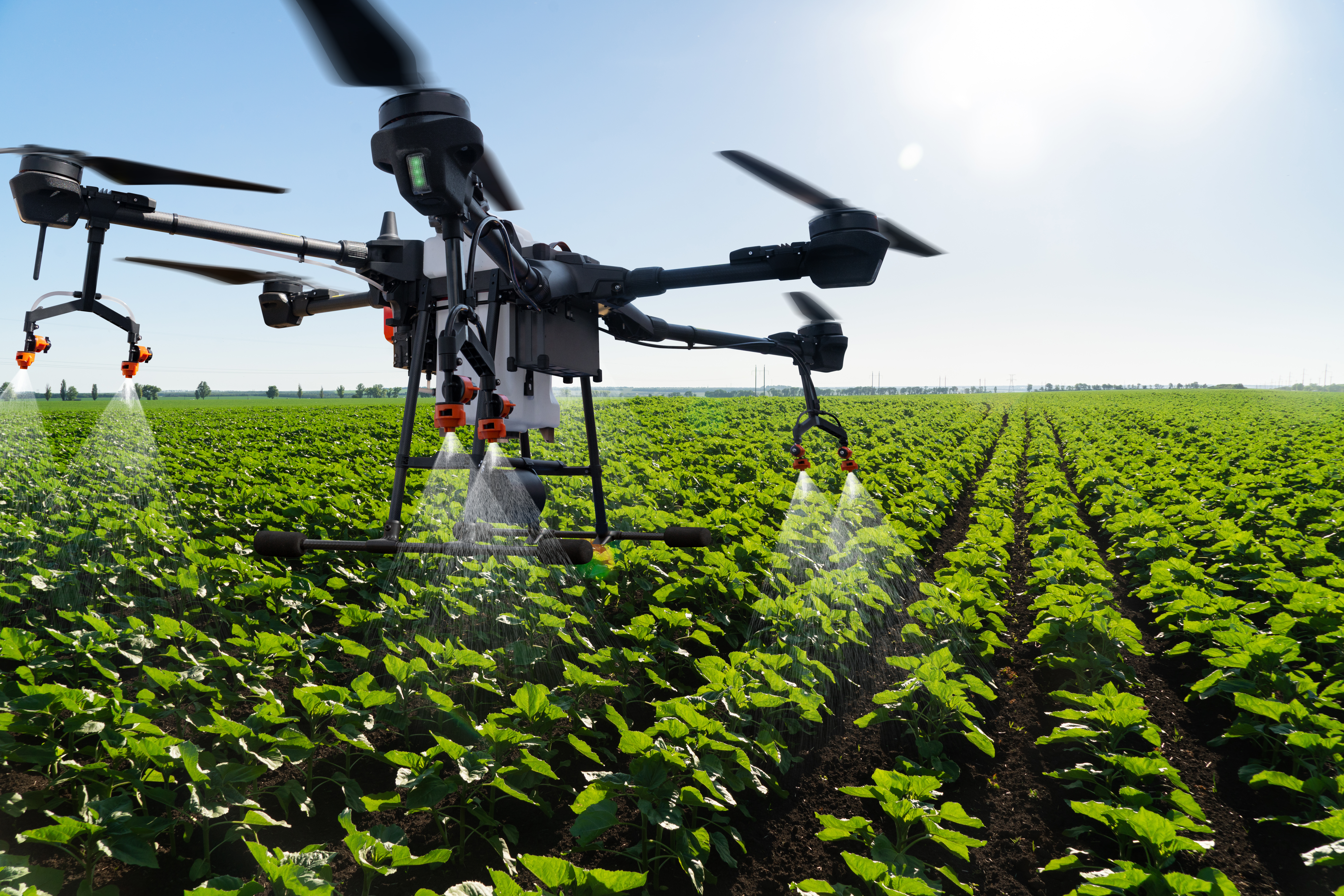
- Optimized spray windows: Wind speed and humidity APIs inform application timing so that expensive chemicals stay on the crop and don’t drift, improving efficacy by up to 15%.8
- Smart irrigation: By integrating Evapotranspiration (ET) data, your irrigation pivots can automatically skip cycles before predicted rain — boosting water efficiency by 40–60%9 and improving crop yields by up to 30%10 while preventing nutrient leaching and soil degradation.
- Pest and disease nowcasting: Using growing degree days and moisture data, our APIs flag the exact windows that trigger fungal outbreaks. This helps to enable surgical, preventative spraying rather than costly “blanket” applications.11
Protecting your high-value assets
In 2026, the real-world payoff of an accurate weather data API is measured in asset protection. Through weather data integration, you gain tools to help avoid common causes of multi-week operational shutdowns:
- Equipment damage: Real-time alerts for flash flooding or high-intensity hail allow operators to move expensive fleets to safety before disaster strikes.
- Soil compaction: Operating heavy equipment on waterlogged soil causes long-term yield decline. Our soil moisture indices tell you exactly when a field is “trafficable,” preventing permanent soil compaction.12
- Engine and component wear: By scheduling operations during optimal temperature windows, you reduce heat-load on engines, lowering long-term maintenance costs for your most expensive assets.
Why the world’s leading agri-tech firms choose The Weather Company
When you’re managing millions of acres and billions in equipment, “good enough” data is a liability. The Weather Company’s APIs are built for the level of scrutiny required by enterprise-scale agriculture:
- Unmatched accuracy: We are nearly 4x more likely to be the most accurate than our closest competitor13 so that your field-level decisions are based on reality, not regional averages.
- Global scale & reliability: Our enterprise API infrastructure is designed to support mission-critical autonomous fleets and global supply chains without interruption. We power over 200 billion API calls per day with a guaranteed 99.95% uptime SLA.
- REST weather API flexibility: Our AI-driven WxMix technology delivers high-resolution insights that are easily integrated into any modern software stack.
Performance-first practices for scalable, accurate, weather data delivery.
Get your copyEfficiency is the new growth
The outlook for 2026 is clear: efficiency is the priority. For those committed to climate-smart agriculture, this means using every available data point to mitigate risk. Stop treating weather as a source of uncertainty. By embedding world-class weather APIs into your systems, you protect your crops, your equipment, and your bottom line.
Ready to see how weather data from the world’s most accurate forecaster14 can protect your yield? Start a free trial of The Weather Company Data APIs today.
Let's get started
Contact our experts today to discover how Weather Data APIs can empower your decision-making and strengthen your business resilience. Let us help you transform weather data into a strategic asset.
Contact usFrequently asked questions
Hyper-local weather data provides kilometer-level precision, whereas public stations are often at distant airports. The Weather Company uses over 390,000 global stations (191,000 in the U.S. alone) to help calibrate your irrigation scheduling and harvesting decisions to the exact conditions of your specific soil.
Weather APIs provide high-fidelity indices like Growing Degree Days (GDD) and Evapotranspiration (ET). Integrating these into automated systems allows agronomists to predict crop maturity with precision and optimize irrigation cycles, typically reducing energy-intensive pumping hours by 15–20%15 while simultaneously preventing nutrient runoff.
Yes, weather APIs for agriculture flag high-risk windows for pests and fungal infections based on temperature and moisture. This allows agricultural enterprises to shift from broad, reactive chemical applications to targeted, preventative treatments.
Integrating a REST weather API requires standard RESTful protocol support and JSON parsing. For enterprise-scale operations, prioritize providers with a 99.95% uptime SLA and high request limits to handle global fleet management.
Related resources

1 AFBF Market Intel, Major Disasters and Severe Weather Caused Over $21 Billion in Crop Losses in 2023, February 2024
2 3 Indiana Farm Bureau/AFBF, Analysis shows that in 2024, farmers lost $20.3 billion to weather disasters, March 2025
4 USDA, USDA Announces Enrollment Period for Farmer Bridge Payments, February 2026
5 AFBF Market Intel, Declining Farm Economy Continues to Pressure Profitability, October 2025
6 AFBF Market Intel, Farm Bankruptcies Continued to Climb in 2025, February 2026
7 The Business Research Company, Precision Agriculture Global Market Report 2026, February 2026
8 MDPI Agriculture, A Review on Spraying Efficiency and Pesticide Drift Control, April 2025
9 10 PMC/NCBI, The role of modern agricultural technologies in improving agricultural productivity and land use efficiency, September 2025
11 Climate.ai, Pest and Disease Early Diagnosis: Using AI to Optimize Inputs and Protect Yields, November 2025
12 SDSU Extension, Accounting for Soil Wetness Prior to Conducting Farm Operations to Minimize Compaction, April 2024
13 14 ForecastWatch, Global and Regional Weather Forecast Accuracy Overview, 2021-2024, commissioned by The Weather Company
15 Intel Market Research, Irrigation Control Systems Market Outlook 2026-2034, February 2026
Key takeaways
- Weather data is becoming a foundational input for smarter planning and decision-making across industries.
- Cities, logistics providers, and energy companies are integrating weather intelligence to improve efficiency and resilience.
- AI and APIs are transforming raw weather data into actionable insights within business systems.
- The Weather Company enables organizations to move from reactive to predictive operations through real-time data solutions.
Try naming a business that isn’t impacted by weather. Go ahead – really pressure test it. Weather touches every corner of the global economy. Whether it’s a farm, a freight company, a fashion brand, or even a software firm with a fully remote team, weather finds a way in.
Yes, even in sectors that feel “weather-proof,” its influence shows up in unexpected ways. That remote software firm? A localized heat wave or severe storm can strain regional power grids, risking the uptime and productivity of a distributed workforce. Your data center? Temperature spikes can strain the cooling systems. Your employees? Sunlight levels can affect human cognition and productivity.
Accepting that weather impacts your business is the first step; building resilience against it is the second. This shift from reactive to proactive requires a sophisticated pipeline that translates atmospheric physics into operational logic.
How do organizations turn weather data into actionable insights?
At The Weather Company, every real-world application starts with a rigorous process that transforms raw environmental signals into strategic intelligence:
- Collection: More than 75 billion terabytes of weather data are ingested daily, sourced from satellites, radar mosaics, aircraft, government feeds, and a global network of ~390,000 personal weather stations, with dense urban and suburban coverage.
- Normalization: This raw data is cleaned, quality-controlled, and standardized to maintain consistency across inputs. It’s then structured into formats ready for modeling and distribution.
- Integration: APIs built for enterprise-scale operations – supporting billions of requests per day – deliver this data into systems such as ERP platforms, IoT networks, digital twins, and custom applications.
- Application: AI-powered technologies like WxMix synthesize over 100 global forecast models, including The Weather Company’s own GRAF® system. These models are continuously optimized for every location and weather variable, surfacing predictive insights that businesses can act on in real time. Independent evaluations rank our forecasts #1 in accuracy across both global and regional scales.1
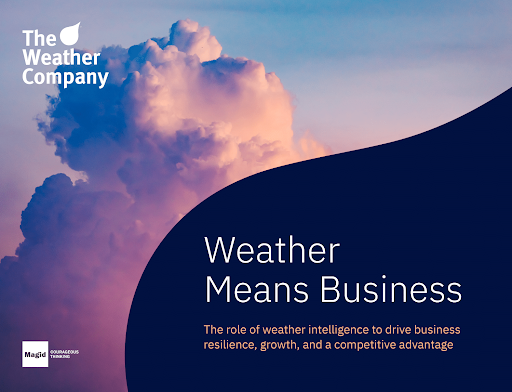
Download our free and exclusive Weather Means Business report to learn how smart businesses are transforming their enterprise strategies.
Get your copyHow is weather data driving innovation across industries?
Across industries, businesses are integrating weather intelligence more deeply than ever to unlock value and build long-term resilience:
- Aviation: Weather is responsible for roughly 75% of all flight delays,2 and airlines depend on real‑time weather insights to optimize routing, reduce fuel use, and enhance safety. To combat this, more than 44,000 flights in the U.S. alone3 rely on weather forecasts every day to plan safer, more efficient routes, reduce fuel burn, and minimize disruptions.
- Energy & utilities: In summer 2025, U.S. electricity demand across the Lower 48 states set new peak records twice, reaching 759,180 megawatts as hot weather drove up cooling needs – nearly 2% higher than the prior year’s peak.4 High‑resolution weather intelligence helps utilities anticipate demand swings, balance renewables, and plan grid operations more effectively under weather‑driven stress.
- Agriculture: Across Europe, extreme weather causes over €28 billion ($31.9 billion) in annual losses for farmers, according to EU-backed analysis.5 Flooding, drought, heatwaves, and storms continue to disrupt crop yields, supply chains, and agricultural productivity. To mitigate these risks, producers are increasingly automating their resilience. Today, 35% of global weather API requests support real-time decisions on planting and crop health,6 allowing growers to integrate hyper-local soil and atmospheric data into their daily operations.
- Retail: With over $1 trillion in global sales influenced by weather,7 brands use seasonal and localized weather signals to optimize promotions, staffing, and inventory, down to the store level.
- Insurance & finance: Global insured losses from natural catastrophes were projected to reach $107 billion in 2025, with the U.S. accounting for a staggering 83% of that total.8 As wildfires and severe storms push losses higher, insurers are turning to high-resolution weather forecasts and risk modeling tools to better price policies, reduce exposure, and support more resilient coverage strategies.
- Construction: Weather regularly disrupts construction timelines – damaging materials, delaying crews, and forcing costly rework. In 2024 alone, the U.S. faced 27 separate billion-dollar weather disasters, totaling more than $182.7 billion in losses.9 By integrating forecast data into scheduling tools, project teams can plan around conditions like rain, wind, and heat to reduce downtime and stay on track.
- Sports & entertainment: Weather and climate extremes are increasingly disrupting major sports and outdoor entertainment events worldwide. In 2025, severe conditions such as wildfires, high winds, and heat forced cancellations and rescheduling of professional competitions (including PGA golf events and marathons), affecting revenue and the fan experience in an industry valued at $2 trillion.10 Organizers are integrating real‑time weather intelligence to make safer go/no‑go decisions, adjust schedules, and protect athletes, spectators, and operations.
The rise of the “Shadow CEO”
This cross-industry momentum reflects a fundamental shift: weather is no longer just a background disruption; it is the “Shadow CEO” of the global economy. It quietly influences shipping routes, energy costs, and staffing needs every single day.
%
of executives say weather significantly impacts their operations11
%
plan to increase or maintain their investment in weather intelligence12
This rising awareness is shifting weather from a background disruptor to a boardroom priority.
What’s next for data-driven problem solving in weather and climate intelligence?
As weather volatility intensifies, businesses are moving beyond basic forecasting and embracing climate intelligence – a more comprehensive approach that layers in air quality, environmental data, and AI-driven insights.
- Generative AI is unlocking new ways to simulate risk, test mitigation strategies, and optimize business continuity plans, before disruption occurs.
- Open data collaboration is expanding, with public and private sectors sharing environmental intelligence to advance climate resilience at scale.
- AI-ready datasets from The Weather Company are purpose-built for integration into digital twins, planning tools, and real-time operations systems. These integrations help organizations anticipate disruption rather than simply react to it.
And business leaders are taking note: in a recent study, 100% of surveyed executives agreed that weather intelligence gives their business a competitive edge.13 When data becomes both scalable and strategic, weather shifts from a source of risk to a driver of opportunity.
Built for developers: Scalable, high-impact weather data APIs
APIs are at the heart of it all, making it easy for developers and data teams to bring high-resolution weather insights straight into the tools they already use. Add AI into the mix, and suddenly you’re spotting patterns – like a storm that could delay shipments or a cold snap that’ll drive up energy demand – so businesses can stay one step ahead.
The Weather Company offers a robust portfolio of enterprise-grade weather APIs designed to deliver real-time, forecast, and historical weather intelligence at scale. Trusted across industries, our APIs support over 200 billion calls per day with enterprise-grade performance, low latency, and secure integration.
These RESTful APIs enable access to:
- Hyper-local forecasts (hourly, daily, and 15-minute “nowcasts”)
- Historical conditions and almanac data for trend analysis
- Severe weather alerts from trusted government sources
- Environmental and lifestyle indices like air quality, UV risk, pollen, and even use cases for driving difficulty, power disruption, and travel comfort
- Marine and aviation insights, geospatial mapping layers, and current site-based conditions for any latitude/longitude
These APIs are built for flexible implementation – whether you’re powering operational dashboards, IoT platforms, public safety alerts, or mobile apps.
A success story in weather intelligence
 Want to see how organizations are already using weather data to solve complex challenges? One example is CAA Club Group, which worked with The Weather Company to improve road safety and operational readiness using real-time weather insights.
For a broader look at how accurate forecasts are driving measurable impact across transportation, energy, and public safety, read our Weather Means Business report.
Ready to build a weather-resilient business?
Don’t just react to the elements — plan for them. Start your free trial to explore our enterprise-grade weather data and start making smarter, data-driven decisions.
Get started
Contact our experts today to discover how Weather Data APIs can empower your decision-making and strengthen your business resilience. Let us help you transform weather data into a strategic asset.
Contact usRelated resources



1 ForecastWatch, Global and Regional Weather Forecast Accuracy Overview, 2021-2024, commissioned by The Weather Company
2 Federal Aviation Administration, FAQ
3 Federal Aviation Administration, Air Traffic By The Numbers
4 U.S. Energy Information Administration, U.S. electricity peak demand set new records twice in July, 2025 (data from EIA’s Hourly Electric Grid Monitor)
5 Reuters, Extreme weather costs EU farmers €28 billion per year, EU says, May, 2025
6 The Weather Company’s own internal data
7 National Retail Federation, Climate-proofing retail: How weather and climate affect retail sales, 2024
8 Reuters, Global insured catastrophe losses set to hit $107 billion in 2025 report shows, December 2025
9 NOAA National Centers for Environmental Information, U.S. Billion-Dollar Weather and Climate Disasters, 2024
10 Reuters, How climate change is putting sport on a sticky wicket, December 2025
11 12 13 Weather Means Business report, Magid for The Weather Company, October 2024
Key takeaways
- The Weather Company’s forecast accuracy is backed by ForecastWatch data, showing it’s nearly 4x more likely to be the most accurate globally than any competitor.
- Reliable weather intelligence depends on continuous updates, hyperlocal granularity, and rigorous third-party validation.
- The GRAFTM model, WxMix ensemble, and Human-over-the-Loop (HOTL) process combine AI with expert insight to produce real-time, on-demand forecasts.
- Weather APIs deliver data with 15-minute resolution, helping businesses across sectors act faster and reduce disruption risks.
- Integrating weather intelligence with enterprise systems like IoT, finance, and logistics drives smarter cross-functional decision-making.
Weather is one of the most complex, high-volume data streams organizations can leverage – and one of the easiest to get wrong. For operations leaders in logistics, energy, and agriculture, the gap between an acceptable weather data model and a truly accurate one comes down to the precision, freshness, and validation of the underlying data.
What was once a general prediction must now become a location-specific, real-time decision input. To get there, businesses are turning to proprietary AI forecasting systems layered with human insight — systems capable of delivering resolutions as detailed as 3.5km while keeping pace with rapidly changing conditions.
Understanding how weather data is structured and applied reveals why precision, validation, and granularity now drive competitive advantage.
Why does weather data matter?
Weather’s impact is constant, but how businesses respond to it is changing. Companies are shifting from reactive strategies to proactive planning driven by high-resolution, real-time weather data.
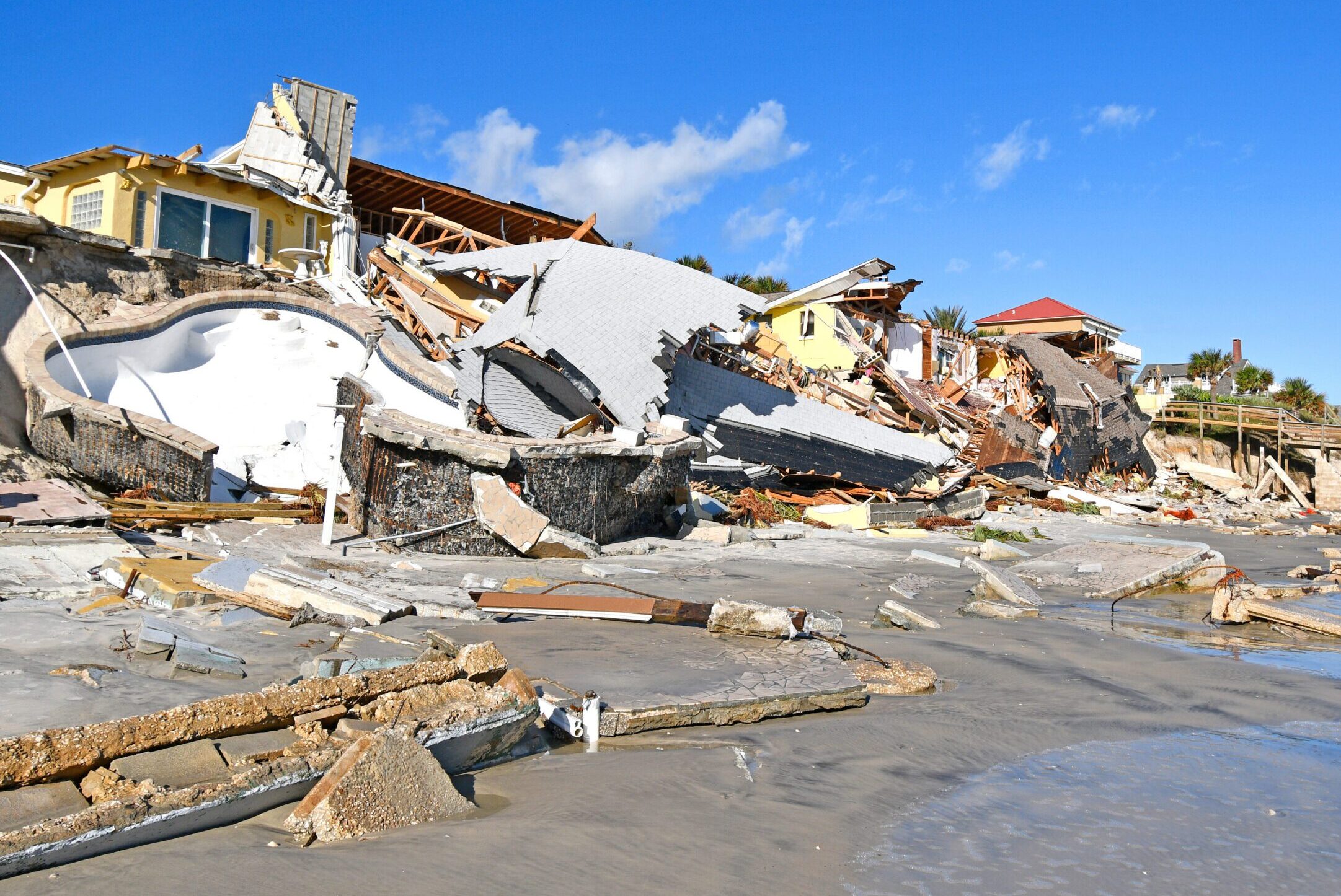
The cost of inaction is steep: In 2023 alone, weather-related disruptions caused over $90 billion in damages across U.S. industries1 – a number that’s pushing more businesses to focus on resilience through proactive weather planning.
As climate variability increases, highlighted by 28 separate billion-dollar weather and climate disasters in the U.S. in 2023 alone,2 so does the need for predictive, adaptable tools. Weather intelligence is now a core component of decision-support tools across sectors like energy, agriculture, and logistics.
How is weather data structured and organized?
Understanding weather data starts with knowing its three main types:
- Real-time data – current observations from radar, satellites, and sensors
- Historical data – long-term climate patterns and trends
- Predictive data – forecast models that simulate future outcomes, including:
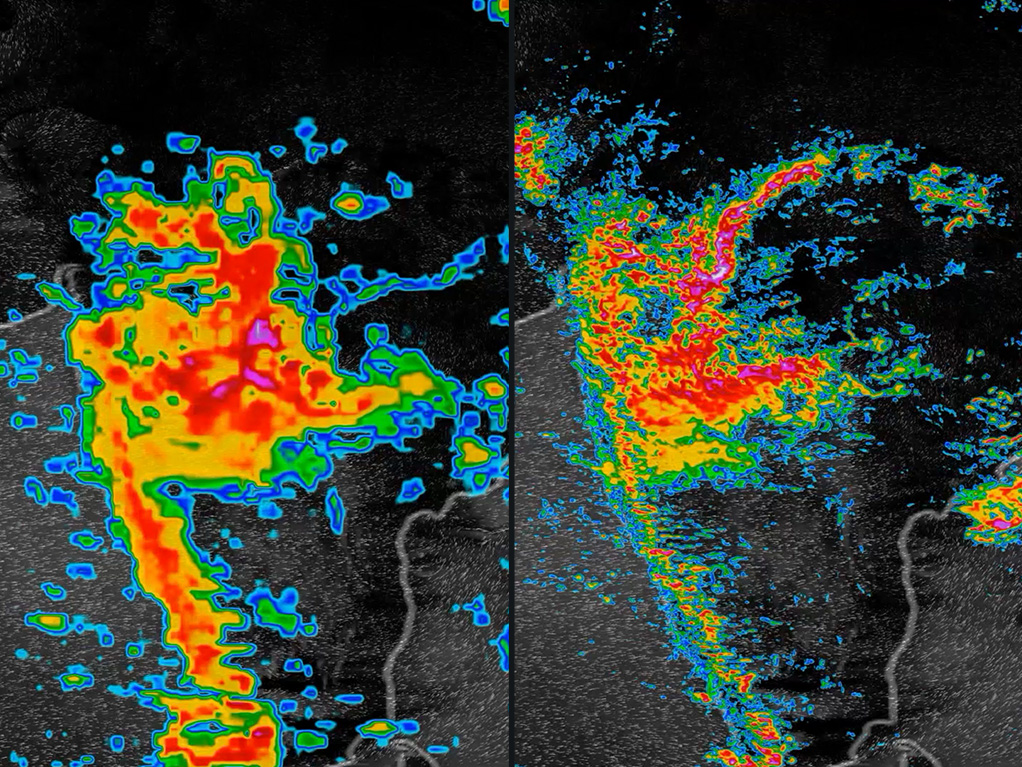
- GRAF® – A proprietary global model that delivers high-resolution forecasts as often as every five minutes, down to a kilometer level.
- WxMix – A continuously optimized blend of more than 100 weather models, customized per location, variable, and forecast window to maximize accuracy.
- HOTL (Human-over-the-Loop) – Oversight from 100+ expert meteorologists who refine AI-generated forecasts based on real-world conditions and operational context.
These tools allow enterprises to create forecasts that are on demand, location-specific, and AI-optimized in real time. That capability is made possible by advances in AI and weather technology.
How is weather data analyzed?
At The Weather Company, forecast accuracy is powered by more than automation. WxMix, our advanced multi-model ensemble, analyzes approximately 100 global weather models. Using AI, it synthesizes and optimizes inputs by location, parameter, and timeframe – maximizing accuracy where and when it matters most.
But it doesn’t stop there. Through Human-over-the-Loop (HOTL) intelligence, our team of over 100 expert meteorologists adds critical oversight so that forecasts are tweaked to reflect real-world complexities algorithms alone might miss. The result is a system that delivers real-time precision with the confidence of expert validation.
What defines reliable weather intelligence?
Not all data is created equal. The most reliable weather intelligence is:
- Accurate – validated against historical and current observations
- Granular – spatially and temporally precise
- Timely – updated continuously (not just 4x a day like legacy systems)
- Validated – tested by third-party accuracy audits

A ForecastWatch study found The Weather Company to be nearly 4x more likely to be the most accurate forecaster compared to the next-best weather forecast provider.3
Standard data vs. precision intelligence: A performance comparison
| Feature | Standard source | Precision source |
| Accuracy | Generalized estimates | Location-specific, validated |
| Granularity | Regional or hourly only | Hyperlocal, down to minutes |
| Timeliness | Updated 2-4x daily | On-demand, real-time updates |
| Validation | Minimal cross-checking | Multi-source & model verified |
| Uptime | Inconsistent delivery | 99.95%+ availability |
| Error handling | Manual lag fixes | Automated detection & failover |

Explore and evaluate a full range of APIs, free.
Start a free trial todayWhat turns weather information into intelligence?
Information tells you the weather is changing. Intelligence tells you what that change will cost and how much time you have to act.
At The Weather Company, that transformation happens through a refinement process that filters raw atmospheric data into signals that are specific, validated, and decision-ready. It starts with granularity – moving from broad forecasts to 3-kilometer, 15-minute updates that detect microclimates across a delivery network. Then comes validation, using a blend of over 100 models (WxMix) checked against real-world conditions from sensors, radar, and aircraft.
Contextualization adds historical insight – understanding how past weather patterns affect current risk, like black ice or power outages. Finally, human expertise enters the loop. Our meteorologists don’t just monitor model output; they translate it into actionable guidance, helping enterprises shift from reaction to optimization.
Together, this approach turns noise into signals and weather into a strategic input for smarter decisions.
Weather intelligence is most effective when it connects siloed enterprise systems. By combining high-resolution forecasts with IoT data, live inventory, and ERP platforms, organizations can build a digital twin of their operations. With that visibility, teams can model how future weather may affect supply chains, test response strategies in advance, and shift from reacting to planning.
How is weather data delivered?
Enterprise-grade weather data needs to be accessible, fast, and flexible. That’s why The Weather Company delivers insights via robust, scalable Weather Data APIs built to support real-time decisions across logistics, energy, insurance, and more.
Our APIs give you access to real-time, historical, and predictive weather data with industry-leading accuracy and sub-hourly updates, optimized for integration into your existing platforms. Start a free trial to experience the difference for yourself.
Why near-accurate isn’t accurate enough
If your current provider can’t clearly explain how their forecasts are built, validated, and applied, you may be optimizing against the wrong reality.
As weather becomes more volatile and business cycles more complex, operational success will hinge on forecast intelligence, not just awareness. The next competitive advantage won’t come from knowing the weather, but from engineering around it.
Get started
Contact our experts today to discover how Weather Data APIs can empower your decision-making and strengthen your business resilience. Let us help you transform weather data into a strategic asset.
Contact usRelated resources
1 2 NOAA National Centers for Environmental Information (NCEI) U.S. Billion-Dollar Weather and Climate Disasters (2025).
* 3 ForecastWatch, Global and Regional Weather Forecast Accuracy Overview, 2021-2024.
Every year on March 23, World Meteorological Day commemorates the founding of the World Meteorological Organization (WMO) and highlights the vital role meteorology has played in improving both daily life and long-term planning. It’s also a moment to reflect on how far the science of weather prediction has come and where it’s heading.
As we celebrate the 75th anniversary of the World Meteorological Organization in 2025, this year’s theme – “Closing the Early Warning Gap Together” – is more relevant than ever. As extreme weather events intensify, continued innovation in meteorology is essential.
The evolution of meteorology over these 75 years has been remarkable. In the 1950s, forecasts could barely predict 24 hours ahead with reasonable accuracy. Today, a five-day forecast is as accurate as a one-day forecast was in the 1980s.1 Hurricane track predictions have improved dramatically – the average three-day track error has decreased from over 300 miles in 1990 to less than 100 miles today.2
Now, artificial intelligence is taking the meteorological world by storm, and while it’s still early days, it shows immense promise when combined with foundational approaches and human expertise to solve some of the most exciting and challenging forecasting problems we face.
At The Weather Company, we’ve maintained an unwavering commitment to advancing meteorological science as the world’s most accurate forecaster.3 Through innovative technology and strategic partnerships, we’re striving to transform how people, businesses, and society understand, prepare for, and respond to weather.
Evolving our Global High-Resolution Atmospheric Forecasting System (GRAF)
A core component of our forecasting capabilities is the Global High-Resolution Atmospheric Forecasting System (GRAF), our proprietary weather modeling system that operates six times faster, updates six times more frequently, and has three times the resolution of competing models. This high frequency, high resolution approach helps detect sudden shifts in weather patterns anywhere around the globe, critical for people navigating day-to-day weather decisions as well as in industries like aviation, energy, and disaster response.
Developed in partnership with the U.S. National Research Foundation National Center for Atmospheric Research (NSF NCAR) and NVIDIA, GRAF plays a role in many of the most important forecast products and weather insights we deliver. Additionally, most improvements we make to GRAF are placed back in open-source, improving access to world-class forecasting capabilities for all.
Today, we are enhancing GRAF through a first-of-its-kind implementation of the Joint Effort for Data assimilation Integration (JEDI) data assimilation system in partnership with the University Corporation for Atmospheric Research (UCAR). This advanced approach significantly improves our ability to understand the current state of the atmosphere – the critical starting point for any forecast – by intelligently integrating a broader set of weather data and observations to paint a more accurate picture.
With JEDI, we will enhance our predictions and allow for improved early warnings of impactful weather, while also creating a stronger foundation to fuel the development of emerging AI methodologies.
New frontiers in AI
It’s impossible to discuss advancements in weather prediction without recognizing artificial intelligence’s transformative role. AI has been used in forecasting for decades, but today, a new breed of Deep Learning based AI models (DL-NWP) are showing the potential to improve the accuracy and granularity of predictions made by traditional models like GRAF.
One example of how this work is coming to life can be seen in our partnership with NVIDIA: together, we are developing a first-of-its-kind, kilometer-scale, AI-based numerical weather prediction model, trained with forecast data generated by GRAF.
AI also enables significantly more cost-effective forecast modelling. This efficiency opens the door to running not just one model at a time to make predictions, but hundreds or thousands, each with slightly different inputs or configurations, otherwise known as “ensemble forecasting.” The result is a comprehensive range of possible weather scenarios, rather than a single prediction, painting a much more complete picture of weather’s uncertainty. This ensemble approach, greatly enhanced by the advent of AI models, forms the foundation of what may be meteorology’s next great leap: probabilistic forecasting.
Beyond certainty: Probabilistic forecasting
Weather forecasts have traditionally been communicated with implied certainty: “Tomorrow will be 27°F with a 20% chance of snow.” This is known as deterministic forecasting, which provides a single, most-likely prediction of future weather.
Probabilistic forecasting changes the game, replacing single-value predictions with ranges and confidence levels of different outcomes. For example, if the 20% chance of snow mentioned above is associated with a blizzard that might pass nearby, the deterministic forecast may not give individuals the level of information they need to make important decisions. Probabilistic forecasting tells us more: while the most likely outcome is that the blizzard referenced above passes south of a certain location, there is still a 20% chance it will veer north and make a direct hit. And, if it does, there could be over a foot of snow, and even a 10% chance of two feet. Armed with that extra depth of information, one might make very different decisions, such as postponing a planned weekend drive to a time with less risk of hazardous conditions.
Beyond the implications for individuals, this approach transforms decision-making for business leaders. Imagine a shipping and logistics company responsible for transporting temperature-sensitive goods planning a cross-country shipment. A deterministic forecast might indicate a 60% chance of relatively benign weather posing little risk to that shipment. A probabilistic forecast might indicate the same, but also tell us there is a 30% chance of weather hot enough to impact the integrity of shipment and a 10% chance of temperatures that would result in a complete loss of that shipment. Knowing this, the company might choose to delay transport – even though the deterministic forecast indicates limited risk.
The potential applications go on and on:
- Aviation: Airlines can adjust fuel loads based on the probability of thunderstorms at the destination airport causing aircraft to circle around before landing.
- Agriculture: Farmers can make smarter decisions about irrigation and pest control timing based on accurate weather probabilities.
- Insurance: Providers can issue timely alerts to homeowners about impending hail or flooding based on customers’ tolerance to different levels of risk.
This approach acknowledges the inherent uncertainty in weather prediction by providing more nuanced, actionable intelligence for complex business decisions. The result is better risk management, resource allocation, and ultimately, competitive advantage. By embracing probabilistic forecasting, we aren’t just forecasting weather – we’re forecasting decisions, driven by data and fueled by AI, to create a more resilient future.
The power of partnerships: Advancing weather science together
No organization advances meteorology alone. Innovation thrives through collaboration, which is why we work with the brightest minds in science and technology to push the boundaries of weather forecasting. Our partnerships with UCAR, NOAA, NVIDIA, and numerous other scientific and technology organizations exemplify the collaborative spirit of this year’s World Meteorological Day theme and are absolutely core to the work we do every day.
As we pioneer the next generation of forecasts, our commitment remains unchanged: delivering the most accurate, science-driven weather information to help people, businesses, and communities around the globe make better decisions. On this World Meteorological Day, as we celebrate 75 years of progress, we also look ahead to the future, where advancements like probabilistic forecasting will empower society to navigate increasingly volatile weather patterns with greater confidence.
Ultimately, together with scientists and innovators worldwide, we’re shaping a world where weather resilience is stronger than ever.
Let's talk
To learn more about harnessing the power of weather to make better, more informed decisions across industries, contact our experts today.
Contact us1 Bauer et al., Nature, 2015
2 NOAA, 2023
3 ForecastWatch, Global and Regional Weather Forecast Accuracy Overview, 2021-2024, commissioned by The Weather Company
Related resources
Key takeaways
- More than 360 million people rely on The Weather Channel’s digital properties1 for decisions ranging from daily activities to major life choices, such as where to live and what vehicle to drive.
- Weather insights and data science offer businesses a competitive edge by enabling them to anticipate and influence consumer behavior and optimize operations.
- According to recent research, 100% of executives say weather intelligence can give their business a competitive edge.2
- Proactive weather strategies help businesses reduce environmental risks, capitalize on emerging revenue opportunities, and improve operational efficiency.
In an age where weather isn’t just small talk but instead, the headline, the impact of changing weather patterns on people and businesses is more significant than ever. From everyday weather conditions to extreme temperatures, the environment is now a critical factor driving strategic decision-making in everything from supply chain management to consumer engagement. As global temperatures continue to rise, businesses need to see the opportunity weather presents. At The Weather Company, we help businesses use weather intelligence to drive business resilience, growth, and competitive advantage.
Adapting at the speed of weather
We’ve all seen it. The world is witnessing unprecedented changes in weather patterns. This intensifying weather volatility is fueling more frequent extreme weather events and economic upheavals.
As a result, keeping tabs on the weather has made The Weather Channel digital properties a habitual touchpoint for over 360 million monthly average users1 worldwide. This widespread reliance shows the powerful influence of weather on consumer behavior. In 2023 alone, Adobe projected that weather would influence over $13.5 billion (about $42 per person) in U.S. e-commerce sales3 — the equivalent of an extra Cyber Monday.
The message is clear — businesses need to evolve from reactive to proactive, weaving weather data deeply into their strategic fabric.
Climate Week Spotlight
Thriving in the face of a changing climate
Sheri Bachstein, The Weather Company President, and Peter Neilley, The Weather Company SVP of Science & Forecasting Operations, share insights on how people and businesses can improve weather resilience in this Climate Week NYC 2025 interview.
The power of a weather strategy
So, what exactly is a weather strategy? A weather strategy is a savvy, data-driven approach that harnesses the power of cutting-edge weather data science and AI to optimize business processes, personalize marketing efforts, and gain an enterprise advantage. It’s about transforming weather from a risk factor into a strategic ally.
According to a recent research study of nearly 300 executives across the retail, CPG, pharmaceutical, insurance, and travel & tourism industries:
%
said that weather intelligence could give their company a competitive advantage2
%
believe that leveraging weather insights as a service provides greater value than relying solely on raw data2
%
say incorporating advanced weather analytics could enhance their ability to anticipate and respond to market fluctuations2
%
recognize enhanced weather insights as a powerful tool for driving revenue growth and reducing costs2
%
of pharma executives say using weather insights effectively can help them be better at their job2
%
of CPG executives will increase or continue their use of weather intelligence in the coming years2
Download our free and exclusive Weather Means Business report to learn how smart businesses are transforming their enterprise strategies with innovative weather intelligence.
Get your copyFuture-proof your business with The Weather Company
As businesses look to the future, integrating weather intelligence into long-term planning is a must. At The Weather Company, we offer unparalleled forecasting capabilities and weather intelligence that enable businesses to thrive in the face of changing weather patterns. With over 40 years of expertise in weather data science, we’ve become the world’s most accurate forecaster,4 a distinction that sets us apart from other providers. Our commitment to innovation and accuracy has earned us the trust of consumers and businesses around the globe.5
Beyond accurate forecasts, we provide scalable, proven solutions for consumers and businesses alike. Businesses tapping into these weather insights will be better positioned to anticipate consumer needs and tailor their offerings.
- Our weather intelligence platform and AI provide the precision and scalability your business process optimization needs to stay ahead.
- Weather Targeting enables advertisers to deliver personalized, relevant messaging that resonates with their audience in real time across the digital ecosystem.
- Premium consumer experiences across The Weather Channel digital properties help marketers engage with consumers at scale in meaningful moments to help them live healthier, safer, smarter, and happier.
A robust weather strategy isn’t just a nice-to-have; it’s essential. Let’s work together to create a weather strategy that drives your business forward.
1 360M monthly active users based on the average of the total monthly (non-unique) users for Jan – June, 2023 across The Weather Company digital properties and consumer products (weather.com, The Weather Channel app, Weather Underground app, wunderground.com, Storm iOS app,) according to internal data
2 Weather Means Business report, October 2024, Magid for The Weather Company
3 Adobe Digital Economy Index 2023
4 ForecastWatch, Global and Regional Weather Forecast Accuracy Overview, 2021-2024, commissioned by The Weather Company
5 According to a Morning Consult Q1 2024 survey, The Weather Channel brand was the #13 most trusted brand in the U.S. The surveys were conducted from January 1, 2024 through March 31, 2024, among nationally representative samples of between 1,158 and 35,280 U.S. adults.
Accurate weather forecasting fosters trust and enables better decision-making. Here’s how it works.
Key takeaways
- Accurate weather forecasting combines real-time data, advanced models, and expert interpretation.
- High-resolution models, such as GRAF®, multi-model ensembles like WxMix, and new AI methodologies are transforming forecast precision on a global scale.
- The Weather Company is nearly 4x more likely to be the most accurate forecaster, according to ForecastWatch.1
- Forecast accuracy directly impacts decision-making across various industries, including aviation, media, advertising, utilities, government sectors, and the daily lives of people everywhere.
Weather forecasts have been around since the beginning of civilization, when humans used recurring meteorological and astronomical events to better monitor weather patterns and plan for seasonal changes. Initially based on (mostly inaccurate) observations of the sky, wind, and temperature, these forecasts have thankfully evolved into more advanced and reliable ones.
Incorporating technology into weather forecasting began in the 1700s with the development of the barometer and thermometer. These basic yet advanced tools not only paved the way for more accurate weather predictions but also inspired generations of weather enthusiasts interested in advancing the science.
Today, individuals and businesses alike rely on accurate weather forecasting to anticipate severe weather and drive daily decision making. But how truly reliable are weather forecasts?
To understand the reliability, it’s crucial to first define what constitutes an accurate forecast.
What is accurate weather forecasting?
An accurate weather forecast is a measure of how closely the forecast matches reality. To produce an accurate forecast, scientists combine complex data analysis, modeling, and human expertise. Forecasts can range from short-term to long-range predictions, each with varying degrees of accuracy.
Short-range weather forecasts
Short-range forecasts (1–14 days) are typically generated by physics-driven models that ingest global weather data and simulate outcomes using advanced techniques, with AI increasingly contributing to the precision of these forecasts within this timeframe. These are considered more reliable due to their frequent model updates and high-resolution input data.
Long-range weather forecasts
Long-range forecasts (15+ days) are largely based on historical data and pattern recognition to predict what’s ahead. Forecasts beyond 15 days are inherently less precise because of how rapidly the atmosphere can change. This means accuracy is likely to decrease the further out the forecast goes.
How reliable are weather forecasts?
The answer largely depends on the forecast range. Generally, short-term forecasts demonstrate high accuracy:
- A 7-day forecast can accurately predict the weather about 80% of the time.2
- A five-day forecast can accurately predict the weather approximately 90% of the time.3
Accuracy drops as the forecast range increases, but advanced models and AI can help improve even long-range predictions.
Why are reliable weather forecasts important?
Weather significantly impacts people’s daily lives, and accurate weather forecasting enables communities to better prepare for the effects of changing weather conditions. Weather forecasting determines the likelihood of a severe weather event or strong storm. By leveraging this information, utilities can strengthen the grid, and schools can decide if it’s safe for parents to drive their children.
Why are reliable weather forecasts important?
In the past four years, the United States saw a total of 93 individual billion-plus-dollar weather and climate disasters (20 in 2021, 18 in 2022, 28 in 2023, and 27 in 2024). Prior to 2020, the highest number for a single year was 16.4. In 2024 alone, there were more than 150 unprecedented climate disasters globally, and $182.7 billion in U.S. weather-related damages – the fourth-highest year on record.5 As extreme weather events become more common, people and businesses rely on weather forecast accuracy more than ever to try to mitigate losses, influence safety measures, increase productivity, and improve business-related decisions.
It’s this critical need that underscores why accurate weather forecasting helps instill confidence, drive informed decisions, and propel the world forward. That’s why we’re committed to continuous innovation of current and future solutions. From rerouting flights to adjusting supply chains, better forecasts reduce risk and support operational confidence.
How do meteorologists predict the weather?
Weather forecasting is the process of combining scientific insights, data, and technology to assess future atmospheric conditions. Meteorologists observe, study, and predict changes in precipitation, temperature, wind, and more.
In today’s data-rich environment, meteorologists combine real-time observations, advanced modeling techniques, and expert interpretation to produce accurate forecasts. But how do weather forecasters predict the weather, and how are weather predictions made?
How a weather forecast is made
Fundamentally, the process begins with gathering data and using that information to feed forecasting models. These simulations help anticipate everything from temperature changes to the path of major storms.
At The Weather Company, we combine human meteorological expertise with advanced AI to create forecasting capabilities that neither could achieve on its own. Our team of over 100 expert meteorologists works in real-time with our AI systems, providing critical oversight and adding invaluable human intelligence to the process – without slowing things down.
Essentially, how to predict the weather is a four-pronged approach:
1. Observe
What is the weather like now? We ingest data from a collection of instruments to observe conditions on the surface and in the upper atmosphere, including:
- Weather radar: Detects precipitation and storm intensity.
- Weather balloons: Measure upper-atmosphere conditions.
- Barometers and thermometers: Monitor pressure and temperature.
- Satellites: Observe cloud cover and storm systems globally.
- Weather stations: Collect ground-level conditions.
- IoT sensors: Deliver hyperlocal temperature, humidity, and pressure data.
2. Model
How will the weather evolve? Numeric Weather Prediction (NWP) models take current atmospheric conditions as a starting point to project a forecast. There are many well-known models, such as the European Centre for Medium-Range Weather Forecasts (ECMWF), the Global Forecast System (GFS), and The Weather Company’s proprietary, hyperlocal Global High-Resolution Atmospheric Forecasting System (GRAF).
Instead of relying on a single model, our AI-driven, multi-model ensemble, WxMix, synthesizes and optimizes over 100 models, ensuring that we always leverage the best available science.
3. Produce
We translate model outputs into actionable insights, such as daily highs/lows, severe weather alerts, and turbulence maps.
4. Deliver
Forecasts are delivered instantly through apps and websites, such as The Weather Channel, Weather Underground, and Storm Radar, which feature APIs that provide real-time and historical data, aviation dashboards, broadcast media systems and displays, as well as mission planning and simulation tools.
Our strength lies in modeling, productization, and delivery – applying advanced modeling techniques, AI integration, and human oversight to produce timely, accurate forecasts.
The role of AI in accurate weather forecasting
AI is rapidly transforming weather forecasting, significantly enhancing its accuracy and speed. This rapid processing enables more frequent forecast updates, which is crucial for quickly evolving weather events, such as severe thunderstorms. In particular, new Deep Learning-based AI models (DL-NWP) are showing promise in improving the accuracy, granularity, and cost-effectiveness of traditional models, while also demonstrating an enhanced ability to depict the range and likelihood of potential weather outcomes, enabling better decision-making.
Long before “AI” became a buzzword, The Weather Company was harnessing the power of sophisticated algorithms, statistical models, and data-driven computational methods to improve weather forecasting and deliver actionable insights to consumers and businesses globally.
Today, we’re working with partners like NVIDIA to actively develop new deep learning approaches and incorporate the latest AI models into our forecasting processes to continuously improve forecast precision.
Who has the most accurate weather forecast?
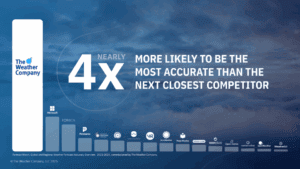
According to the latest ForecastWatch study, The Weather Company is nearly 4x more likely to be the most accurate weather forecaster than the next closest competitor.6
Building on our commitment to proven forecast accuracy, we continue to innovate and challenge ourselves to do even better.
- Consistent #1 finishes: The most 1st place finishes each year since ForecastWatch measurement began.7 8
- Regional accuracy dominance: The most accurate forecast provider is most often in 7 out of 8 regions.9
- Leading in longer-range forecasts: Nearly 6x more likely to be the most accurate when measuring a 14-day time horizon.10
Benefits of accurate weather forecasting
Weather affects nearly every sector — from supply chains and staffing to safety and customer engagement. It impacts an estimated $3 trillion of the U.S. economy annually and influences 30% of global GDP.11 Even a 1ºC temperature shift can cause a 1.2% swing in consumer spending.12
Simply, better accuracy means better decisions. Accurate weather forecasting can deliver measurable value across industries:
Aviation: For airlines, accurate forecasts are crucial for planning routes, minimizing delays, and enhancing safety. Weather is responsible for nearly 75% of flight delays,13 highlighting the importance of accurate, proactive forecasting for keeping flights on schedule and passengers safe. Turbulence prediction, wind shear detection, and runway condition forecasts enable flight crews to make informed decisions that protect passengers and optimize fuel consumption.
Advertising: Weather impacts consumer behavior, and accurate forecasts enable brands to align their messaging with what people are experiencing in the moment. The Weather Company’s advertising solutions use real-time weather and location insights to power smarter campaign delivery – reaching consumers when and where it matters most. These insights help brands anticipate shifts in mindset and purchase intent, such as promoting allergy relief ahead of high pollen days or iced coffee on a warmer-than-usual afternoon. With tools like Weather Targeting, advertisers can dynamically tailor messaging by region, season, or even zip code – improving performance while maintaining privacy-forward practices..
Media: Reliable forecasts built into broadcast media solutions keep viewers informed and engaged. Localized, timely forecasts build trust, improve viewer retention, and support higher ad revenue. Broadcasters can promote their accuracy, backed by The Weather Company, as a differentiator in competitive media markets.
Government & defense: From storm response to mission planning, government and defense agencies rely on accurate forecasts for operational readiness. Whether preparing for hurricanes or managing logistics during winter storms, accurate data helps leaders act decisively and allocate resources efficiently.
Given the ever-increasing reliance on precise weather insights, what’s next for forecasting?
What is the future of forecasting?
Forecasting is evolving to become faster, more personalized, and more precise. Key innovations include:
- Probabilistic forecasting: Instead of offering a single deterministic outcome, probabilistic forecasts show a range of possible scenarios and the likelihood of each one. This helps decision-makers understand risk and uncertainty more clearly – for example, while a deterministic forecast might indicate an expected snowfall amount of 5 inches in the next 24 hours, a probabilistic forecast reveals there’s also a chance of as little as 1 inch or as many as 10 inches of snowfall in that time, which might prompt a user to change plans or prepare alternatives accordingly.
- AI-powered modeling: Artificial intelligence and machine learning are increasingly playing a role in enhancing forecast accuracy. These systems can rapidly process massive volumes of historical and real-time data, identify subtle patterns, and provide a range of outcomes known as ensemble modeling, which supports probabilistic forecasting and gives a more complete picture of the weather’s nuances and variability. AI is particularly useful for refining forecasts in dynamic or hard-to-model environments.
- Street-level resolution: Forecasts are becoming hyperlocal, not just city-wide, but down to neighborhoods and even individual streets. This level of detail supports everything from route planning in logistics to micro-targeted alerts for consumers.
Precision, preparedness, and progress
Ultimately, accurate weather forecasting isn’t just about knowing if it will rain tomorrow; it’s about making smarter, more informed decisions that protect lives, livelihoods, and economies. The synergy of human meteorological insight and advanced AI is pushing the boundaries of what’s possible. Moving forward, our unwavering commitment to precision will continue to empower individuals and businesses to thrive in an ever-changing world.
Let's talk
To learn more about harnessing the power of weather to make better, more informed decisions across industries, contact our experts today.
Contact usRelated resources




1 2 3 6 7 9 10 ForecastWatch, Global and Regional Weather Forecast Accuracy Overview, 2021-2024, commissioned by The Weather Company
4 5 National Centers for Environmental Information, Billion Dollar Weather and Climate Disasters, 2024
8 ForecastWatch, Global and Regional Weather Forecast Accuracy Overview, 2017-2022, commissioned by The Weather Company
11 National Oceanic and Atmospheric Administration (NOAA)
12 Raja Rajamannar, Weather Wizards: How Marketers Can Harness the Elements for Unprecedented Success, September, 17, 2024
13 Federal Aviation Administration, FAQ: Weather Delay