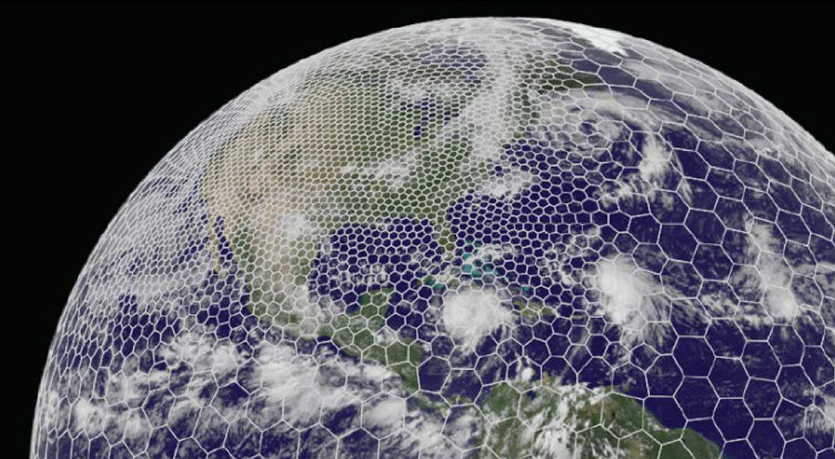
The latest GRAF® weather model improvements
Continue reading

27-knot gusts and acceptable risk
Establishing reliable weather forecasting in a location where it doesn’t exist is risky. When that location is BEHIND enemy lines the risk tolerance to get it done skyrockets. Retired Grey Beret, Brady Armistead, joins us to break down the blind HALO drop and why the risk was worth it.
Read about our solutions for Government & Defense to learn how The Weather Company provides actionable environmental insights from the operations center to the tactical edge.
We ramped in, we got out of the airplane, you’re in the dark already. You’re in a dark room, and you open the room into an even darker room. That’s what it’s like jumping off the ramp of the airplane. Get under canopy and realize just from the wind on my face, I’m like, okay, this is not what I was anticipating. This is one of the things that we call blind drops.
My career as a Special Operations weatherman started at Fort Lewis, Washington with 1st Special Forces Group. And while I was there working in the weather station as an observer, I got to watch the 1st Special Forces Group’s Special Operations weather team. And I see them coming to the weather station, getting ready to go on a mission, and I’m sitting on my butt in the weather station, typing stuff on the machines to send it out while they’re going out to do cool stuff. So I was like, you know, those guys look like they’re having a lot more fun than I am. And so that’s what led to my transition to becoming a Special Operations weatherman.
An interesting example of a mission in which weather played a key role in making things happen would be the initial insertion of forces into Afghanistan at the beginning of the war. Our mission was to establish a usable desert landing strip to bring in some other forces, some Marine Corps folks.
When you’re in a foreign country like this, especially Afghanistan and a lot of the states that surround it, they don’t have meteorology. It’s not like you’re in The States that provide weather information into the network and everything else. In Afghanistan, there was nothing. We’ve already done a bunch of analysis, so we talk about the planning process. We already are pretty sure that we can land airplanes there. But just like anything else, got to get eyes on it to ensure it’s accurate.
We were jumping way heavy for the altitudes we’re jumping at. We weighed ourselves in—like I think I weighed in at 700 pounds total to parachute, I think is supposed to hold up to 460 pounds, right? So we’re going—we’re almost doubling what the parachute can hold. But again, we’re going to waive the risk because we need to get these guys on the ground.
That drop, being the crazy weather guy, and I’m like, “Holy crap, the winds are a lot higher than we thought,” because I can feel them. You know, under canopy I can feel the wind. Not just the dropping wind, but the wind coming, you know, horizontally. And I’m like, this is not going to be good.
So the landing was not my best. Like, guys missing kneecaps, freaking broke their ribs. You know, one guy burned off part of his face because he landed face first and got drug by his parachute. The model said the weather is good for static line drop. The weather wasn’t good for static line drop.
When I took my first reading, after everything else, I had a 20—I think it was a 27 knot wind gust happening on the ground at that location, right? So instantly that’s the first thing I’m telling my air traffic control guys, “Hey, winds are 27 knots from this direction,” you know, or you know, whatever it was like 15 gusting 27, you know, right down the LZ, which is perfect for the airplanes, but not so much for the parachutists that usually don’t go much above 13 knots, right, for a static line infiltration.
So, yeah, that’s why everybody was hurt. But so we get up, we’re trying to figure out what we’re going to do. We’ve got to establish the LZ. Like it doesn’t matter that we’re injured. Unless you’re not able to walk or you’re not able to move, you’re getting this thing set up. You’re still mission focused. You’re not going to be sitting there crying and calling for medic or something like that. You can get up and move and do your job. So begin setting up the LZ, assessing it for landing capabilities and everything else, and bring in the aircraft.
When we go back and we talk about all that, it goes back to the meteorological side of this, which was, we did a blind drop and there was no collaborating information. So we’re using model data to make a decision about what the weather conditions were. We went in with what were basically false pretenses of what the weather conditions were going to be like on the ground.
Weather plays a role in everything that we do. When I was a young guy, we called it the “WET trilogy”. So it’s the weather, enemy, and terrain, right? Those three things are constants. No matter what you do, those are three things that are either going to work against you or for you.
But at the end of the day, one of the things that we see is, is that any time that you place weather as a secondary thought process, it bites us in the butt. It doesn’t matter where in the planning process you are. This needs to be included because it’s part of that WET trilogy. If you’re talking about the enemy and you’re talking about the terrain, you’re probably talking about the meteorology, the weather, because that’s part of the entire package.
Let's talk
To learn more about our integrated weather planning, visualization, and execution platform for government and defense, contact our experts today.
Contact us