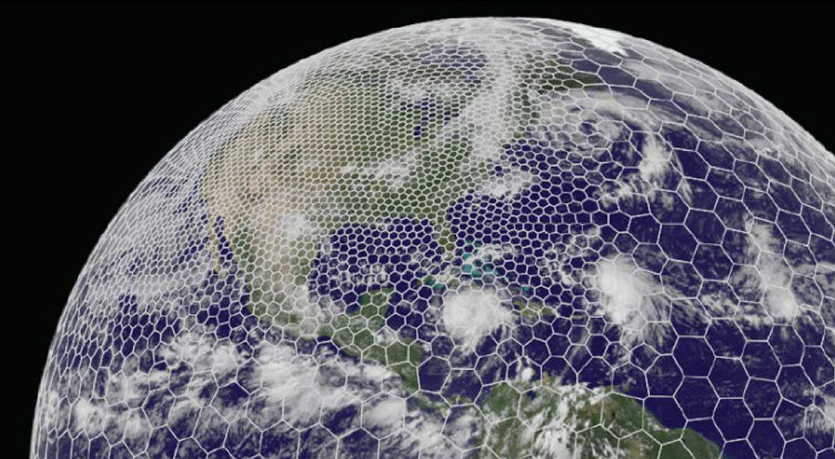
The latest GRAF® weather model improvements
Continue reading

What’s with the weather dude?
There’s a reason meteorologists are combat trained, jump qualified and embedded into special operations…and HAVE BEEN since World War II. Career Special Operator, let’s call him, “John Doe,” drops in to explain WHY their knowledge is so critical to mission success.
Read about our solutions for Government & Defense to learn how The Weather Company provides actionable environmental insights from the operations center to the tactical edge.
We briefed the team. “Hey, don’t go out of your hide site between this time and that time.” We kind of got the rolling eyes, “Okay, weather dude. Why?”
“That’s because that’s when we calculate dew formation time, based on the humidity and the temperature. And if you’re out and moving around during that time in the morning when the frost develops on the ground, they’ll be able to track you right back to your hide site.”
And that was a big light bulb above their heads moment. You could just see their eyes widen and the response was, “Okay, weather dude, that’s good information.”
I operated in several different environments during the time that I was in the Special Ops weather community. One of the most challenging areas, though, harkens back to our World War II origins in Yugoslavia. And the terrain in Yugoslavia is incredible, and it is actually the reason why, during World War II, we put guys on the ground in Yugoslavia as part of the OSS.
A lot of the missions that were being flown were canceled due to weather. A large number of the sorties had to turn around because they couldn’t find the drop zones. They couldn’t get to the airfields, they couldn’t land. Also of impact in that area, bombing missions were flown out of Italy to bomb the Ploiești oil fields in Romania. Those missions were also impacted by the weather.
So the determination was made that they were going to put guys on the ground in Yugoslavia. They had a lot of volunteers from the 19th Weather Squadron. These guys paved the way for us. They went through the OSS spy training, went through British Jump School. The 19th Weather Squadron, Parachute Detachment—which we have orders on and letterhead—was the first Air Force organized, trained, and equipped parachute unit.
They operated at Tito’s headquarters in Drvar for several months and as a result, the sortie rate increased by 70%. Weather data was coming out of an area that there was previously no data, and it was coming out several times a day. As a result, it significantly impacted both aviation operations for bombing missions and for airlift missions and resupply.
Everything that our guys are doing now has grown from that initial force in World War II on the SOF side and the conventional side. I think that it’s fantastic the resources that the guys of today have. I don’t believe that it’s possible for them to get too much information.
Weather is intel, and it involves doing everything that’s necessary for mission success. A lot of people don’t understand why there would ever be weather personnel—observers, forecasters, officers—that are jump qualified or freefall qualified. In order to support the mission, you need to know the mission. In order to know the mission, you need to be part of the mission. You need to be there.
It’s virtually impossible for somebody who’s sitting in Omaha doing remote support to understand the impact of the mission, having never been there. But if they don’t understand the tactical side and the real true impacts, it’s just not happening.
Let's talk
To learn more about our integrated weather planning, visualization, and execution platform for government and defense, contact our experts today.
Contact us