
Weather intelligence for the future: Crafting a strategic enterprise approach to changing environmental conditions
Continue reading

Weather forecasts shape critical decisions daily. From planning your morning commute to optimizing global supply chains — forecast accuracy isn’t just preferred, it’s essential.
But what does better accuracy actually mean for those who depend on it? Let’s look at the real-world impact across industries and why The Weather Company continues to earn recognition from business leaders for its proven accuracy1, technological innovation, and scalable solutions.
Advertising: Turning weather science into marketing ROI
 Consciously or subconsciously, weather influences every aspect and decision of people’s lives – how we feel, what we try, and what we buy. Even a 1 °C increase in temperature can boost consumer spending by 1.2%.2
And it adds up: The National Retail Federation estimates that weather affects about $1 trillion in global sales annually.3 When it comes to delivering a brand message in the right moment, to the right people, the precision and accuracy of weather-targeted advertising isn’t just a nice-to-have, it’s a must have.
In today’s cluttered ad environment, where every touchpoint counts, marketers can’t afford to waste budget or an opportunity to drive an action. Take it from Ryan Oliver, Head of Communications at EcoFlow — an emerging leader in portable power solutions: “The Weather Company’s credibility and accuracy helped us reach a highly engaged audience actively seeking solutions for weather-related outages, boosting awareness and interest in EcoFlow’s backup power solutions.”
Aviation: Better forecasts, safer flights
 In aviation, forecast accuracy directly impacts safety, customer satisfaction, and profitability. Weather causes approximately 75% of all flight delays4, costing airlines an estimated $60 billion annually.5 Further, weather conditions are the source of more than 65% of injuries to passengers and crew due to turbulence.
With accurate, probabilistic forecasts, airlines can better anticipate disruptions before they happen — not just react to them. This leads to better, more efficient route planning, reduced fuel consumption, and happier passengers flying smoother skies. Take it firsthand from Nathan Polderman, Sr. Manager of Meteorology, United Airlines: “United Airlines’ operations are greatly enhanced from the accuracy of The Weather Company forecast data and the ability for their meteorologists — embedded in the United Network Operations Center — to quickly adjust and communicate nuances and uncertainties in the forecast. Precise and accurate weather forecasts are critical to United’s efforts to maintain safe and efficient operations and keep customers satisfied.”
Media: Building viewer trust
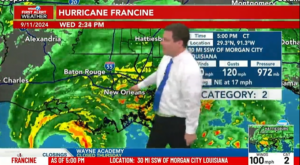 For broadcasters, forecast accuracy isn’t just about ratings — it’s the trust currency that makes viewers reach for their channel first. And in the highly competitive media landscape, trusted weather forecasts directly impact station credibility.
Consistent, accurate forecasts strengthen viewer loyalty and position the broadcast team as the authoritative weather source, whether nationally or locally. As Patrick Bigbie, Chief Meteorologist, WDAM-TV, puts it: “The Weather Company’s GRAF model is the first one I check each day when building my forecasts and presentations. I find it very reliable and trustworthy enough to share with my viewers.” Mark Nelsen, Chief Meteorologist at KPTV & KPDX Television, adds: “We’ve been using The Weather Company’s GRAF model for over five years now. Its accuracy is remarkable and I’ve learned not to second-guess it since it usually proves me wrong.” GRAF, a proprietary global weather modeling system, is just one of the many forecasting technologies built and used at The Weather Company to drive the accuracy of our weather forecast portfolio.
Government & defense: When missions and lives are at stake
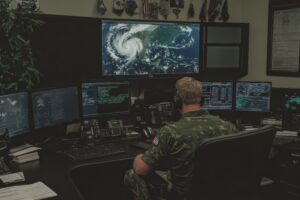 In defense operations, even minor deviations in weather forecasts can compromise asset deployment, technological capabilities, and personnel safety.
With weather intelligence that accurately predicts weather conditions on the ground and in the air, military personnel teams can better prepare for the operating conditions they’ll face in the field. This preparation allows for tactical adjustments that create strategic advantage. When adversaries rely on less accurate or incomplete information, your enhanced weather awareness becomes a decisive operational edge.
Not all forecasts are created equal
Many claim it, but only one forecaster can prove it: The Weather Company is the world’s most accurate forecaster.6 Delivering this level of accuracy doesn’t happen by chance. It requires a unique approach to weather forecasting that only The Weather Company has pioneered and continues to perfect.
Since our inception nearly five decades ago, we’ve combined human, meteorological expertise with proprietary, state-of-the-science technologies and AI to provide accurate forecasts and scalable solutions for people and businesses alike. And with that accuracy comes trust – trust that has earned us the distinction of being the most trusted weather provider and one of the top 15 most trusted brands among all adults in 2025.7
Solutions to thrive in the face of impactful weather
Accurate weather data helps instill confidence, drive decision-making, and propel the world forward. That’s why we’re committed to continuous innovation of current and future solutions, including:
- Weather Data APIs: We deliver real-time and historical weather data that provides high-resolution, continuously-updated, and hyper-local intelligence.
- Consumer experiences: Consumer experiences: We’re trusted by more than 330 million people each month across all digital properties, including weather.com and The Weather Channel app.8 The Weather Channel app stands as the #1 most downloaded weather app in the U.S, a daily habit for over 50 million people.9
- Enterprise solutions: Our solutions power decisions for 2,000+ enterprise customers across media (600+ broadcast stations), aviation (25,000+ flights per day), government, defense, agriculture, insurance, automotive, retail, CPG, pharma, energy, and beyond.
The best of both worlds: Human expertise + AI precision
We combine human meteorological expertise with advanced AI to create forecasting capabilities that neither could achieve alone:
- Human-guided, AI-powered approach: 100+ meteorologists collaborate with our AI systems through a “human over the loop” model, combining decades of expertise with cutting-edge technology to deliver fresh, precise, more accurate, and actionable forecasts.
- Scientific collaboration: Our ongoing work and dialogue with the broader scientific community includes NCAR, UCAR, and NOAA, accelerating our innovation while advancing capabilities for everyone.
- Technological rigor: We process 75+ billion terabytes of data daily across 100+ forecast models to create 25+ billion personalized, on-demand forecasts for 2.2 billion global locations. As part of that technology stack, our proprietary, high-precision weather modeling system, GRAF, provides hourly updates that can predict events as small as a thunderstorm virtually anywhere on the planet.
When weather shapes decisions, accuracy is the only option
For decisions that affect people and businesses everywhere, you need forecasts you can count on every time.
The question isn’t whether you can afford accurate weather intelligence, but whether you can afford to be without it. It’s your turn: Discover how our unmatched forecast accuracy can transform your business outcomes.
Let's talk
To learn more about harnessing the power of weather to make better, more informed decisions across industries, contact our experts today.
Contact usRelated resources





1 6 ForecastWatch, Global and Regional Weather Forecast Accuracy Overview, 2021-2024, commissioned by The Weather Company
2 3 LinkedIn: Raja Rajamannar, Weather Wizards: How Marketers Can Harness the Elements for Unprecedented Success, September, 17, 2024
4 FAA: FAQ Weather Delay
5 Cosmos, The Cost of Delays, Feb. 2025
7 According to a 2025 Morning Consult “Most Trusted Brands” survey
8 Based on the average of the total monthly (non-unique) users for Jan. – Dec. 2024 across The Weather Company digital properties and consumer products, according to internal, global data
9 According to Top Downloadable Weather Apps in 2024 in the US (by Downloads), from Sensor Tower (Jan. 1 – Dec. 31, 2024)
Key takeaways
- Predictive analytics help optimize airport operations, reducing delays and improving efficiency.
- Real-time weather monitoring enables faster responses to aviation weather conditions, enhancing safety.
- Airport operations technology minimizes taxi delays, fuel waste, and ground congestion.
- Accurate aircraft weather forecasts improve flight routing, turbulence avoidance, and passenger experience.
Weather is one of the most significant factors affecting airport efficiency, often leading to costly delays, flight cancellations, and logistical bottlenecks. While traditional forecasting methods provide a general outlook, they lack the precision needed for dynamic airport operations. Advanced weather intelligence from The Weather Company is changing that, offering predictive analytics, real-time monitoring, and data-driven decision-making tools that help aviation leaders minimize disruptions.
By integrating cutting-edge airport operations technology, airports can proactively respond to aviation weather conditions, to help improve everything from runway management to gate assignments. With more accurate forecasts, airlines and ground crews can better anticipate adverse weather and airports can function more smoothly, leading to better passenger experiences and operational savings.
The impact of weather on airport operations
Weather is responsible for a significant portion of air travel disruptions. According to industry data, 74% of flight delays exceeding 15 minutes can be directly attributed to weather-related issues.1 Snow, thunderstorms, turbulence, and low visibility can halt or slow down airport activity, creating a ripple effect that affects airlines, ground crews, and passengers.
The consequences of these disruptions are costly. In 2024, travelers lost more than 20 minutes to taxi-out times at some of the nation’s biggest airports, with LaGuardia topping the list at 23 minutes.2 These delays not only inconvenience passengers but also contribute to excessive fuel burn and increased emissions. Inefficient ground operations and flight delays can cost airlines millions annually, making airport operations optimization a key priority.
How predictive analytics optimizes airport efficiency
Our advanced airport operations technology leverages predictive analytics to help airports better prepare for and respond to aviation weather conditions. Unlike traditional weather monitoring systems, predictive analytics can provide highly detailed, location-specific insights that allow airports to make proactive operational decisions.
For example, predictive analytics can help optimize runway usage by forecasting when storms or snow will impact airport operations. Rather than reacting to adverse conditions as they occur, airports can deploy de-icing teams in advance, re-evaluate ATFM slots based on expected delays, and provide alternative landing paths to minimize holding patterns. These proactive measures significantly reduce disruptions, allowing flights to stay on schedule even in challenging weather conditions.
Industry research suggests that with more accurate and timely weather predictions, airports could prevent as many as two-thirds of weather-related delays and cancellations.3 By integrating predictive analytics into their decision-making processes, aviation leaders can transform weather from an operational obstacle into a manageable factor.
Real-time weather monitoring for smarter decision making
In addition to predictive analytics, real-time weather monitoring from The Weather Company plays a crucial role in airport operations efficiency. While long-term forecasts help with planning, live weather data is essential for managing day-to-day airport logistics.
Global Surface Movement within Maverick™ Dispatch provides this critical data. This critical feature provides continuous, high-resolution monitoring of runway conditions, arrival and departure trends, and taxiway congestion. With this data, dispatchers and pilots can better coordinate pushback and taxiing, reducing unnecessary delays and improving fuel efficiency.
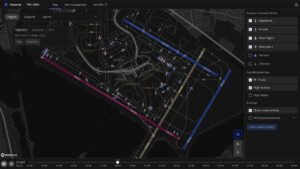
GSM quickly visualizes ramp, taxiway, and runway conditions
For instance, by tracking real-time runway conditions, dispatchers can better determine whether an aircraft will soon be cleared for takeoff. This allows pilots to decide whether to taxi using only one engine, conserving fuel if a longer wait is expected. At high-traffic airports where taxi-out delays can exceed 30 minutes, such optimizations lead to significant cost savings and lower carbon emissions.
Real-time weather monitoring also enables airports to adjust operations as conditions change. If an unexpected thunderstorm develops near a major hub, air traffic controllers can adjust arrival sequences to minimize airborne holding, reducing fuel waste and passenger delays. The ability to adapt quickly to shifting aviation weather conditions is key to maintaining efficient and resilient airport operations.
Airport operations technology that leverages weather intelligence
The latest advancements in airport operations technology rely on weather intelligence to improve efficiency and minimize delays. Maverick Dispatch is a prime example, providing real-time weather insights that enhance flight scheduling, ground movement, and air traffic management.
Maverick Dispatch integrates high-resolution weather data with operational workflows, helping airports anticipate and respond to changing conditions. Key features include:
- Analytics toolkit: AI models like terminal airspace convection risk (TrACR) overlay, airport arrival rate (AAR), and airport departure rate (ADR) bring critical weather intelligence directly into operational workflows.
- IROPs management: Gate-to-gate flight tracking with real-time IROP event updates visualizes weather impacts for proactive flight management during disruptions for faster, efficient responses.
- NOTAM viewer: Supports operational awareness by enabling users to input specific airports or airspaces and quickly retrieve applicable Notices to Airmen (NOTAMs). These alerts can be grouped by type — such as runway closures, airspace restrictions, or navigational aids — and filtered by issuance time or validity period. The result is stronger situational awareness and quicker, more informed decisions in complex environments.
Additionally, automated de-icing systems now use predictive weather insights to determine the optimal time to deploy de-icing crews. This prevents excessive delays while helping promote aircraft safety in winter weather conditions. As taxi-out times and runway congestion continue to challenge major airports, integrating these weather-driven technologies will be essential for improving overall efficiency.
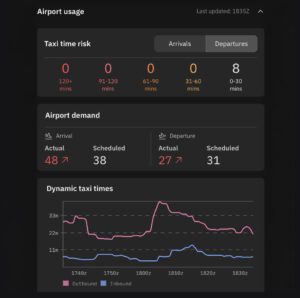
Predictive airport intelligence gives visibility into taxiway impacts
The role of aircraft weather forecasts in passenger safety
Beyond operational efficiency, aircraft weather forecasts play a crucial role in passenger safety and comfort. Unexpected turbulence, wind shear, and convective storms can pose risks to passengers and crew members, making accurate weather forecasting essential for smooth and safe flights. Our aviation solutions platform helps you maintain your commitment to safety through features such as:
- Total Turbulence Alerting: Provides real-time updates on turbulence intensity, allowing pilots to adjust altitude or flight paths before encountering rough air. This proactive approach enhances passenger comfort while significantly reducing the risk of in-flight injuries. Between 2009 and 2023, 79% of serious turbulence-related injuries involved crew members, highlighting the need for better turbulence-avoidance tools.4
- Global High-Resolution Atmospheric Forecasting (GRAF®) system: Delivers hyper-localized forecasts with three times the resolution of conventional models. By providing detailed insights into convection, precipitation, and wind patterns, GRAF helps pilots make better-informed routing decisions. This reduces the likelihood of weather-related diversions and delays, contributing to a smoother travel experience for passengers.
- Runway Visual Range (RVR) forecast: Plays a vital role in flight safety by providing visibility data for takeoffs and landings. When combined with predictive analytics and real-time monitoring, these tools allow pilots and air traffic controllers to make informed decisions on instrument landing system minimums, minimizing disruptions and keeping flights operating safely.
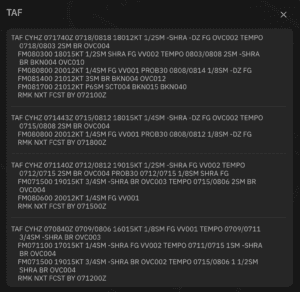
Easily access forecast conditions and quickly see how the forecast has been changing over time
A more efficient future for weather and airports
As the aviation industry continues to evolve, integrating advanced weather intelligence into airport operations will be key to improving efficiency and reducing delays. With the right airport operations technology, airports can anticipate and respond to aviation weather conditions more effectively, optimizing flight schedules, minimizing fuel waste, and enhancing passenger safety.
By leveraging predictive analytics, real-time weather monitoring, and high-resolution aircraft weather forecasts from the world’s most accurate forecaster,5 aviation leaders can transform how weather and airports interact. These innovations will not only lead to smoother operations but also create a more resilient and efficient air travel experience for airlines, crews, and passengers alike.
With the right tools, airports can turn weather challenges into opportunities for smarter, more sustainable aviation.
Let's talk
To learn more about our advanced aviation weather solutions, contact our aviation experts today.
Contact usRelated resources



1 Federal Aviation Administration, FAQ: Weather Delay, 2025
2 Upgraded Points, Upgraded Points Study Reveals Which Airports Waste the Most of Your Time While Traveling, 2024
4 Safety Compass, Flight Attendants Continue to Be Seriously Injured in Turbulence, 2023
5 ForecastWatch, Global and Regional Weather Forecast Accuracy Overview, 2021-2024, commissioned by The Weather Company
Key takeaways
- Real-time weather data helps airlines reduce risks and improve safety during flights.
- Airlines deal with dangers like turbulence, storms, and volcanic ash, which can delay flights and affect safety.
- The Weather Company’s tools use data and real-time alerts to help pilots and dispatchers make better decisions.
- Advanced weather technology lowers costs, improves flight routes, and makes travel smoother for passengers.
- Using detailed weather data helps airlines stay prepared for disruptions and keep operations running smoothly.
The promise of on-time arrival hangs in the balance with every departure. Airlines follow tight schedules, so even small delays can cause bigger problems. A single disruption can push back flights, use up extra resources, and affect passengers. But the skies are full of changing weather that can turn an easy flight into a risky one. Turbulence, sudden wind changes, and surprise storms can make planning difficult and create serious safety concerns.
Airlines must manage these risks to keep passengers and crews safe while staying on schedule. That’s where real-time aviation weather risk management comes into play. By using advanced weather data from The Weather Company, airlines can better predict dangers, change flight paths when needed, and help make travel safer and smoother for everyone on board.
The importance of weather intelligence in aviation
Airlines deal with many weather challenges that can delay flights, affect safety, and increase costs. Risk management in aviation is crucial for addressing issues such as turbulence, icing, thunderstorms, and even volcanic ash clouds. Thunderstorms – especially those common in spring and summer – can rapidly intensify, bringing lightning, hail, and heavy rain that disrupt schedules and pose serious safety risks. Volcanic ash clouds are less frequent but far more dangerous; ash particles can damage aircraft engines and sensors in minutes, sometimes without any visual cues. Together, hazards like these highlight how weather plays a major role in flight safety – contributing to 39% of aviation accidents between 2008 and 2022, according to the National Transportation Safety Board (NTSB).¹
Turbulence is a leading cause of in-flight injuries. It accounts for the majority of injuries in commercial airline accidents, with cabin crew comprising nearly 80% of those injured, according to the NTSB.² Total Turbulence Alerting provides airlines with real-time aviation weather turbulence tracking, enabling them to monitor turbulence intensity along planned flight paths. For a flight from London to New York, pilots who get turbulence updates over the Atlantic can change altitude or reroute to smoother air.
Leveraging real-time data for enhanced safety
Severe weather events, particularly during hurricane season and training thunderstorms in the summer, pose significant threats to flight operations. According to the FAA, weather-related delays account for more than 74% of global flight delays, impacting both schedules and costs.³ The Weather Company’s Tropical Storm Tables with forecasted track, equip flight dispatchers with real-time updates on storm trajectories and intensities, allowing them to adjust flight paths proactively. This level of preparedness helps flights avoid hazardous areas, reducing the likelihood of cancellations, diversions, or, worse, accidents.
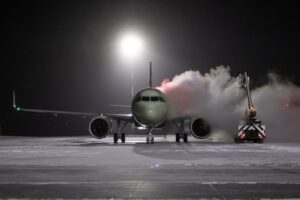
Similarly, aviation weather reports on icing conditions are vital for flights over colder regions. Icing can decrease an aircraft’s lift, increase drag, and ultimately compromise safety. Using predictive analytics – including Forecast Icing Potential and HIWC (high ice water content) Forecast – The Weather Company alerts airlines to potential icing zones. For instance, if a flight from Chicago to Denver is expected to encounter icing conditions over the Rockies, crews can be advised to activate de-icing measures or adjust cruising altitudes. This proactive approach helps maintain aerodynamics, improving flight safety and efficiency, even in challenging weather.
Managing volcanic ash and space weather
While less frequent, volcanic ash clouds pose severe risks to aviation safety. Ash particles can damage engines within minutes. Repair costs can reach significant amounts depending on the severity of the incident. Imagine a volcanic eruption near Southeast Asia, releasing ash into the atmosphere. The Weather Company’s volcanic ash tracking tools provide real-time alerts to reroute flights, avoiding volcanic ash flight disruption and protecting aircraft engines.
In addition to terrestrial weather, space weather events, such as solar flares, can disrupt communication systems and GPS signals and expose passengers and crew to solar radiation. While rare, these disruptions can be serious, especially for long-haul flights over remote regions. The Weather Company works with the Space Weather Prediction Center (SWPC), an entity of the National Oceanic and Atmospheric Administration located in Boulder, CO, to provide solar activity forecasts that inform operational planning and issue space weather advisories during impactful events.
Wind shear and sudden wind shifts
Wind shear and unexpected wind shifts, especially during critical phases like takeoffs and landings, can challenge even the most experienced pilots. Airports like Hong Kong International are known for their difficult wind conditions. Airlines receive real-time updates on wind patterns through METARs (current conditions) and TAFs (forecast conditions), which are accessible in MaverickTM Dispatch for streamlined access in dispatcher workflows. This helps pilots adjust their approaches and reduce the risk of hard landings or go-arounds. Not only does this enhance safety, but it also helps airlines avoid costly hard landing inspections that lead to aircraft downtime and reduce unnecessary fuel burn caused by go-arounds.
The strategic value of predictive analytics
Real-time weather data doesn’t only help with immediate dangers – it also makes flights more efficient. By leveraging tools like Pilotbrief® and Maverick Dispatch, airlines optimize flight routes by using accurate weather for flight path planning, take advantage of favorable wind conditions, and reduce fuel consumption. In fact, improving flight planning through advanced weather insights can significantly cut fuel burn and emissions.
Fuel efficiency
For a deeper look at how airlines can realize these savings, explore our guide on improving airline fuel efficiency with advanced weather insights. Weather-related operational disruptions are increasing, with Air Traffic Flow Management (ATFM) delays in Europe rising from an average of 0.13 minutes per flight in 2011 to 0.54 minutes in 2023, totaling 90,000 hours of delays.4
Maintenance planning
Predictive analytics also aids in maintenance planning. By minimizing exposure to turbulence and extreme weather, airlines can reduce unplanned maintenance costs. Weather delays as a proportion of total flight delays have increased from around 11% in 2012 to nearly 30% in 2023.5 In fact, the number of reports of large hail and heavy rain captured in the European Severe Weather Database rose by 18% in 2023 compared to 2022, highlighting the growing impact of extreme weather on aviation.6 These disruptions have significant cost implications for airlines, travelers, and the environment.
Predictive measures are a vital part of keeping operations efficient and protecting profits. In addition to weather analytics, The Weather Company also supports airlines through advanced airport arrival and departure capacity modeling and surface insights that accounts for weather-driven constraints. These models help predict how storms or wind shifts will impact runway configurations, arrival rates, and departure flows for better planning and fewer last-minute delays.
Improving passenger experience through weather intelligence

Beyond safety and efficiency, effective aviation weather risk management can significantly enhance the passenger experience. For instance, by using real-time weather insights to reroute flights away from areas of turbulence, airlines can offer smoother and more comfortable journeys.
Moreover, anticipating weather-related disruptions allows airlines to communicate proactively with passengers and enables them to adjust their plans – whether by leaving home later or spending more time enjoying their trip – instead of waiting at the gate in frustration. Whether adjusting schedules to avoid storms or managing delays due to low visibility at busy airports, leveraging weather data helps airlines build trust with their customers by demonstrating a commitment to safety and reliability.
Navigating the future of aviation with The Weather Company
Accurate, real-time weather data is essential in aviation, where even small disruptions can be costly. GRAF® (Global High-Resolution Atmospheric Forecasting) delivers weather predictions six times faster and at three times the resolution of leading models. Within Maverick Dispatch, airlines gain access to advanced GRAF layers that offer deeper insights into rapidly evolving conditions, supporting faster and more informed operational decisions. Total Turbulence Alerting also provides expert insights to help pilots navigate rough conditions.
Predictive weather analytics from the world’s most accurate forecaster,7 can help airlines plan better routes, lower costs, and keep flights safe. Aviation solutions from The Weather Company help aviation leaders handle everyday challenges and rare extreme weather events to stay resilient in a competitive industry.
Let's talk
To learn more about our advanced aviation weather solutions, contact our aviation experts today.
Contact usRelated resources
¹National Transportation Safety Board (NTSB), NTSB Weather Related Accidents, 2024. Available at: NTSB
²National Transportation Safety Board (NTSB), Preventing Turbulence-Related Injuries in Air Carrier Operations Conducted Under Title 14 Code of Federal Regulations Part 121, 2021. Available at: NTSB
³Federal Aviation Administration (FAA), FAQ Weather Delay, 2024. Available at: FAA
4 5 6 International Air Transport Association (IATA), Weather-related operational disruptions are rising. Available at: IATA
7 ForecastWatch, Global and Regional Weather Forecast Accuracy Overview, 2021-2024, commissioned by The Weather Company
Key takeaways
- Aviation supply chain challenges are intensifying amid escalating tariffs and changing weather conditions.
- Weather intelligence plays a pivotal role in helping airlines mitigate maintenance delays and operational disruptions.
- The impact of weather on aviation extends beyond turbulence to component wear, inspections, and downtime.
- Accurate aviation weather information is essential for proactive route planning, resource allocation, and resilience building.
The aviation industry is bracing for a potential storm of escalating tariffs, and while increased costs are a concern, the real turbulence may lie elsewhere. According to Ravi Vanmali, VP of Aviation at The Weather Company, one of the most significant aviation supply chain challenges will likely be the growing fragility of the global aircraft parts network. As Ravi explains, “From our perspective, the most significant impact is in the intricate global supply chain of aircraft parts.”
Adding to these concerns is the possibility of retaliatory tariffs impacting the movement of aircraft themselves. The potential for the return of aircraft introduces significant uncertainty in airline fleet management and expansion. Ravi points out, “These uncertainties in aircraft movement only amplify the existing concerns around access to critical spare parts due to tariffs.”
%
of executives say weather significantly impacts supply chains, risk management, and customer interactions1
The weather wildcard: Amplifying maintenance challenges in a tariff climate
This disruption in the parts supply chain takes on a new level of significance when coupled with the growing impact of weather on aviation due to more intense weather patterns. Consider this:
Severe weather and increased wear and tear: Severe weather, turbulence, and dust can accelerate wear and tear leading to increased maintenance. If replacement parts are delayed or unavailable due to tariffs and supply chain disruptions, the consequences can be significant.
Hard landings and mandatory inspections: Hard landings, which can be triggered by challenging weather conditions, require mandatory inspections and potential repairs. When access to parts is constrained, grounding an aircraft for extended periods becomes a far greater operational and financial risk.
Airlines at a crossroads: Integrating weather into strategic planning
According to Ravi, potential tariff impacts and erratic weather conditions will drive a significant shift in airline operations. “From what we’re seeing,” Vanmali notes, “operations teams will need to increasingly integrate detailed weather outlooks into the planning phase of flight operations.” He emphasizes that “this proactive consideration of weather risks will allow airlines to make more informed decisions about scheduling and routing,” ultimately bolstering their resilience in a challenging environment.
The importance of accurate weather intelligence
In this evolving landscape, the need for the most accurate and reliable weather information becomes paramount. This is where aviation solutions from The Weather Company, the world’s most accurate forecaster,2 can play an even more critical role in operational resilience. Our recent research confirms the vital role of weather intelligence in airline operations. In fact, 100% of airline executives surveyed affirm its value to their business.3 They specifically cite using it for:
- Informing route planning
- Planning supply and fuel levels according to anticipated weather conditions
- Supporting disaster preparedness and response planning
- Enhancing customer engagement through personalized weather-related communications during travel disruptions
%
of travel executives report that weather has impacted revenue and operating costs by over 50% in the past year4
Meeting critical needs of modern airlines
This reliance on weather intelligence, already crucial, becomes even more pronounced in an era of tariff-related supply chain vulnerabilities. Airlines are seeking solutions that:
- Aggregate multiple data points into a single operational tool for use pre-flight and en route.
- Include a comprehensive range of aviation weather information, including wind, turbulence, visibility, icing, lightning, convection, precipitation, volcanic ash, jet stream shifts, NOTAMs, and Airspace Restrictions.
- Accurately predict weather patterns ahead of flight times.
- Offer filtering by weather type and precise location, with real-time updates.
The Weather Company’s aviation solutions can help meet these critical needs and navigate both weather and tariff-related challenges, including:
- Reliable and actionable weather insights: High-resolution forecasts offer the accuracy needed to help make informed decisions about routing and scheduling. These insights help to enhance flight safety and operational efficiency while minimizing the likelihood of encountering severe weather that could result in increased maintenance and costs.
- Long-range outlooks for strategic planning: Integrating longer-term weather outlooks into the planning phase allows airlines to proactively identify potential periods of heightened weather risk and adjust schedules accordingly. This helps improve overall safety and mitigates the chances of preventable repairs.
- Real-time alerts and monitoring: Our timely weather alerts enable quick flight and operational adjustments to reduce disruptions while maintaining safety.
- Historical weather data for risk assessment: Weather and maintenance data analysis helps identify high-risk routes and seasons, improving safety and fleet deployment.
Building resilience in a tariff-sensitive environment
Airlines need a new level of operational agility and foresight to handle tariffs, supply chain uncertainties, and weather risks. Advanced weather intelligence helps reduce repairs, ease maintenance amid parts shortages, and build operational resilience.
%
of executives plan to increase or maintain their use of weather intelligence in the coming years5
The Weather Company is here to provide the actionable weather insights you’ll need to navigate this new era. Together, we can help your business thrive in the face of evolving global challenges.
Let's talk
To learn more about our advanced aviation weather solutions, contact our aviation experts today.
Contact usRelated resources

1 3-5 Weather Means Business report, October 2024, Magid for The Weather Company
2 ForecastWatch, Global and Regional Weather Forecast Accuracy Overview, 2021-2024, commissioned by The Weather Company
Key takeaways
- Maverick Dispatch brings advanced weather intelligence into aviation dispatch for safer, more efficient operations.
- TrACR, airport capacity modeling, and taxi predictive analytics provide actionable insights on airspace congestion risks, airport arrival and departure rates, and dynamic taxi time risks.
- Context-driven alerts reduce over-alerting, allowing dispatchers to focus on the most critical weather affecting their flight desks.
- The Weather Company’s Weather Forecast Services power Maverick Dispatch, offering accurate, real-time data for decision-making.
Aviation fleet operations depend on accuracy and efficiency, yet dispatchers face challenges. Disconnected data sources, outdated systems, over-alerting, and complex workflows make their jobs harder than ever. These hurdles aren’t about inconvenience — they impact airline costs, safety, and even customer satisfaction.
The solution: Maverick Dispatch. Powered by The Weather Company’s Weather Forecast Services, this innovative flight-tracking experience integrates cutting-edge weather intelligence into dispatch workflows. As a result, aviation leaders gain actionable insights without operational disruptions. To deliver these advantages, Maverick Dispatch was designed with input from global airline experts. Through this approach, it seamlessly combines advanced tools — terminal airspace convection risk (TrACR), Global Surface Movement (GSM), and airport capacity and taxi time modeling — into one unified experience. Together, these features create context-driven workflows that transform fleet operations from ground to air.
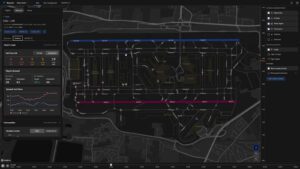
Visualized airport impacts and predictive weather intelligence merge in a modern interface to enable faster decisions and proactive flight management.
The perfect storm: aviation dispatch challenges
Dispatchers manage countless variables, from airspace congestion to rapidly changing weather, leading to information overload. Despite the availability of modern forecasting tools, they often encounter:
- Alert fatigue: Traditional systems generate a flood of notifications lacking context or priority. Dispatchers waste time filtering through irrelevant data, delaying critical decisions.
- Fragmented workflows: Dispatchers often toggle between multiple tools to access flight data, forecasts, and operational alerts. The constant switching adds complexity and cognitive load while increasing the risk of oversight.
- Outdated interfaces: Legacy platforms provide data in disjointed, hard-to-read formats. Quick decisions become difficult in critical moments when data is hard to interpret.
The ripple effects can be far-reaching. Delayed responses to weather disruptions can cascade into flight cancellations, diversions, and turbulence encounters. Maverick Dispatch tackles these problems head-on.
Cut through the noise: context-driven alerts when they matter most
Alert fatigue creates distractions rather than solutions. With Maverick Dispatch, operation teams experience a focused, context-driven alerting system inside a single dashboard for consolidation. Likewise, Condition Manager lets airlines set custom alert thresholds to fit their needs. On the ground, GSM improves aviation dispatch awareness with advanced Surface Analytics that track real-time conditions — helping dispatchers optimize taxiing, de-icing programs, and tarmac congestion during adverse weather situations.
From reactive to predictive: elevating safety and decision making
Safety in aviation hinges on accurate, timely information. Maverick Dispatch can help teams stay ahead of risks like turbulence, thunderstorms, and low visibility through AI-powered tools such as TrACR, airport capacity insights, and dynamic taxi-time risk, which bring critical weather intelligence directly into dispatch workflows. A closer look:
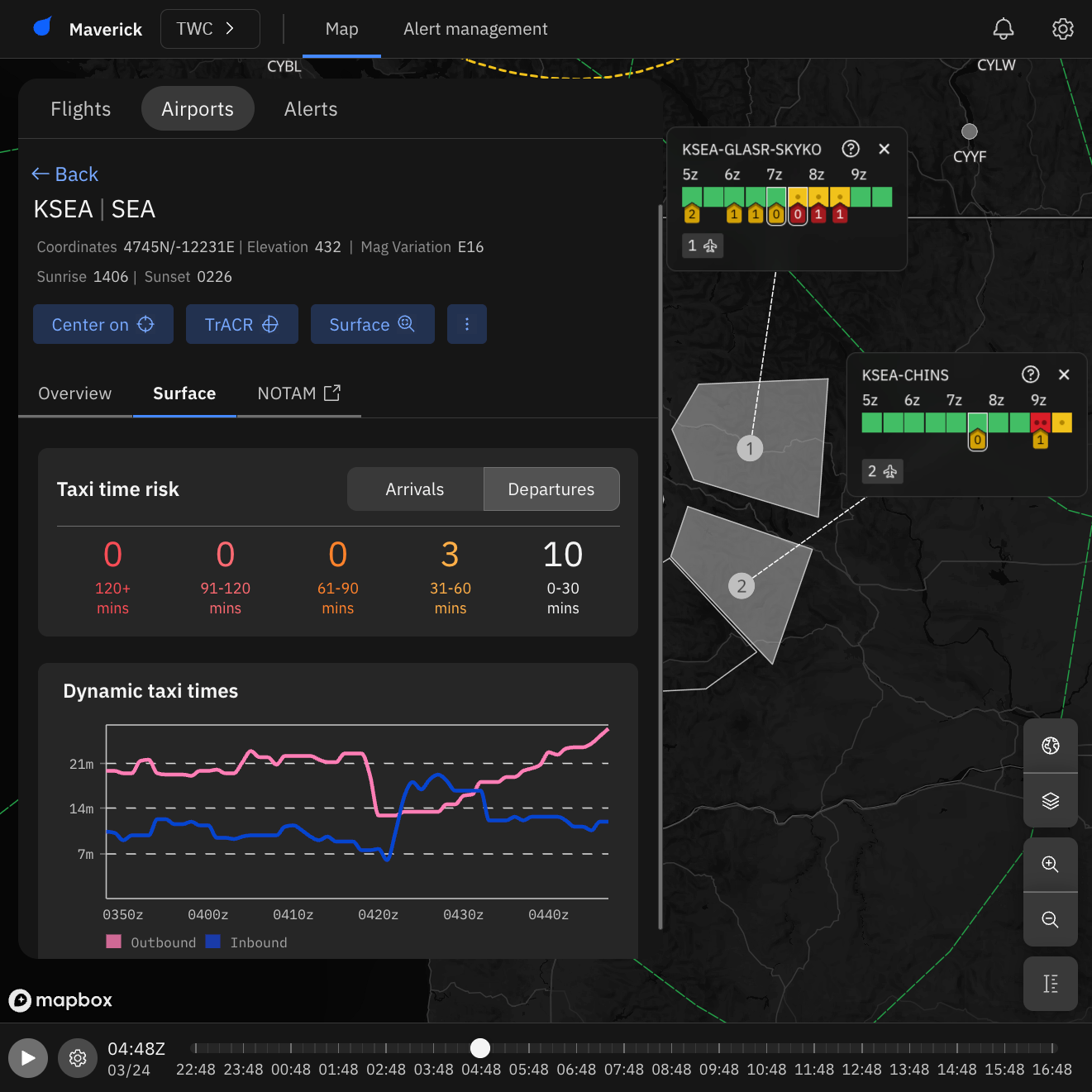
Predictive airport intelligence visualizes weather impacts for proactive flight management.
- TrACR: Detects and displays convection risks, like thunderstorms near flight paths, enabling early intervention.
- Airport capacity insights: show past metrics and forecast aircraft arrival and departure activity, helping dispatchers adjust schedules and optimize landing slots during high demand.
For instance, during a storm at a major hub, TrACR can highlight specific flights impacted by convection risks in the terminal airspace. Irrelevant details are filtered out. Therefore, dispatchers can quickly access Flight Rules, Meteorological Aerodrome Report (METARs), Terminal Area Forecast (TAFs), and airport arrival rate (AAR) via the airport’s drop-down menu for quick decision-making.
By supporting smarter decisions during both routine operations and Irregular Operations (IROPs), Maverick Dispatch can optimize routes, reduce delays, and fuel burn — adding up to tangible cost savings. These AI-driven insights can also improve passenger satisfaction by enabling smoother, more reliable operations.
Designed with dispatchers, for dispatchers
Maverick Dispatch emerged from continuous collaboration with global airline experts and customers, incorporating continuous feedback into every aspect of the experience. The result is an intuitive design that streamlines aviation dispatch operations and eliminates complexity. Built on a flexible SaaS platform, it also reduces IT burdens and speeds up feature updates, allowing dispatchers to stay focused.
Some of the additional key features and user-focused benefits include:
- Consolidated flight panels: Deliver relevant flight data and alerts in a single, intuitive interface.
- Interactive mapping: Weather overlays, including GRAF® layers, create a dynamic, high-resolution visual platform for situational awareness.
- Actionable alert dashboards: Consolidate alerts into a single view to help dispatchers prioritize critical information.
- Weather layer suggestions: Offer automated, context-driven data overlays to surface the most relevant information for decision making.
- Rapid updates and feature flags: New feature updates, enhancements, and training can be deployed through the SaaS platform quickly and on demand.
- Centralized meteorology tools: Specialized aviation forecasts and tools, like TAFs, METARs, and the upcoming “ask a meteorologist” feature, provide on-demand support for complex weather scenarios.
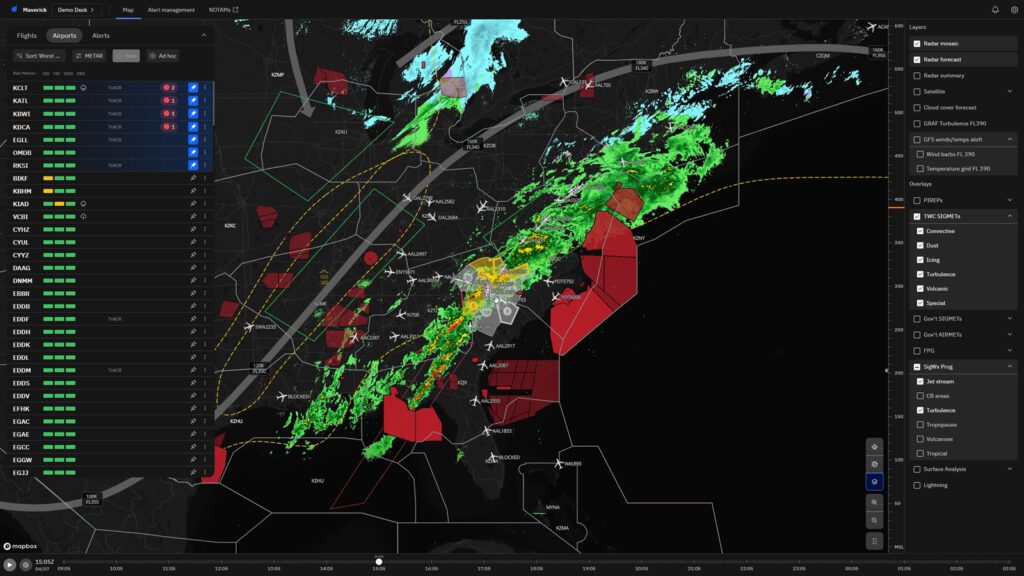
Seamless access to layers like TFRs and SUAs, airport insights, and desk alerts for quick situational awareness.
Ready to transform dispatch operations?
Aviation leaders face pressure to improve efficiency and safety while keeping up with industry demands. Maverick Dispatch offers a solution built for the future that lets dispatchers make smarter decisions faster.
Weather intelligence is aviation intelligence. See how Maverick Dispatch not only simplifies decision making, but also strengthens operational resilience. Take the first step toward safer, more efficient fleet management from runway to airspace.
Get an insider’s look: watch our product launch event replay
Ready for an exclusive preview of our exciting product functionality, including contextual alerting and workflow insights? Watch a replay of the Maverick Dispatch launch event today.
Let's talk
To learn more about our advanced aviation weather solutions, including Maverick Dispatch, contact our aviation experts today.
Contact usRelated resources
Every year on March 23, World Meteorological Day commemorates the founding of the World Meteorological Organization (WMO) and highlights the vital role meteorology has played in improving both daily life and long-term planning. It’s also a moment to reflect on how far the science of weather prediction has come and where it’s heading.
As we celebrate the 75th anniversary of the World Meteorological Organization in 2025, this year’s theme – “Closing the Early Warning Gap Together” – is more relevant than ever. As extreme weather events intensify, continued innovation in meteorology is essential.
The evolution of meteorology over these 75 years has been remarkable. In the 1950s, forecasts could barely predict 24 hours ahead with reasonable accuracy. Today, a five-day forecast is as accurate as a one-day forecast was in the 1980s.1 Hurricane track predictions have improved dramatically – the average three-day track error has decreased from over 300 miles in 1990 to less than 100 miles today.2
Now, artificial intelligence is taking the meteorological world by storm, and while it’s still early days, it shows immense promise when combined with foundational approaches and human expertise to solve some of the most exciting and challenging forecasting problems we face.
At The Weather Company, we’ve maintained an unwavering commitment to advancing meteorological science as the world’s most accurate forecaster.3 Through innovative technology and strategic partnerships, we’re striving to transform how people, businesses, and society understand, prepare for, and respond to weather.
Evolving our Global High-Resolution Atmospheric Forecasting System (GRAF)
A core component of our forecasting capabilities is the Global High-Resolution Atmospheric Forecasting System (GRAF), our proprietary weather modeling system that operates six times faster, updates six times more frequently, and has three times the resolution of competing models. This high frequency, high resolution approach helps detect sudden shifts in weather patterns anywhere around the globe, critical for people navigating day-to-day weather decisions as well as in industries like aviation, energy, and disaster response.
Developed in partnership with the U.S. National Research Foundation National Center for Atmospheric Research (NSF NCAR) and NVIDIA, GRAF plays a role in many of the most important forecast products and weather insights we deliver. Additionally, most improvements we make to GRAF are placed back in open-source, improving access to world-class forecasting capabilities for all.
Today, we are enhancing GRAF through a first-of-its-kind implementation of the Joint Effort for Data assimilation Integration (JEDI) data assimilation system in partnership with the University Corporation for Atmospheric Research (UCAR). This advanced approach significantly improves our ability to understand the current state of the atmosphere – the critical starting point for any forecast – by intelligently integrating a broader set of weather data and observations to paint a more accurate picture.
With JEDI, we will enhance our predictions and allow for improved early warnings of impactful weather, while also creating a stronger foundation to fuel the development of emerging AI methodologies.
New frontiers in AI
It’s impossible to discuss advancements in weather prediction without recognizing artificial intelligence’s transformative role. AI has been used in forecasting for decades, but today, a new breed of Deep Learning based AI models (DL-NWP) are showing the potential to improve the accuracy and granularity of predictions made by traditional models like GRAF.
One example of how this work is coming to life can be seen in our partnership with NVIDIA: together, we are developing a first-of-its-kind, kilometer-scale, AI-based numerical weather prediction model, trained with forecast data generated by GRAF.
AI also enables significantly more cost-effective forecast modelling. This efficiency opens the door to running not just one model at a time to make predictions, but hundreds or thousands, each with slightly different inputs or configurations, otherwise known as “ensemble forecasting.” The result is a comprehensive range of possible weather scenarios, rather than a single prediction, painting a much more complete picture of weather’s uncertainty. This ensemble approach, greatly enhanced by the advent of AI models, forms the foundation of what may be meteorology’s next great leap: probabilistic forecasting.
Beyond certainty: Probabilistic forecasting
Weather forecasts have traditionally been communicated with implied certainty: “Tomorrow will be 27°F with a 20% chance of snow.” This is known as deterministic forecasting, which provides a single, most-likely prediction of future weather.
Probabilistic forecasting changes the game, replacing single-value predictions with ranges and confidence levels of different outcomes. For example, if the 20% chance of snow mentioned above is associated with a blizzard that might pass nearby, the deterministic forecast may not give individuals the level of information they need to make important decisions. Probabilistic forecasting tells us more: while the most likely outcome is that the blizzard referenced above passes south of a certain location, there is still a 20% chance it will veer north and make a direct hit. And, if it does, there could be over a foot of snow, and even a 10% chance of two feet. Armed with that extra depth of information, one might make very different decisions, such as postponing a planned weekend drive to a time with less risk of hazardous conditions.
Beyond the implications for individuals, this approach transforms decision-making for business leaders. Imagine a shipping and logistics company responsible for transporting temperature-sensitive goods planning a cross-country shipment. A deterministic forecast might indicate a 60% chance of relatively benign weather posing little risk to that shipment. A probabilistic forecast might indicate the same, but also tell us there is a 30% chance of weather hot enough to impact the integrity of shipment and a 10% chance of temperatures that would result in a complete loss of that shipment. Knowing this, the company might choose to delay transport – even though the deterministic forecast indicates limited risk.
The potential applications go on and on:
- Aviation: Airlines can adjust fuel loads based on the probability of thunderstorms at the destination airport causing aircraft to circle around before landing.
- Agriculture: Farmers can make smarter decisions about irrigation and pest control timing based on accurate weather probabilities.
- Insurance: Providers can issue timely alerts to homeowners about impending hail or flooding based on customers’ tolerance to different levels of risk.
This approach acknowledges the inherent uncertainty in weather prediction by providing more nuanced, actionable intelligence for complex business decisions. The result is better risk management, resource allocation, and ultimately, competitive advantage. By embracing probabilistic forecasting, we aren’t just forecasting weather – we’re forecasting decisions, driven by data and fueled by AI, to create a more resilient future.
The power of partnerships: Advancing weather science together
No organization advances meteorology alone. Innovation thrives through collaboration, which is why we work with the brightest minds in science and technology to push the boundaries of weather forecasting. Our partnerships with UCAR, NOAA, NVIDIA, and numerous other scientific and technology organizations exemplify the collaborative spirit of this year’s World Meteorological Day theme and are absolutely core to the work we do every day.
As we pioneer the next generation of forecasts, our commitment remains unchanged: delivering the most accurate, science-driven weather information to help people, businesses, and communities around the globe make better decisions. On this World Meteorological Day, as we celebrate 75 years of progress, we also look ahead to the future, where advancements like probabilistic forecasting will empower society to navigate increasingly volatile weather patterns with greater confidence.
Ultimately, together with scientists and innovators worldwide, we’re shaping a world where weather resilience is stronger than ever.
Let's talk
To learn more about harnessing the power of weather to make better, more informed decisions across industries, contact our experts today.
Contact us1 Bauer et al., Nature, 2015
2 NOAA, 2023
3 ForecastWatch, Global and Regional Weather Forecast Accuracy Overview, 2021-2024, commissioned by The Weather Company
Related resources

Key takeaways
- Weather intelligence is revolutionizing aviation safety by addressing turbulence, volcanic ash, and extreme weather with advanced technologies.
- Predictive tools like GRAF and TrACR empower airlines to forecast and mitigate weather challenges with hyper-localized, high-resolution data.
- Probabilistic forecasts enhance operational efficiency by providing a range of possible weather outcomes and their associated probabilities.
- Integrated platforms such as Fusion and Pilotbrief® combine real-time weather data and forecasts to optimize routes and improve decision-making.
- Collaborative data-sharing initiatives, including SkyPath and IATA Turbulence Aware, strengthen global efforts to improve aviation safety and efficiency.
Modernizing aviation safety with weather intelligence
Every takeoff, every landing, and every mile flown is governed by one of aviation’s most challenging variables: the weather. From turbulence to dense fog, weather conditions profoundly shape the aviation experience, impacting schedules, costs, and, most importantly, aviation safety. According to OPSNET data, approximately 74% of flight delays exceeding 15 minutes are directly attributable to weather-related factors.¹ Weather is more than an operational challenge; it’s a fundamental safety priority.
 To combat these challenges, airlines are turning to advanced weather technology that empowers decision-makers with real-time insights and predictive weather analytics. Tools such as turbulence tracking and volcanic ash detection are helping aviation professionals reduce risks, strengthen safety protocols, and improve efficiency across all phases of flight. The Weather Company’s innovative aviation weather solutions demonstrate how weather intelligence can transform aviation operations, enabling smoother skies and safer outcomes.
The following sections explore the tools, data, and technologies reshaping aviation safety today. From highlighting the key risks posed by weather to uncovering cutting-edge innovations, the industry is rising to the challenge of managing weather’s impact. Understanding these advancements is essential for today’s aviation operations leaders when navigating severe storms or adjusting for turbulence mid-flight.
Key weather risks in aviation operations
In aviation, weather can pose risks ranging from operational disruptions to life-threatening hazards. Understanding the specific challenges posed by different weather conditions is critical to maintaining aviation safety and operations. Each meteorological phenomenon requires precise strategies and advanced weather technology to mitigate its impact.
Weather has been identified as contributing to approximately 22% of aviation accidents between 2008 and 2022, according to an aviation safety report by the National Transportation Safety Board (NTSB).² By addressing these risks with advanced weather technology, airlines can strengthen safety protocols and maintain operational reliability.
Turbulence
Pilotbrief allows pilots to visualize SkyPath turbulence reports along their flight path, enabling quick route adjustments for smoother flights.
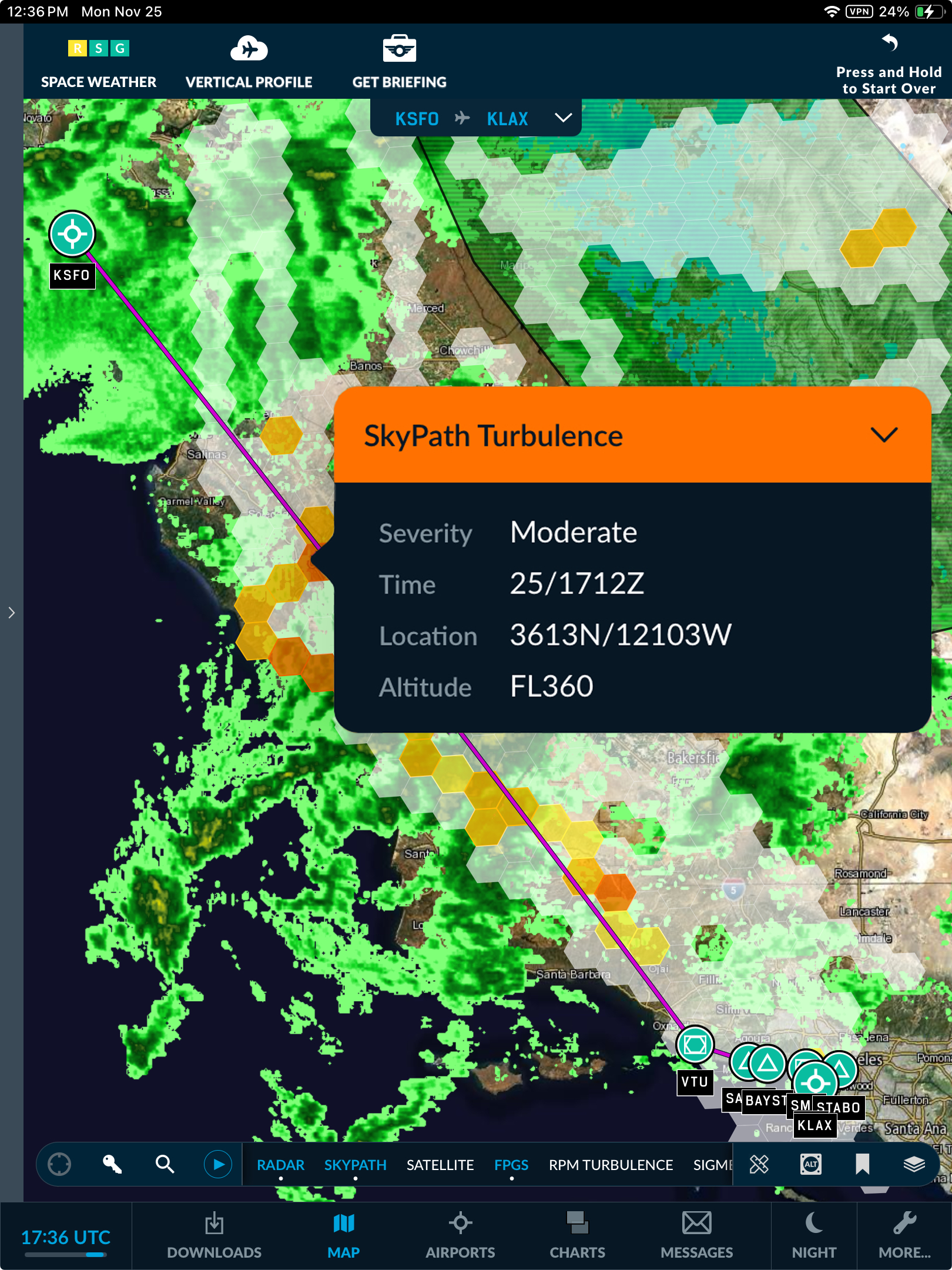
Pilotbrief allows pilots to visualize SkyPath turbulence reports along their flight path, enabling quick route adjustments for smoother flights.
Turbulence remains one of the leading causes of in-flight injuries. Between 2009 and 2023, 79% of serious turbulence-related injuries involved crew members, predominantly flight attendants.³ Clear air turbulence can occur without visible warning, making predictive weather analytics essential for preemptive route adjustments. For example, The Weather Company’s Total Turbulence Alerting provides pilots with live updates on turbulence intensity, helping them adjust routes to keep flights safer, more efficient, and more comfortable for passengers and crew.
Volcanic ash
While less frequent than turbulence, volcanic ash poses a uniquely dangerous risk. Ash particles can damage engines within minutes, often leading to significant repair costs and operational delays. The Weather Company’s volcanic ash detection tools provide immediate alerts that allow airlines to reroute flights and avoid hazardous zones. Enhanced volcanic ash SIGMET notifications are triggered when ash clouds extend beyond thresholds, such as 6,000 feet above a volcano or 10,000 feet above ground. These tools not only protect passengers and aircraft but also minimize costly disruptions.
Wind shear and fog
Wind shear — a sudden change in wind speed or direction — can jeopardize takeoffs and landings, two of the most critical phases of flight. Similarly, dense fog reduces visibility, frequently causing delays at major airports. Fog-related disruptions contribute significantly to holding patterns, increasing both fuel consumption and carbon emissions. By integrating weather intelligence, airlines can better prepare for these conditions, supporting safer operations.
Thunderstorms and extreme weather
Thunderstorms are among the most disruptive weather events, bringing turbulence, lightning, and wind shear. These conditions can cause significant operational challenges, from delays to rerouting. Advanced convective risk technologies allow airlines to predict and navigate around these storms, reducing disruptions and maintaining safe operations.
The role of predictive technologies in aviation safety
When it comes to managing the weather’s impact on aviation, traditional monitoring systems often fall short. While adequate for basic planning, generic forecasts lack the accuracy needed for dynamic operational decision-making. In contrast, predictive weather analytics and dynamic data tools empower airlines to anticipate weather changes, mitigate risks, and optimize routes for safety and efficiency.
Innovative forecasting technologies for safer skies
Predictive technologies are redefining how airlines address weather challenges by providing hyper-localized, highly accurate insights into atmospheric conditions. For example:
- GRAF forecasting: The Global High-Resolution Atmospheric Forecasting (GRAF) system delivers detailed forecasts for convection, precipitation, turbulence, and extreme heat. Operating six times faster and with three times the resolution of conventional models, GRAF empowers airlines to make timely adjustments to routes and operations.
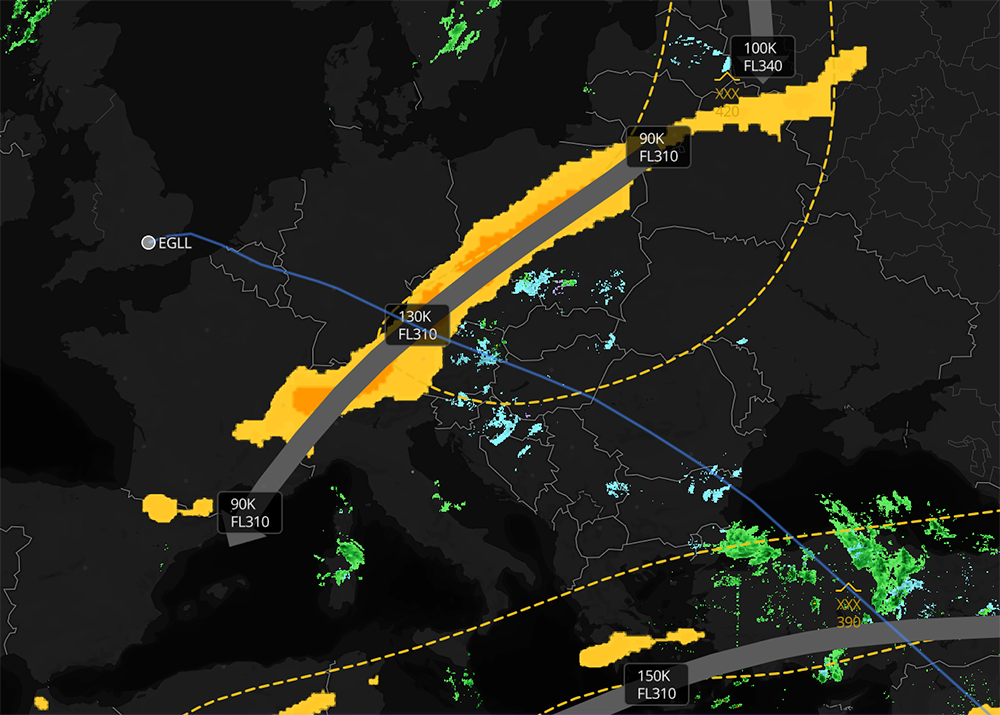
- Terminal airspace convective risk (TrACR): The TrACR tool helps airports and airlines anticipate convection hazards around terminal areas, minimizing the probability of holding patterns or go-arounds and supporting safer landing conditions.
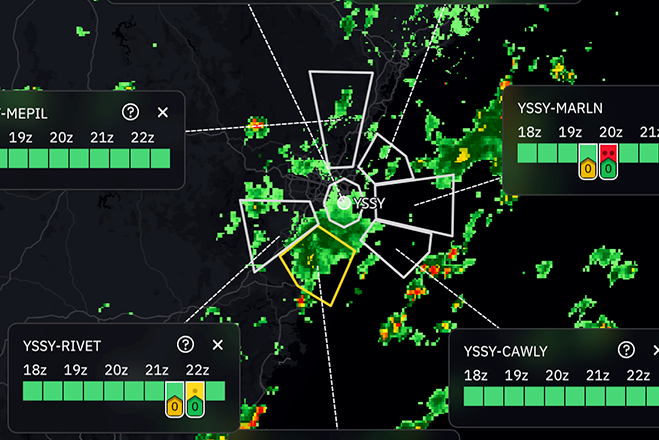
TrACR delivers real-time, actionable convective weather forecasts for critical arrival and departure corridors.
- Potential volcanic ash impact reports: By simulating the possible movement of ash from continuously emitting volcanoes, these reports help airlines evaluate risks, adjust flight paths, and minimize disruptions.
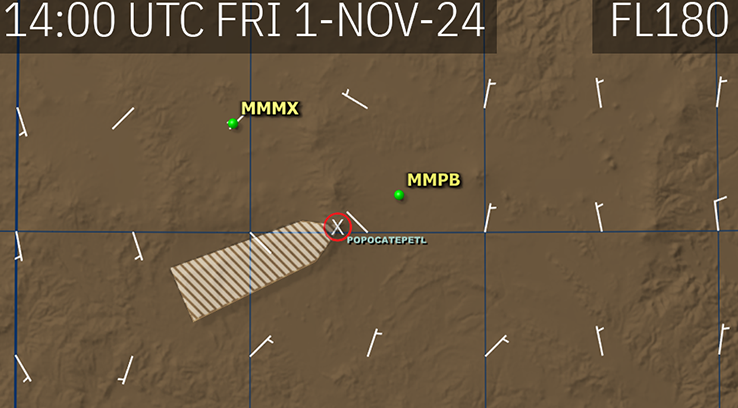
A visualization of potential ash transport based on forecast winds near the volcano summit level, aiding aviation planning near active volcanoes.
Streamlining operational workflows
Real-time monitoring tools take predictive capabilities further by delivering critical updates directly to pilots, air traffic controllers, and dispatch teams. Solutions like Pilotbrief and Weather Forecast Services integrate these insights into pilot and flight operations’ workflows, enabling teams to:
- Detect developing turbulence along planned flight paths and adjust altitude for smoother air.
- Monitor VAAC advisories and SIGMET alerts to reroute when volcanic ash thresholds are exceeded.
- Provide alerts for wind shear or low visibility to improve safety during critical phases like takeoff and landing.
Additionally, The Weather Company uses predictive analytics to alert airlines to potential icing zones. For instance, if a flight from Chicago to Denver is expected to encounter icing conditions over the Rockies, crews can be advised to implement de-icing measures or adjust cruising altitudes. These proactive insights enable safer flight operations, even in complex weather conditions.
Real-time weather monitoring and advanced technologies
Modern aviation requires more than accurate forecasts; it demands instantaneous, actionable insights that adapt to evolving conditions. From the moment an aircraft leaves the gate to its final approach, weather intelligence tools enable decision-makers to maintain safety, minimize disruptions, and optimize operations. These technologies provide the foundation for more innovative, more responsive aviation operations.
Transforming flight management
Continuously updated weather monitoring tools, such as The Weather Company’s dispatch solutions, Fusion and MaverickTM Dispatch, and Pilot EFB solution, Pilotbrief, provide continuous updates on atmospheric conditions. Unlike static weather reports, these tools deliver actionable insights and alerts via The Weather Company’s Forecast-on-Demand (FOD) process. The FOD system pulls fresh data from satellites, radar, ground sources, and more to deliver insights tailored to specific flight paths and operational phases, precisely when requested. This level of personalization allows dispatchers and pilots to confidently request flight path adjustments, avoiding delays or hazards caused by sudden weather changes.
Up-to-the-minute weather intelligence isn’t just for pilots and dispatchers — it empowers collaboration across all levels of an airline’s operations. Flight planners, air traffic controllers, and ground crews benefit from the same integrated data, helping enable a unified response to changing conditions. This alignment enhances efficiency while maintaining the highest aviation safety standards.
Proactive decision-making through data integration
One of the greatest advantages of real-time weather technologies is their ability to centralize data for decision-makers. The Weather Company’s Maverick Dispatch and Fusion solutions exemplify this capability by delivering advanced weather intelligence within operational workflows. By empowering operational teams with a comprehensive view of weather, airspace, and flight data, The Weather Company helps them anticipate and mitigate disruptions.
Continuous Global Tracking (CGT) within our dispatch solutions provides near-real-time visibility of flights using ground and satellite-based ADS-B data, promoting accurate situational awareness for both en route and ground operations. Intelligent alerting engines proactively notify users of operational exceptions such as turbulence, convective weather, or air traffic congestion, enabling teams to make decisions before problems escalate.
In addition to their tracking and alerting features, Maverick Dispatch and Fusion enhance surface movement with accurate position reports, optimizing taxiing and runway availability at busy airports. For example:
- Air Traffic Flow Manager within Fusion lets dispatchers work to reduce holding patterns, saving time and fuel during peak operations.
- Runway-specific forecasts for RVR let pilots and air traffic controllers determine necessary precautions for takeoff or landing during limited visibility conditions.
- Alerts for wind shear improve safety during takeoff and landing for smoother operations in challenging conditions.
Operational and environmental benefits of weather intelligence
In an industry where every decision counts, advanced weather intelligence is rewriting the playbook for operational efficiency and sustainability. By merging real-time insights with predictive technologies, airlines are unlocking innovative ways to cut costs, reduce environmental impact, and uphold the highest safety standards.
Fuel efficiency that fuels progress
Fuel accounts for nearly 30% of airline operating expenses, making it a constant target for optimization. Advanced tools like Global Surface Movement (GSM) are transforming how airlines approach fuel management, reducing waste where it starts — on the ground. By cutting just a few minutes of taxi time, regional carriers can save up to 41 kilograms of fuel per flight, proving that even small changes deliver measurable results.⁴
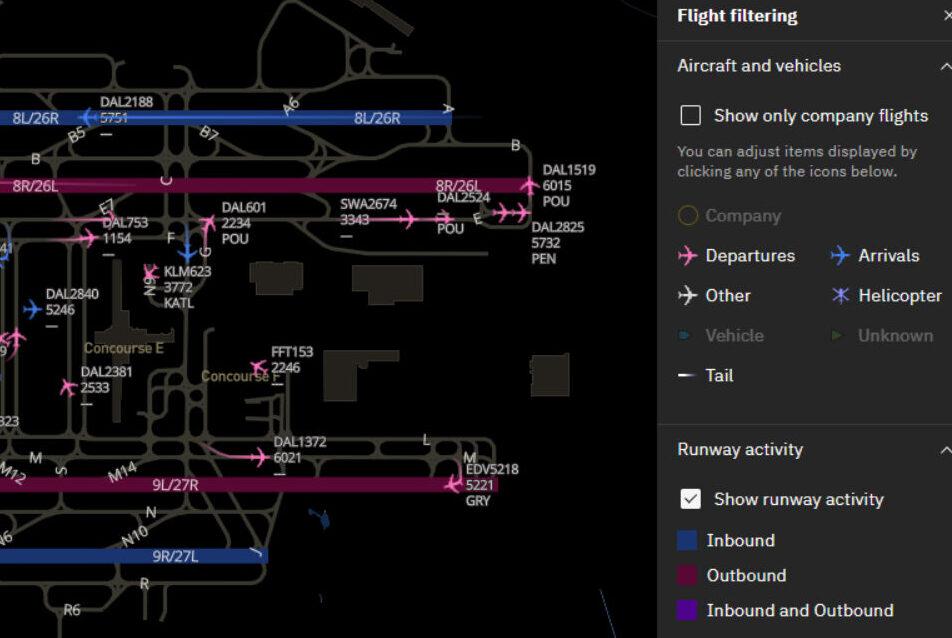
By monitoring real-time ground traffic with GSM, airlines can adjust gate pushbacks to reduce fuel consumption during tarmac delays.
Predictive weather analytics take it a step further, enabling airlines to chart the most fuel-efficient routes while avoiding turbulence and other costly disruptions. These optimized flight paths can slash fuel consumption, creating a ripple effect of reduced emissions and lower costs that resonate across the industry. For more detailed strategies on improving airline fuel efficiency, our comprehensive guide on advanced weather insights explores cutting-edge solutions and actionable recommendations. It’s not just about flying smarter — it’s about meeting sustainability goals without sacrificing profitability.
Efficiency without compromising safety
Operational efficiency is about precision and maximizing impact, not taking shortcuts. Real-time monitoring tools help airlines maintain optimal cruising altitudes, reduce turbulence-related risks, and keep fuel burn in check. On the ground, smarter coordination minimizes runway congestion and delays during critical phases like takeoff and landing, where precision is non-negotiable.
With advanced weather intelligence, airlines can help ensure safety is baked into every decision. The result? Smoother flights for passengers, a smaller carbon footprint, and a stronger bottom line.
Advancing aviation with essential weather intelligence
The aviation industry is at the forefront of technological innovation, and advancements in weather intelligence are no exception. Emerging tools and methodologies are shaping a future where airlines can anticipate and respond to weather challenges with unprecedented accuracy. From probabilistic forecasting to satellite systems, these innovations are redefining how weather impacts aviation operations.
Probabilistic forecasting and advanced modeling: Revolutionizing aviation safety
Probabilistic forecasting is transforming aviation safety by enhancing turbulence detection, prediction, storm tracking, and volcanic ash detection. Leveraging multi-model ensembles to generate a spectrum of possible weather outcomes and their respective likelihoods enables airlines to optimize decision-making for preventive actions such as de-icing or intentional ground delays.
Key benefits of probabilistic forecasting include:
- Improved decision-making and operational efficiency: By offering insights into the likelihood of various weather scenarios, probabilistic forecasts help airlines navigate uncertainty with confidence. Airlines can allocate resources more efficiently, reduce unnecessary expenditures, and make economically sound decisions that minimize costs while maintaining safety standards.
- Utilization of ensemble forecasts and advanced technologies: Ensemble forecasting runs multiple weather models to generate a spectrum of atmospheric conditions, offering richer data than single deterministic forecasts. Advancements in deep learning and artificial intelligence, along with partnerships between The Weather Company and NVIDIA, will soon enable large-scale, high-resolution probabilistic forecasts. When driven by expert aviation meteorologist oversight, these tools predict localized weather events, such as thunderstorms near airports or turbulence along specific flight paths, with unprecedented accuracy.
- Safety enhancements and regulatory compliance: Probabilistic forecasts help dispatchers, pilots, and operational teams avoid hazardous weather conditions by understanding the range and likelihood of adverse weather events. They also support regulatory compliance by highlighting the likelihood of conditions falling below weather minima, enabling airlines to proactively plan adjustments and adhere to strict operational requirements.
By integrating these capabilities, airlines can help dynamically optimize routes, proactively address weather challenges, and further boost operational efficiency. Probabilistic forecasting reshapes how the aviation industry anticipates and mitigates weather impacts, creating a brighter, safer future.
Advancements in radar and satellite-based monitoring
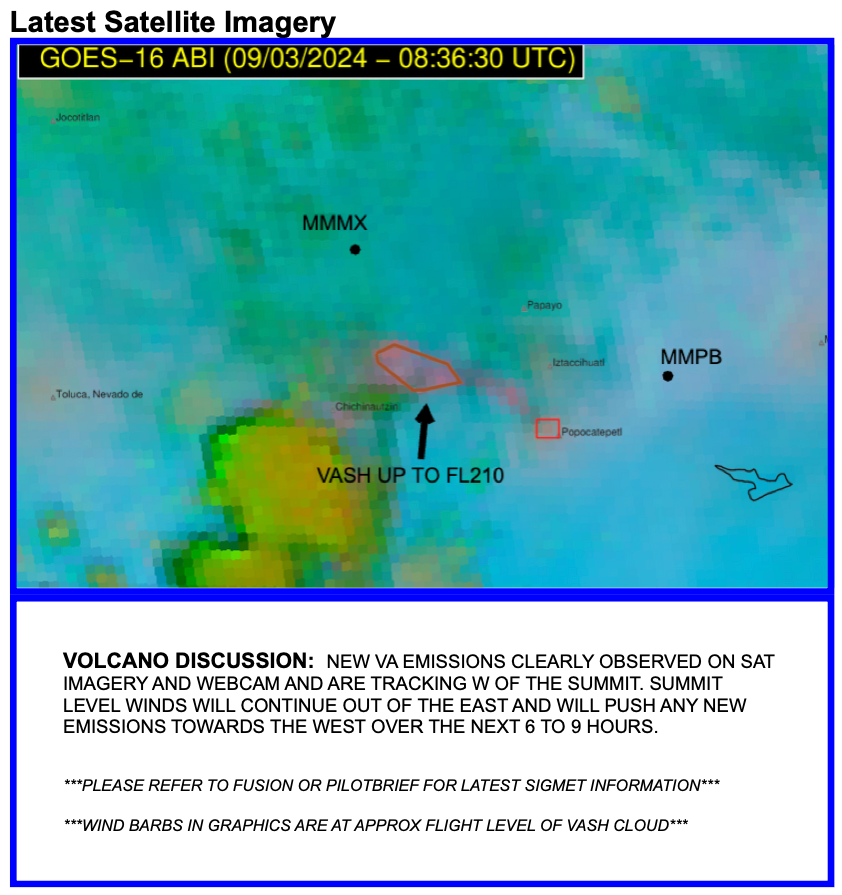
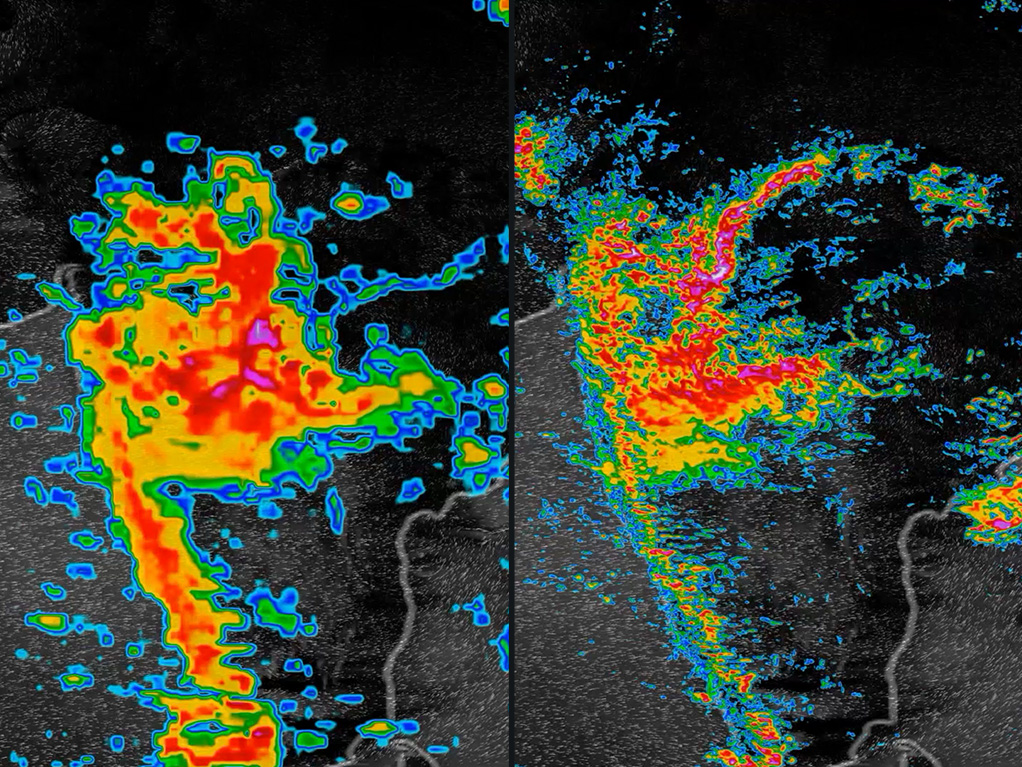
RGB imagery enhances satellite data to highlight atmospheric particulates. Using channels sensitive to volcanic ash (8.4 µm) helps forecasters identify affected areas.
RGB imagery enhances satellite data to highlight atmospheric particulates. Using channels sensitive to volcanic ash (8.4 µm) helps forecasters identify affected areas.
A global radar mosaic forms the backbone of modern aviation weather monitoring. Integrating data from multiple radar sources delivers a unified view of weather systems across vast regions. Airlines gain high-resolution real-time insights into storm intensity, lightning activity, and other critical atmospheric conditions. These capabilities enable precise operational planning for better safety and efficiency across both domestic and international flights.
However, radar coverage faces challenges over transoceanic and polar routes, where traditional systems fall short. SATrad addresses these gaps by leveraging satellite technology to extend monitoring capabilities to remote areas. Its high-resolution, near-real-time data on weather conditions in regions beyond radar’s reach enables tracking of severe weather events worldwide.
Proactive measures made possible by these advancements are key to reducing risks. For instance, satellite-based volcanic ash detection enables airlines to assess threats and reroute flights well in advance. Such capabilities reduce disruptions and protect aircraft engines from damage. Integrating radar and satellite systems creates a seamless weather intelligence solution that empowers airlines to operate safely and reliably, even in the most challenging environments.
Hyper-localized forecasting
Traditional weather forecasting often provides general information that lacks specificity for flight operations. Future innovations will focus on hyper-localized forecasts tailored to individual flight paths, airport locations, and altitudes. Technologies like The Weather Company’s GRAF already deliver accurate predictions for turbulence and wind shear, and future iterations will only continue to expand these capabilities to provide even greater accuracy for critical aviation decisions.
Hyper-localized forecasts will help airlines address micro-weather events such as localized fog banks or wind gusts at specific runways, further improving safety and efficiency during critical phases of flight.
Collaborative data sharing
The future of aviation safety lies in strengthened collaboration between airlines, air traffic management, and weather intelligence providers. Integrated systems will share live data across global networks, improving situational awareness and decision-making. Collaborative efforts will help to ensure that weather information is consistent and actionable for all stakeholders.
Two key initiatives exemplify the benefits of data sharing in aviation: SkyPath turbulence reports and IATA’s Turbulence Aware. Both programs rely on airlines contributing turbulence data from their own flights. In return, participating airlines gain access to a comprehensive network of turbulence reports submitted by other carriers. This shared data pool provides a global view of turbulence conditions for improved situational awareness and route optimization.
Through The Weather Company’s aviation solutions, airlines can seamlessly consume both SkyPath and IATA Turbulence Aware data. Integrating this turbulence intelligence into workflows helps minimize turbulence encounters, enabling airlines to maintain passenger and crew comfort and safety. Additionally, reducing turbulence incidents can reduce the need for aircraft inspections, which often result in aircraft being grounded until airworthiness is validated.
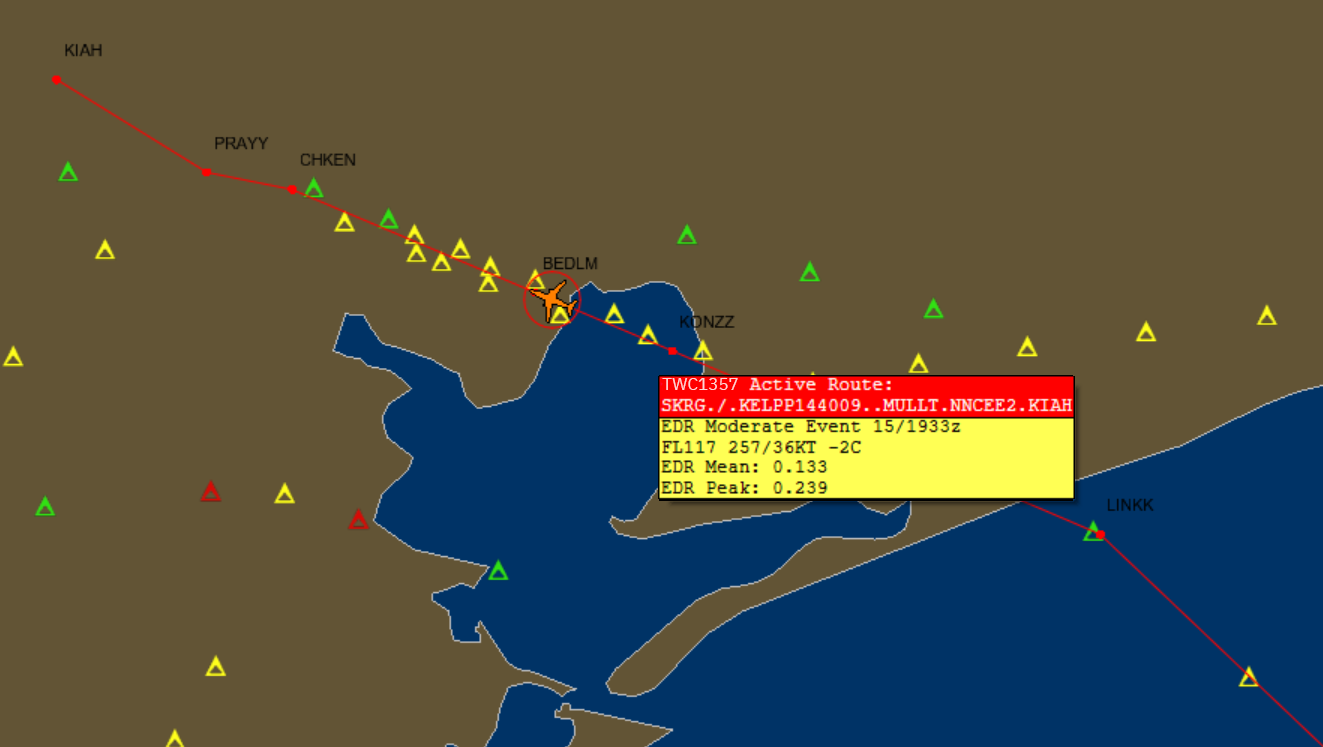
IATA Turbulence Aware subscribers are proactively alerted to turbulence reports affecting their flight routes, including the severity level.
As the aviation industry adapts to these trends, airlines will be better equipped to navigate weather challenges, optimize performance, and deliver safer, more efficient travel experiences. By investing in advanced weather technology, the future of flight will be safer and more economical.
Elevating aviation safety with advanced weather intelligence
Weather has always been a defining factor in aviation, influencing safety, efficiency, and costs. Today, advanced weather intelligence is revolutionizing how airlines approach these challenges, enabling proactive decisions and optimizing operations. From predictive analytics and hyper-localized forecasts to tools like Fusion and Pilotbrief, which provide both real-time data and future weather forecasts, these innovations are transforming aviation safety.
These weather intelligence tools mitigate delays, optimize routes, and reduce fuel consumption by addressing risks such as clear air turbulence, volcanic ash, and convection. More importantly, they lay the foundation for a safer and more sustainable aviation industry.
Advanced weather technology isn’t just a competitive advantage — it’s a necessity for modern airlines navigating a rapidly changing landscape. Take the next step with The Weather Company’s predictive weather analytics and discover how aviation safety can reach new heights through the power of innovation.
Let's talk
To learn more about our advanced aviation weather solutions, contact our aviation experts today.
Contact usRelated resources
¹ Federal Aviation Administration (FAA), FAQ: Weather Delay, 2024. Available at: FAA
² National Transportation Safety Board (NTSB), NTSB Weather Related Accidents, 2024. Available at: NTSB
³ Federal Aviation Administration (FAA), Turbulence: Staying Safe, 2024. Available at: FAA
⁴ EUROCONTROL, Rate of Fuel Burn, 2024. Available at: EUROCONTROL
Key takeaways
- More than 360 million people rely on The Weather Channel’s digital properties1 for decisions ranging from daily activities to major life choices, such as where to live and what vehicle to drive.
- Weather insights and data science offer businesses a competitive edge by enabling them to anticipate and influence consumer behavior and optimize operations.
- According to recent research, 100% of executives say weather intelligence can give their business a competitive edge.2
- Proactive weather strategies help businesses reduce environmental risks, capitalize on emerging revenue opportunities, and improve operational efficiency.
In an age where weather isn’t just small talk but instead, the headline, the impact of changing weather patterns on people and businesses is more significant than ever. From everyday weather conditions to extreme temperatures, the environment is now a critical factor driving strategic decision-making in everything from supply chain management to consumer engagement. As global temperatures continue to rise, businesses need to see the opportunity weather presents. At The Weather Company, we help businesses use weather intelligence to drive business resilience, growth, and competitive advantage.
Adapting at the speed of weather
We’ve all seen it. The world is witnessing unprecedented changes in weather patterns. This intensifying weather volatility is fueling more frequent extreme weather events and economic upheavals.
As a result, keeping tabs on the weather has made The Weather Channel digital properties a habitual touchpoint for over 360 million monthly average users1 worldwide. This widespread reliance shows the powerful influence of weather on consumer behavior. In 2023 alone, Adobe projected that weather would influence over $13.5 billion (about $42 per person) in U.S. e-commerce sales3 — the equivalent of an extra Cyber Monday.
The message is clear — businesses need to evolve from reactive to proactive, weaving weather data deeply into their strategic fabric.
Climate Week Spotlight
Thriving in the face of a changing climate
Sheri Bachstein, The Weather Company President, and Peter Neilley, The Weather Company SVP of Science & Forecasting Operations, share insights on how people and businesses can improve weather resilience in this Climate Week NYC 2025 interview.
The power of a weather strategy
So, what exactly is a weather strategy? A weather strategy is a savvy, data-driven approach that harnesses the power of cutting-edge weather data science and AI to optimize business processes, personalize marketing efforts, and gain an enterprise advantage. It’s about transforming weather from a risk factor into a strategic ally.
According to a recent research study of nearly 300 executives across the retail, CPG, pharmaceutical, insurance, and travel & tourism industries:
%
said that weather intelligence could give their company a competitive advantage2
%
believe that leveraging weather insights as a service provides greater value than relying solely on raw data2
%
say incorporating advanced weather analytics could enhance their ability to anticipate and respond to market fluctuations2
%
recognize enhanced weather insights as a powerful tool for driving revenue growth and reducing costs2
%
of pharma executives say using weather insights effectively can help them be better at their job2
%
of CPG executives will increase or continue their use of weather intelligence in the coming years2
Download our free and exclusive Weather Means Business report to learn how smart businesses are transforming their enterprise strategies with innovative weather intelligence.
Get your copyFuture-proof your business with The Weather Company
As businesses look to the future, integrating weather intelligence into long-term planning is a must. At The Weather Company, we offer unparalleled forecasting capabilities and weather intelligence that enable businesses to thrive in the face of changing weather patterns. With over 40 years of expertise in weather data science, we’ve become the world’s most accurate forecaster,4 a distinction that sets us apart from other providers. Our commitment to innovation and accuracy has earned us the trust of consumers and businesses around the globe.5
Beyond accurate forecasts, we provide scalable, proven solutions for consumers and businesses alike. Businesses tapping into these weather insights will be better positioned to anticipate consumer needs and tailor their offerings.
- Our weather intelligence platform and AI provide the precision and scalability your business process optimization needs to stay ahead.
- Weather Targeting enables advertisers to deliver personalized, relevant messaging that resonates with their audience in real time across the digital ecosystem.
- Premium consumer experiences across The Weather Channel digital properties help marketers engage with consumers at scale in meaningful moments to help them live healthier, safer, smarter, and happier.
A robust weather strategy isn’t just a nice-to-have; it’s essential. Let’s work together to create a weather strategy that drives your business forward.
1 360M monthly active users based on the average of the total monthly (non-unique) users for Jan – June, 2023 across The Weather Company digital properties and consumer products (weather.com, The Weather Channel app, Weather Underground app, wunderground.com, Storm iOS app,) according to internal data
2 Weather Means Business report, October 2024, Magid for The Weather Company
3 Adobe Digital Economy Index 2023
4 ForecastWatch, Global and Regional Weather Forecast Accuracy Overview, 2021-2024, commissioned by The Weather Company
5 According to a Morning Consult Q1 2024 survey, The Weather Channel brand was the #13 most trusted brand in the U.S. The surveys were conducted from January 1, 2024 through March 31, 2024, among nationally representative samples of between 1,158 and 35,280 U.S. adults.
Accurate weather forecasting fosters trust and enables better decision-making. Here’s how it works.
Key takeaways
- Accurate weather forecasting combines real-time data, advanced models, and expert interpretation.
- High-resolution models, such as GRAF®, multi-model ensembles like WxMix, and new AI methodologies are transforming forecast precision on a global scale.
- The Weather Company is nearly 4x more likely to be the most accurate forecaster, according to ForecastWatch.1
- Forecast accuracy directly impacts decision-making across various industries, including aviation, media, advertising, utilities, government sectors, and the daily lives of people everywhere.
Weather forecasts have been around since the beginning of civilization, when humans used recurring meteorological and astronomical events to better monitor weather patterns and plan for seasonal changes. Initially based on (mostly inaccurate) observations of the sky, wind, and temperature, these forecasts have thankfully evolved into more advanced and reliable ones.
Incorporating technology into weather forecasting began in the 1700s with the development of the barometer and thermometer. These basic yet advanced tools not only paved the way for more accurate weather predictions but also inspired generations of weather enthusiasts interested in advancing the science.
Today, individuals and businesses alike rely on accurate weather forecasting to anticipate severe weather and drive daily decision making. But how truly reliable are weather forecasts?
To understand the reliability, it’s crucial to first define what constitutes an accurate forecast.
What is accurate weather forecasting?
An accurate weather forecast is a measure of how closely the forecast matches reality. To produce an accurate forecast, scientists combine complex data analysis, modeling, and human expertise. Forecasts can range from short-term to long-range predictions, each with varying degrees of accuracy.
Short-range weather forecasts
Short-range forecasts (1–14 days) are typically generated by physics-driven models that ingest global weather data and simulate outcomes using advanced techniques, with AI increasingly contributing to the precision of these forecasts within this timeframe. These are considered more reliable due to their frequent model updates and high-resolution input data.
Long-range weather forecasts
Long-range forecasts (15+ days) are largely based on historical data and pattern recognition to predict what’s ahead. Forecasts beyond 15 days are inherently less precise because of how rapidly the atmosphere can change. This means accuracy is likely to decrease the further out the forecast goes.
How reliable are weather forecasts?
The answer largely depends on the forecast range. Generally, short-term forecasts demonstrate high accuracy:
- A 7-day forecast can accurately predict the weather about 80% of the time.2
- A five-day forecast can accurately predict the weather approximately 90% of the time.3
Accuracy drops as the forecast range increases, but advanced models and AI can help improve even long-range predictions.
Why are reliable weather forecasts important?
Weather significantly impacts people’s daily lives, and accurate weather forecasting enables communities to better prepare for the effects of changing weather conditions. Weather forecasting determines the likelihood of a severe weather event or strong storm. By leveraging this information, utilities can strengthen the grid, and schools can decide if it’s safe for parents to drive their children.
Why are reliable weather forecasts important?
In the past four years, the United States saw a total of 93 individual billion-plus-dollar weather and climate disasters (20 in 2021, 18 in 2022, 28 in 2023, and 27 in 2024). Prior to 2020, the highest number for a single year was 16.4. In 2024 alone, there were more than 150 unprecedented climate disasters globally, and $182.7 billion in U.S. weather-related damages – the fourth-highest year on record.5 As extreme weather events become more common, people and businesses rely on weather forecast accuracy more than ever to try to mitigate losses, influence safety measures, increase productivity, and improve business-related decisions.
It’s this critical need that underscores why accurate weather forecasting helps instill confidence, drive informed decisions, and propel the world forward. That’s why we’re committed to continuous innovation of current and future solutions. From rerouting flights to adjusting supply chains, better forecasts reduce risk and support operational confidence.
How do meteorologists predict the weather?
Weather forecasting is the process of combining scientific insights, data, and technology to assess future atmospheric conditions. Meteorologists observe, study, and predict changes in precipitation, temperature, wind, and more.
In today’s data-rich environment, meteorologists combine real-time observations, advanced modeling techniques, and expert interpretation to produce accurate forecasts. But how do weather forecasters predict the weather, and how are weather predictions made?
How a weather forecast is made
Fundamentally, the process begins with gathering data and using that information to feed forecasting models. These simulations help anticipate everything from temperature changes to the path of major storms.
At The Weather Company, we combine human meteorological expertise with advanced AI to create forecasting capabilities that neither could achieve on its own. Our team of over 100 expert meteorologists works in real-time with our AI systems, providing critical oversight and adding invaluable human intelligence to the process – without slowing things down.
Essentially, how to predict the weather is a four-pronged approach:
1. Observe
What is the weather like now? We ingest data from a collection of instruments to observe conditions on the surface and in the upper atmosphere, including:
- Weather radar: Detects precipitation and storm intensity.
- Weather balloons: Measure upper-atmosphere conditions.
- Barometers and thermometers: Monitor pressure and temperature.
- Satellites: Observe cloud cover and storm systems globally.
- Weather stations: Collect ground-level conditions.
- IoT sensors: Deliver hyperlocal temperature, humidity, and pressure data.
2. Model
How will the weather evolve? Numeric Weather Prediction (NWP) models take current atmospheric conditions as a starting point to project a forecast. There are many well-known models, such as the European Centre for Medium-Range Weather Forecasts (ECMWF), the Global Forecast System (GFS), and The Weather Company’s proprietary, hyperlocal Global High-Resolution Atmospheric Forecasting System (GRAF).
Instead of relying on a single model, our AI-driven, multi-model ensemble, WxMix, synthesizes and optimizes over 100 models, ensuring that we always leverage the best available science.
3. Produce
We translate model outputs into actionable insights, such as daily highs/lows, severe weather alerts, and turbulence maps.
4. Deliver
Forecasts are delivered instantly through apps and websites, such as The Weather Channel, Weather Underground, and Storm Radar, which feature APIs that provide real-time and historical data, aviation dashboards, broadcast media systems and displays, as well as mission planning and simulation tools.
Our strength lies in modeling, productization, and delivery – applying advanced modeling techniques, AI integration, and human oversight to produce timely, accurate forecasts.
The role of AI in accurate weather forecasting
AI is rapidly transforming weather forecasting, significantly enhancing its accuracy and speed. This rapid processing enables more frequent forecast updates, which is crucial for quickly evolving weather events, such as severe thunderstorms. In particular, new Deep Learning-based AI models (DL-NWP) are showing promise in improving the accuracy, granularity, and cost-effectiveness of traditional models, while also demonstrating an enhanced ability to depict the range and likelihood of potential weather outcomes, enabling better decision-making.
Long before “AI” became a buzzword, The Weather Company was harnessing the power of sophisticated algorithms, statistical models, and data-driven computational methods to improve weather forecasting and deliver actionable insights to consumers and businesses globally.
Today, we’re working with partners like NVIDIA to actively develop new deep learning approaches and incorporate the latest AI models into our forecasting processes to continuously improve forecast precision.
Who has the most accurate weather forecast?
According to the latest ForecastWatch study, The Weather Company is nearly 4x more likely to be the most accurate weather forecaster than the next closest competitor.6
Building on our commitment to proven forecast accuracy, we continue to innovate and challenge ourselves to do even better.
- Consistent #1 finishes: The most 1st place finishes each year since ForecastWatch measurement began.7 8
- Regional accuracy dominance: The most accurate forecast provider is most often in 7 out of 8 regions.9
- Leading in longer-range forecasts: Nearly 6x more likely to be the most accurate when measuring a 14-day time horizon.10
Benefits of accurate weather forecasting
Weather affects nearly every sector — from supply chains and staffing to safety and customer engagement. It impacts an estimated $3 trillion of the U.S. economy annually and influences 30% of global GDP.11 Even a 1ºC temperature shift can cause a 1.2% swing in consumer spending.12
Simply, better accuracy means better decisions. Accurate weather forecasting can deliver measurable value across industries:
Aviation: For airlines, accurate forecasts are crucial for planning routes, minimizing delays, and enhancing safety. Weather is responsible for nearly 75% of flight delays,13 highlighting the importance of accurate, proactive forecasting for keeping flights on schedule and passengers safe. Turbulence prediction, wind shear detection, and runway condition forecasts enable flight crews to make informed decisions that protect passengers and optimize fuel consumption.
Advertising: Weather impacts consumer behavior, and accurate forecasts enable brands to align their messaging with what people are experiencing in the moment. The Weather Company’s advertising solutions use real-time weather and location insights to power smarter campaign delivery – reaching consumers when and where it matters most. These insights help brands anticipate shifts in mindset and purchase intent, such as promoting allergy relief ahead of high pollen days or iced coffee on a warmer-than-usual afternoon. With tools like Weather Targeting, advertisers can dynamically tailor messaging by region, season, or even zip code – improving performance while maintaining privacy-forward practices..
Media: Reliable forecasts built into broadcast media solutions keep viewers informed and engaged. Localized, timely forecasts build trust, improve viewer retention, and support higher ad revenue. Broadcasters can promote their accuracy, backed by The Weather Company, as a differentiator in competitive media markets.
Government & defense: From storm response to mission planning, government and defense agencies rely on accurate forecasts for operational readiness. Whether preparing for hurricanes or managing logistics during winter storms, accurate data helps leaders act decisively and allocate resources efficiently.
Given the ever-increasing reliance on precise weather insights, what’s next for forecasting?
What is the future of forecasting?
Forecasting is evolving to become faster, more personalized, and more precise. Key innovations include:
- Probabilistic forecasting: Instead of offering a single deterministic outcome, probabilistic forecasts show a range of possible scenarios and the likelihood of each one. This helps decision-makers understand risk and uncertainty more clearly – for example, while a deterministic forecast might indicate an expected snowfall amount of 5 inches in the next 24 hours, a probabilistic forecast reveals there’s also a chance of as little as 1 inch or as many as 10 inches of snowfall in that time, which might prompt a user to change plans or prepare alternatives accordingly.
- AI-powered modeling: Artificial intelligence and machine learning are increasingly playing a role in enhancing forecast accuracy. These systems can rapidly process massive volumes of historical and real-time data, identify subtle patterns, and provide a range of outcomes known as ensemble modeling, which supports probabilistic forecasting and gives a more complete picture of the weather’s nuances and variability. AI is particularly useful for refining forecasts in dynamic or hard-to-model environments.
- Street-level resolution: Forecasts are becoming hyperlocal, not just city-wide, but down to neighborhoods and even individual streets. This level of detail supports everything from route planning in logistics to micro-targeted alerts for consumers.
Precision, preparedness, and progress
Ultimately, accurate weather forecasting isn’t just about knowing if it will rain tomorrow; it’s about making smarter, more informed decisions that protect lives, livelihoods, and economies. The synergy of human meteorological insight and advanced AI is pushing the boundaries of what’s possible. Moving forward, our unwavering commitment to precision will continue to empower individuals and businesses to thrive in an ever-changing world.
Let's talk
To learn more about harnessing the power of weather to make better, more informed decisions across industries, contact our experts today.
Contact usRelated resources

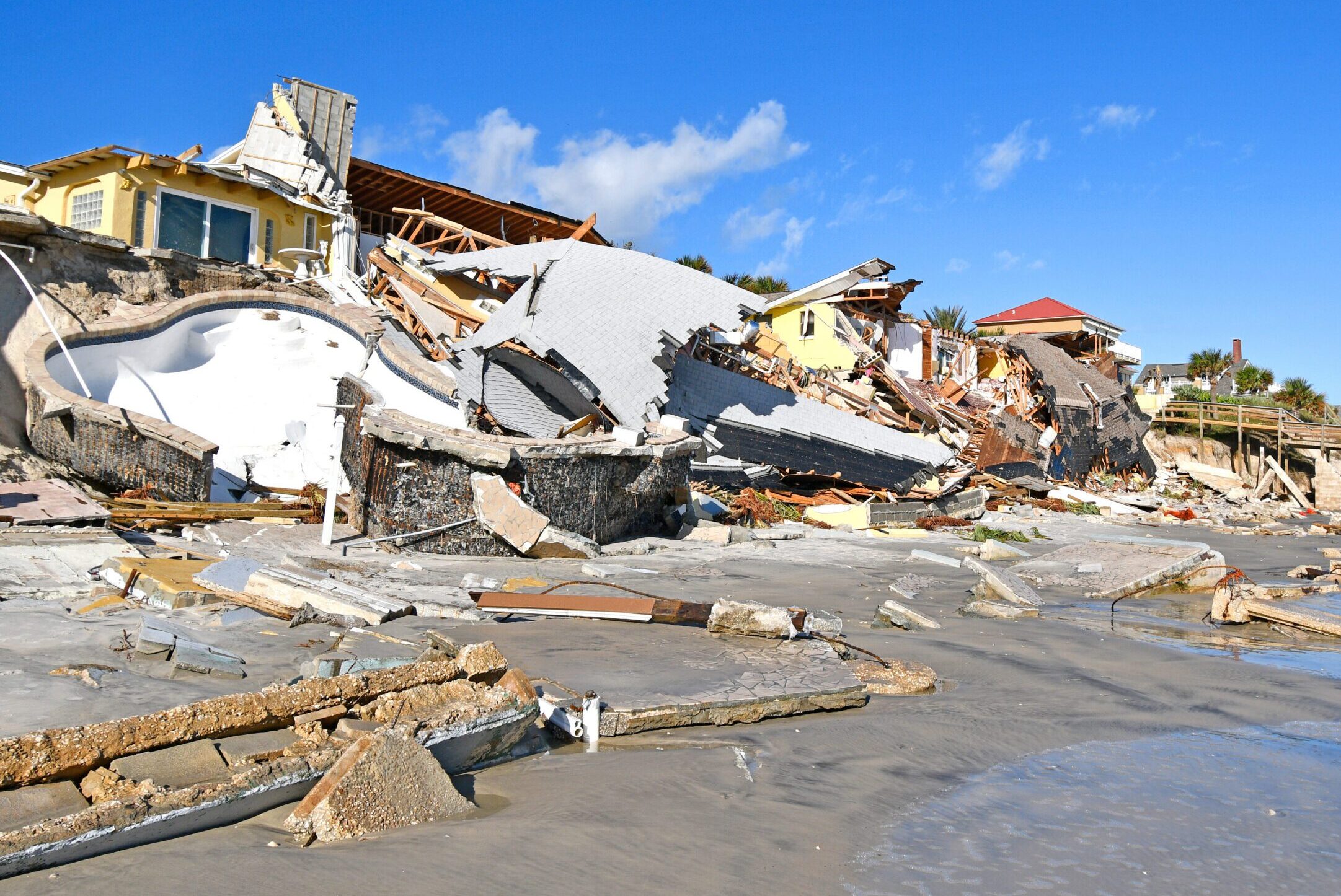


1 2 3 6 7 9 10 ForecastWatch, Global and Regional Weather Forecast Accuracy Overview, 2021-2024, commissioned by The Weather Company
4 5 National Centers for Environmental Information, Billion Dollar Weather and Climate Disasters, 2024
8 ForecastWatch, Global and Regional Weather Forecast Accuracy Overview, 2017-2022, commissioned by The Weather Company
11 National Oceanic and Atmospheric Administration (NOAA)
12 Raja Rajamannar, Weather Wizards: How Marketers Can Harness the Elements for Unprecedented Success, September, 17, 2024
13 Federal Aviation Administration, FAQ: Weather Delay