The latest GRAF® weather model improvements
Continue reading

Key takeaways
- Modern weather forecasting runs at hourly and sub-hourly update frequencies across billions of locations globally. Human-Over-The-Loop (HOTL) replaces legacy synchronous human gatekeeping with asynchronous, continuous forecast management.
- Machine learning models handle scale, processing speed, and pattern detection. But they still need expert shepherding to catch model errors, anomalous data spikes, and meteorologically suspect output before it drives downstream decisions.
- Meteorologists draw geographic polygons to assign forecast rules to specific parameters over defined time spans. The system applies those rules automatically whenever data is requested for the relevant location, parameter, and time.
- HOTL was built to add quality control and nuanced forecast adjustments without slowing publication. That matters when weath.
Why expert validation matters in AI weather forecasting
Weather data is easier to access than ever. Open-source models and basic APIs are widely available, which can make forecasts look interchangeable on the surface. They aren’t.
For someone planning a weekend jog, an inaccurate forecast may be a minor inconvenience. For an enterprise making high-velocity operational decisions, forecast quality directly affects cost, risk, and safety. When a forecast feeds a routing engine, commodity trading model, grid operations workflow, or staffing system, a model error at the wrong moment creates immediate exposure.
AI produces forecasts at scale. Experts validate what machines miss.
AI can process atmospheric data faster than any meteorology team. But speed isn’t validation.
Machine learning algorithms identify statistical patterns. They don’t reason through atmospheric physics the way an experienced forecaster does. When model output is mathematically plausible but meteorologically flawed, automated systems can still treat it as fact. It can crunch the raw data, but it lacks the instinct to recognize when those numbers look wrong.
That’s where expert human oversight becomes critical. At The Weather Company, experienced forecasters can spot unrealistic scenarios and make intuitive corrections that AI misses.
The architectural shift: Human-In-The-Loop vs. Human-Over-The-Loop
Understanding the value of modern forecast data starts with how forecasting architectures have changed.
The legacy problem: Human-In-The-Loop (HITL)
Historically, forecast quality control relied on a Human-In-The-Loop model. A computer generated a forecast, a meteorologist manually reviewed and edited it, and then clicked publish. The human was a mandatory synchronous gatekeeper.
As spatial resolution increased and update cadences moved to hourly and sub-hourly cycles, that model became a bottleneck. It’s physically impossible for meteorologists to inspect billions of data points every few minutes. Waiting for manual approval also means data can become stale before users receive it.
The modern solution: Human-Over-The-Loop (HOTL)
Human-Over-The-Loop changes the meteorologist’s role from gatekeeper to forecast manager.
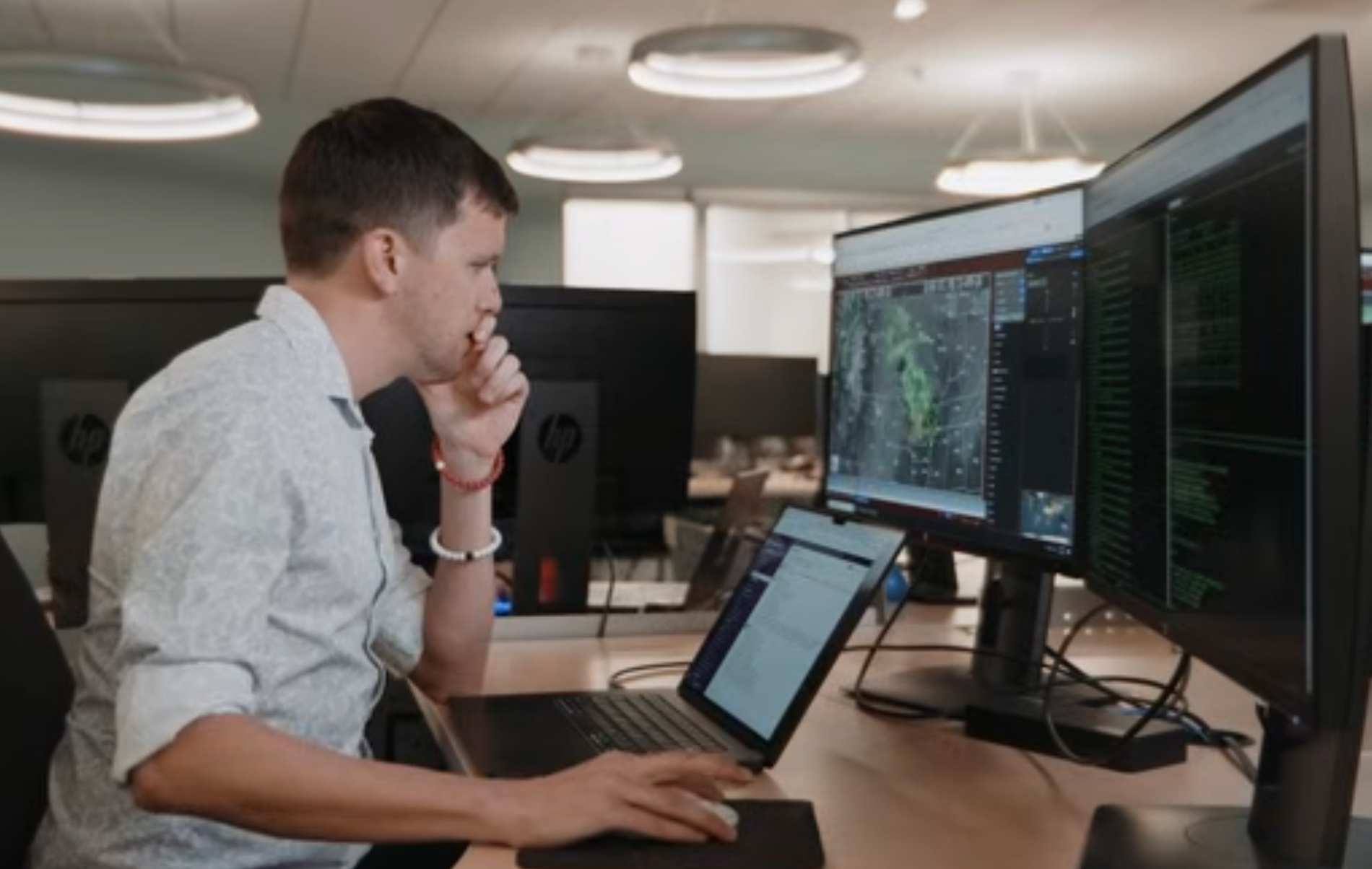
In a HOTL pipeline, automated models can output data continuously to consumer apps and enterprise APIs. At the same time, meteorologists monitor those outputs through cloud-connected workstations and workstation tools that support raster data, point data, bulletin renderings, and point-query analysis.
When a forecaster spots a model misreading local terrain, missing smoke impacts, or over-predicting rainfall, they don’t stop the feed. Instead, they draw geographic polygons over the affected area and configure rules for a specific parameter over a span of time. Those rules are then applied whenever a forecast is requested for the relevant location, parameter, and time.
Analogous example: Think of automated rail control. The train keeps moving. The operator monitors conditions, sets limits, and makes targeted adjustments only when exceptions appear, without stopping the system.
Why AI weather models need human shepherds
As AI weather models improve, do human meteorologists become less necessary? In practice, the opposite often happens. As model velocity increases, expert oversight matters more.
Computer forecasts keep getting better, but they’re still in need of shepherding because of model errors or limits in forecasting certain weather types. AI models can process large historical datasets quickly. But if they ingest noisy radar returns, conflicting sensor data, or terrain-driven distortions, flawed predictions can cascade into downstream systems.
HOTL combines both strengths. AI handles scale, speed, and coverage. Human experts add physical validation, quality control, and accountability.
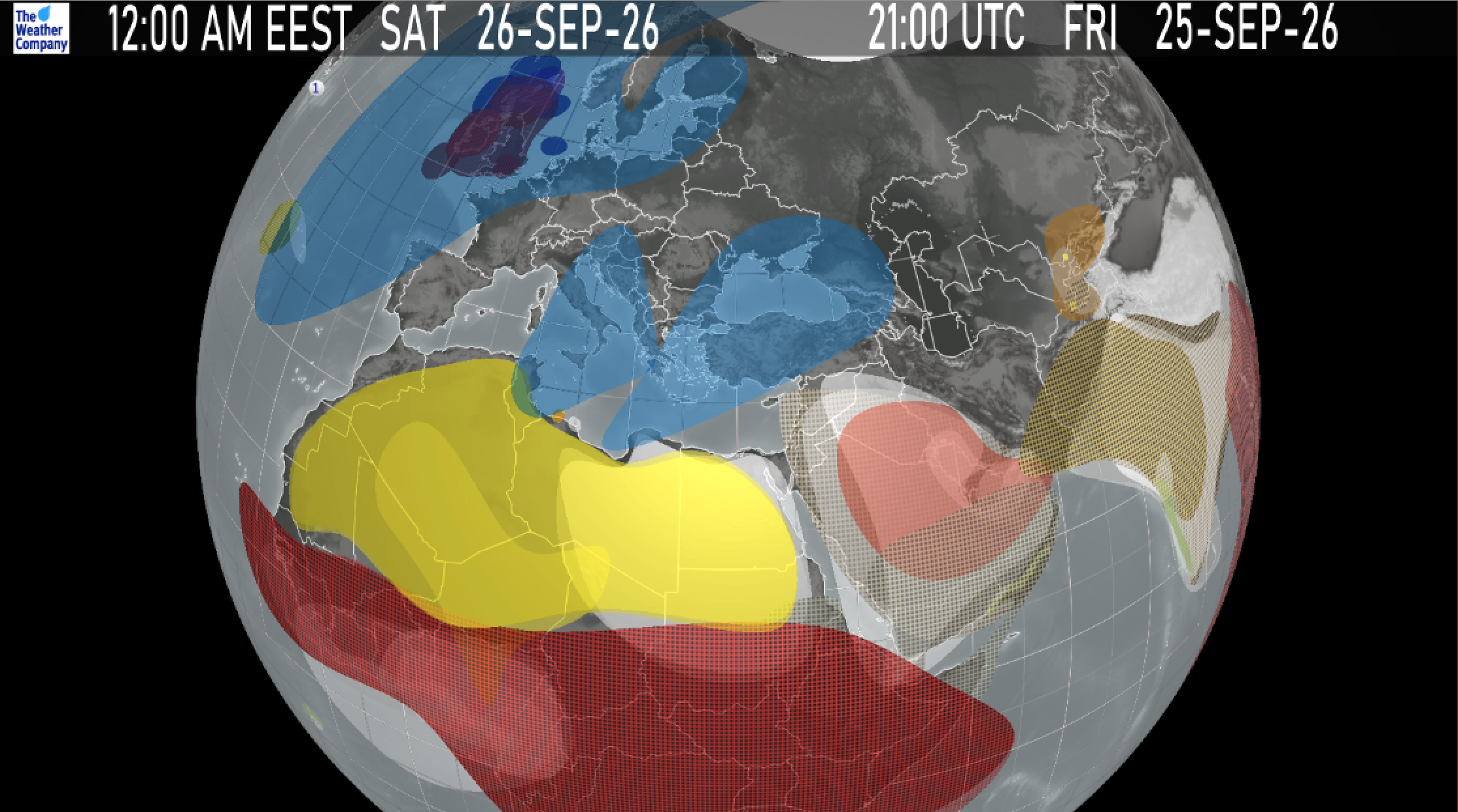
Manually applied filters and rules cover a geographical area over a range of time and gives the data “instructions” on what to change given certain conditions.
How HOTL supports enterprise and consumer workflows
Machine models deliver lightning-fast data, but expert human verification keeps those predictions tied to actual atmospheric conditions. By bridging machine scale with human judgment, the HOTL platform translates complex atmospheric science into practical operational safeguards across both consumer applications and industry-specific workflows:
1. Eliminating “ghost radar” (B2C & public safety)
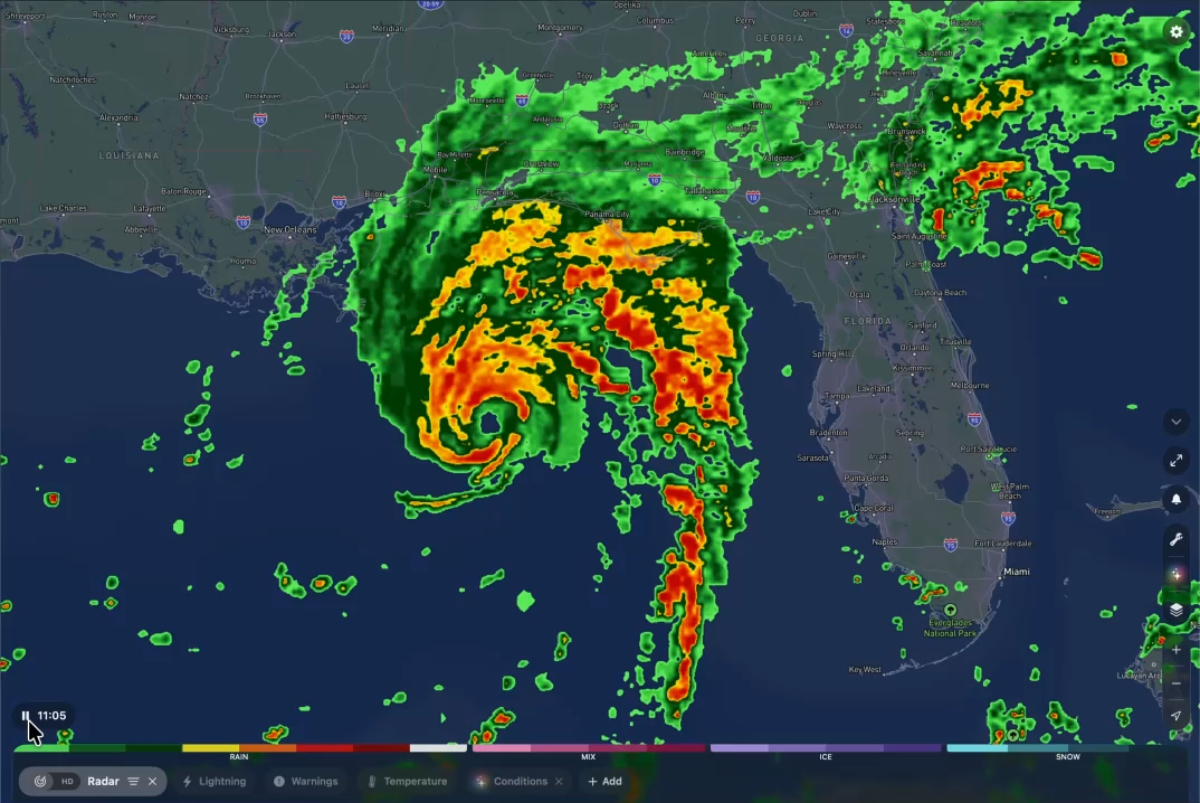
Radar networks can detect non-precipitating returns, often caused when radar beams bend during atmospheric temperature inversions and reflect off buildings, turbines, or ocean spray. An automated model can misread that clutter as rain and trigger false alerts.
- The HOTL fix: In the RadarPlus instance, meteorologists apply radar echo masks to block non-precipitating echoes from appearing in the radar mosaic. They can also use site-list controls to include or remove data from a radar site in the mosaic.
2. Aviation hazards and collapsing data silos (B2B aviation)
In commercial aviation, dispatch teams and cockpit crews need a shared operational picture. Weather hazard interpretation can’t live in separate tools if flight planning decisions need to move quickly.
- The HOTL fix: In the EnRoute instance, aviation meteorologists author Flight Planning Guidance (FPG) for 3D regions of concern and identify meteorological significance to flights through hazard-specific regions such as turbulence, icing, or volcanic ash areas.
3. Supply chain rerouting and automated webhooks (B2B logistics)
Rerouting a truck fleet because of a false-positive wind or ice signal is expensive. If weather is going to trigger automated actions, the forecast layer has to be governed carefully.
- The HOTL fix: HOTL adds guardrails that keep the automated forecast from doing something obviously wrong. That gives logistics teams a more defensible basis for automating webhook-based rerouting when threshold conditions are met.
4. Grid balancing and commodity hedging (B2B energy)
Energy traders and utility operators depend on temperature and precipitation outlooks to estimate load, generation commitments, and price exposure. Small forecast misses over large load centers can create material financial risk.
- The HOTL fix: In the LongView instance, forecasters publish and adjust seasonal and subseasonal temperature and precipitation anomaly forecasts, including departures from normal.
Under the hood: Asynchronous polygons and developer ergonomics
How does HOTL turn scientific judgment into fast, machine-readable forecast logic?
The asynchronous workflow
- Cloud workstation access: Forecasters log in through password-protected Single Sign-On and connect to HOTL servers in the cloud.
- Visual analysis and point queries: They review weather data underlays such as contours, images, and plots, then use point queries to inspect tabular and graphical forecast details.[1]
- Polygon rule creation: The meteorologist draws a geographic polygon over the target region and sets explicit attributes for the forecast rule.
- Time boxing: Apply rule from 14:00 UTC to 19:00 UTC.
- Parameter tuning: Adjust surface temperature down 3.5°F; cap gusts at 22 knots.
- Audit control: Rules are managed within HOTL instances and organized by office, with user privileges and shared definitions supporting operational control.[1]
- API execution: When a client queries a location inside that polygon for the relevant parameter and time, the rules are applied at request time.
40 years of historical data: The defensibility advantage
In enterprise planning, an AI forecasting platform is only as reliable as the historical data used to train and evaluate its models. Machine learning systems need long, consistent records to backtest performance and isolate weather-driven variables.
The Weather Company brings more than four decades of meteorological history to its forecasting operations, while HOTL adds ongoing human quality control on top of automated forecast generation. That combination gives data science teams a stronger basis for internal model training, risk modeling, and demand analysis.
When insurers price catastrophe risk, utilities commit day-ahead power generation, or retailers automate inventory positioning, they’re not just buying a forecast. They’re depending on a weather input that has to stand up inside financial and operational systems.
Securing enterprise workflows with verified intelligence
The goal of modern meteorology isn’t to remove human expertise. It’s to apply that expertise where it has the highest operational value.
By decoupling human oversight from the automated publication loop, Human-Over-The-Loop forecasting gives developers, data scientists, and business leaders machine-scale forecast delivery with real-time scientific control.
When weather drives decisions, forecast accuracy isn’t abstract. It directly affects operational quality, safety, and margin.
Let's talk
To learn more about harnessing the power of weather to make better, more informed decisions across industries, contact our experts today.
Contact usFrequently asked questions
In a Human-In-The-Loop system, human review is required before data can be published, which slows the process. In a Human-Over-The-Loop system, human input is specified asynchronously from automated forecast generation, so forecasts can continue to publish while experts manage exceptions and add guardrails.
AI models are strong at processing large datasets and detecting complex spatial patterns. But computer forecasts are still in need of shepherding because of model errors and limits in forecasting certain weather types. Human meteorologists add physical verification, contextual judgment, and quality control.
HOTL reduces the risk of costly false positives by adding quality control and nuanced forecast adjustments without blocking the publication process. That matters when forecast triggers are tied directly to routing, staffing, grid balancing, or aviation operations.
HOTL applies human input asynchronously rather than forcing forecasters to review individual requests. That architectural choice removes manual approval from the live publication path. It allows forecast updates to keep flowing while human-authored rules are applied to the relevant forecast request context.