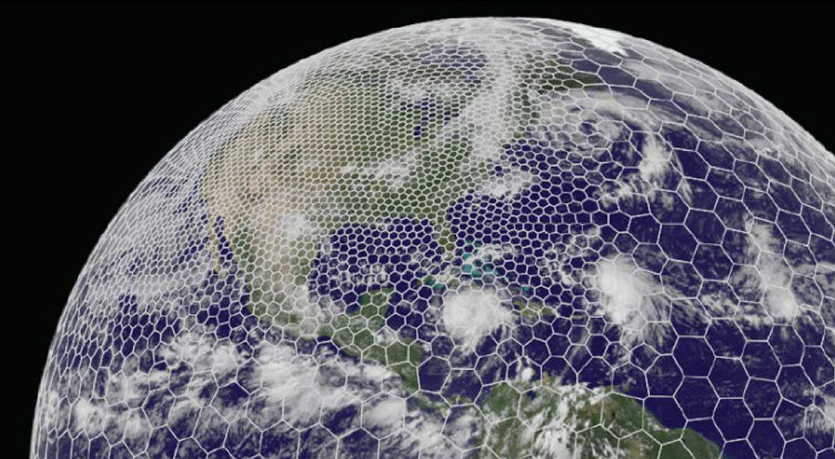
The latest GRAF® weather model improvements
Continue reading


Key takeaways
- The Weather Company’s AI weather forecasting now delivers hyper-local predictions at the scale of a football field, giving leaders sharper insight into the conditions that affect specific sites.
- AI paired with expert human forecasters at The Weather Company outperforms either one alone.
- Probabilistic weather forecasting shows the range of possible outcomes, not just one answer, helping executives plan for risk with confidence.
- New high-resolution datasets are sharpening forecasts for severe weather, including hurricanes, freezes, flooding, and wildfire conditions.
- Enterprises in logistics, aviation, energy, retail, and agriculture can turn better forecasts into measurable operational gains.
The forecast gap that’s costing you money
Picture this: a regional distribution center shuts down for a winter storm warning. The storm tracks 30 miles south. Trucks sit idle. Shelves go unstocked. You’ve just lost a day of revenue to weather that never arrived at your site.
Flip it. An airline keeps a hub open based on a calm forecast. A line of thunderstorms develops faster than the regional model predicted. Now you have ground stops, diverted flights, and crew timing out across the network.
This is the forecast gap. Traditional weather models predict conditions on wide grids — sometimes 7-10 miles (10-13 km) across. That works for telling a city whether to grab an umbrella. It doesn’t work when your business lives or dies by what happens at one warehouse, one airport, one substation, or one field.
The cost of doing nothing
For business leaders, weather impact on business is not a side issue. It’s a line item.
Think about what an imprecise forecast actually costs:
- Lost revenue from unnecessary closures or cancellations
- Safety incidents when conditions turn worse than predicted
- Wasted labor when crews show up for work that gets scrubbed
- Supply chain chaos when shipments get rerouted on bad information
- Insurance exposure when teams are caught off guard
The status quo treats every site in a region the same way. Your fulfillment center gets the same forecast as the office park 20 miles down the highway. Your wind farm gets the same forecast as the suburb next door. That mismatch is where money leaks out.
How AI is closing the gap
The Weather Company is using AI weather prediction to push forecasting into places it’s never reached before.
Hyper-local predictions, down to the football field
What is a hyper-local weather forecast? Think of a traditional forecast as a blurry photo. You can see the general shape of what’s coming, but the details are fuzzy. AI-driven super-resolution acts like a sharpening filter. It takes that blurry image and brings it into focus, down to the level of detail on a football field.
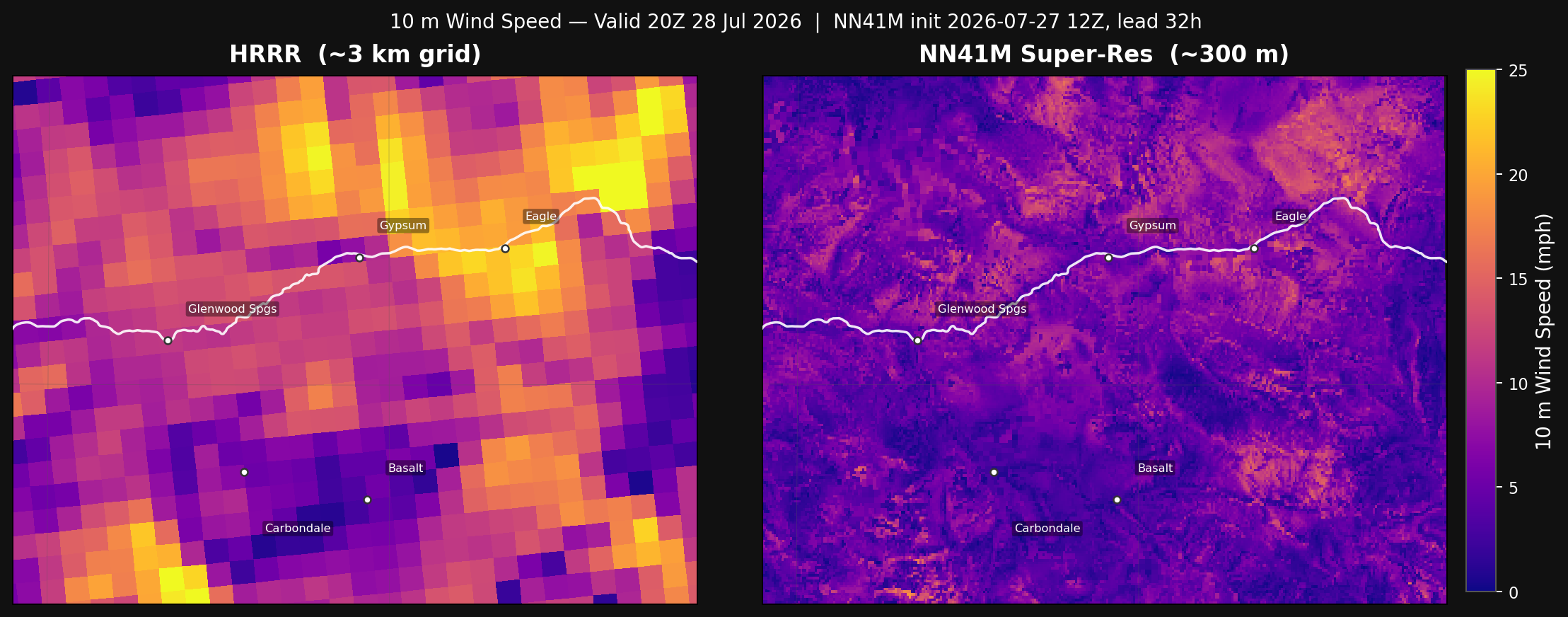

Seeing the forecast others miss. The Weather Company’s AI-powered super-resolution technology transforms standard weather model data into hyper-local wind forecasts 10x more detailed.
That means a forecast is tuned to the specific warehouse loading dock, runway, turbine, store, or field where your work actually happens. The Weather Company is working to operationalize these super-resolution products in the coming months.
Sharper forecasts for the weather that hurts most
Hyper-local, sunny-day forecasts are useful. But the extreme weather business impact is where forecasting precision pays off most: hurricanes, freeze forecasts, derechos, flooding, and wildfire conditions.
We’re working with a 1-kilometer dataset from MITRE, known as Weather 1K, which will sharpen predictions for these high-impact hazards. For a COO, that means better lead time and better precision on exactly the events that drive business continuity decisions.
Ensemble forecasting: planning for what could happen
A single forecast tells you one story. Ensemble weather forecasting tells you many.
Think of it like a financial stress test. You don’t make capital decisions based on one assumed market scenario. You model many. Weather should work the same way.
An ensemble runs the forecast many times with slightly different starting points. The result is a range of possible outcomes, each with its own probability. Instead of being told “it will be 72 degrees and breezy,” you get “there’s an 80% chance temperatures stay between 68 and 75, with a 20% chance of stronger winds by mid-afternoon.”
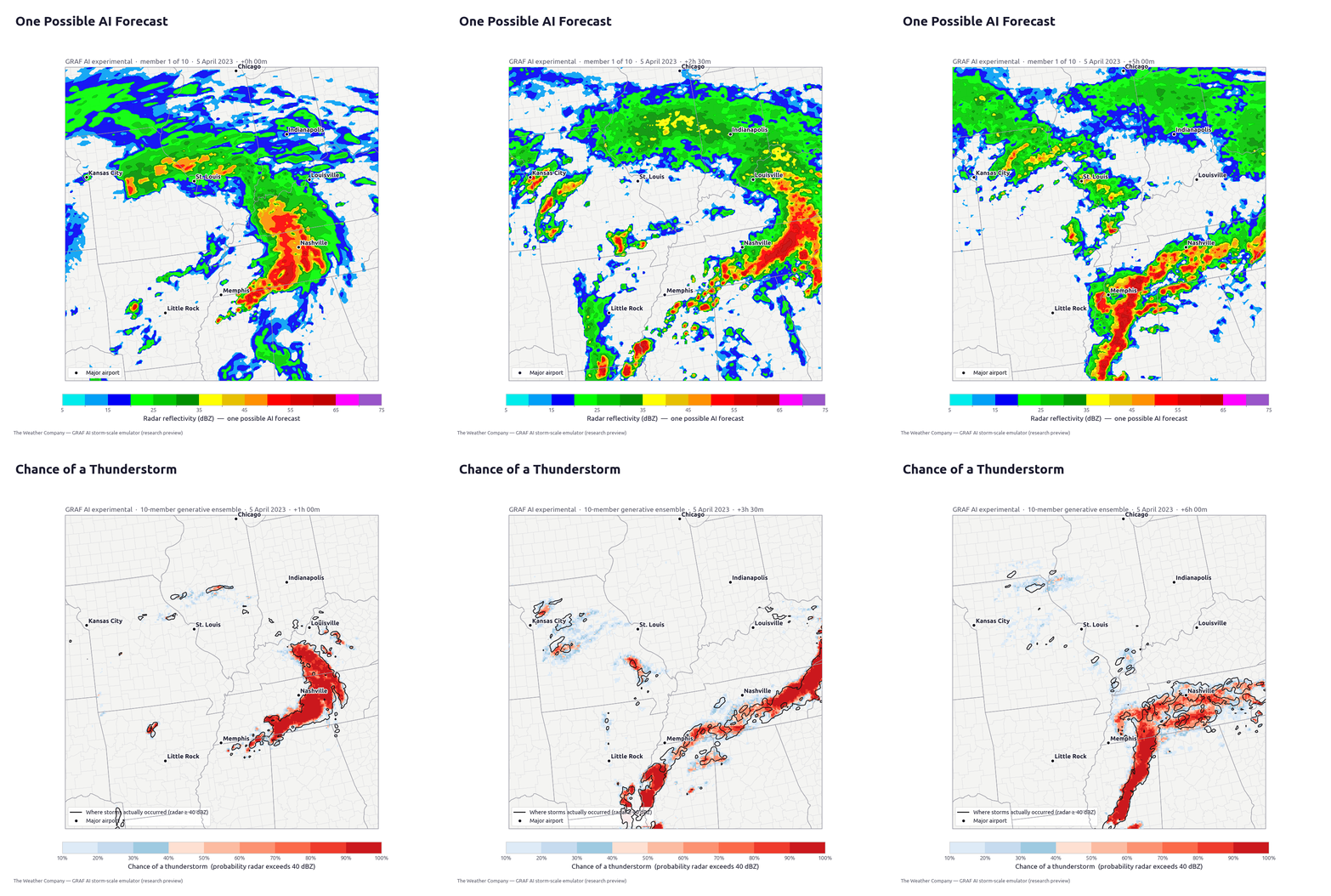
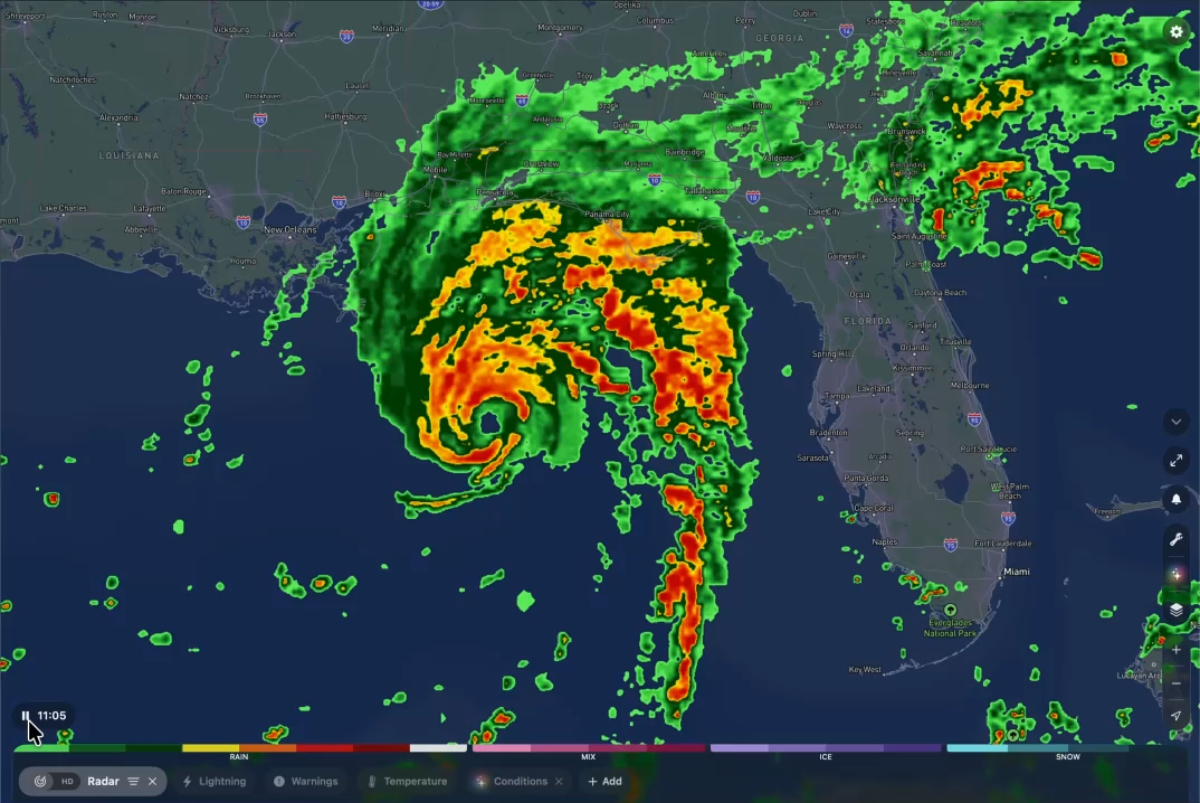
A single storm prediction followed by a probabilistic forecast (generated from 10-mem ensemble).
The challenge with ensembles has always been cost. Running a physics-based weather model repeatedly is computationally expensive. AI changes the math. An AI emulator can produce ensemble forecasts at a fraction of the compute cost, and we plan to launch this enhancement later this calendar year.
The differentiator: AI plus expert humans
What is the difference between AI weather forecasting and traditional weather models? Traditional models run on fixed schedules at coarse resolution. AI forecasting adapts in real time, surfacing patterns across far more data than any human could process. Google, NVIDIA, and several startups are building AI weather models. What sets The Weather Company apart is our Human-over-the-Loop (HOTL) approach, where expert human forecasters work in parallel with AI rather than after it.
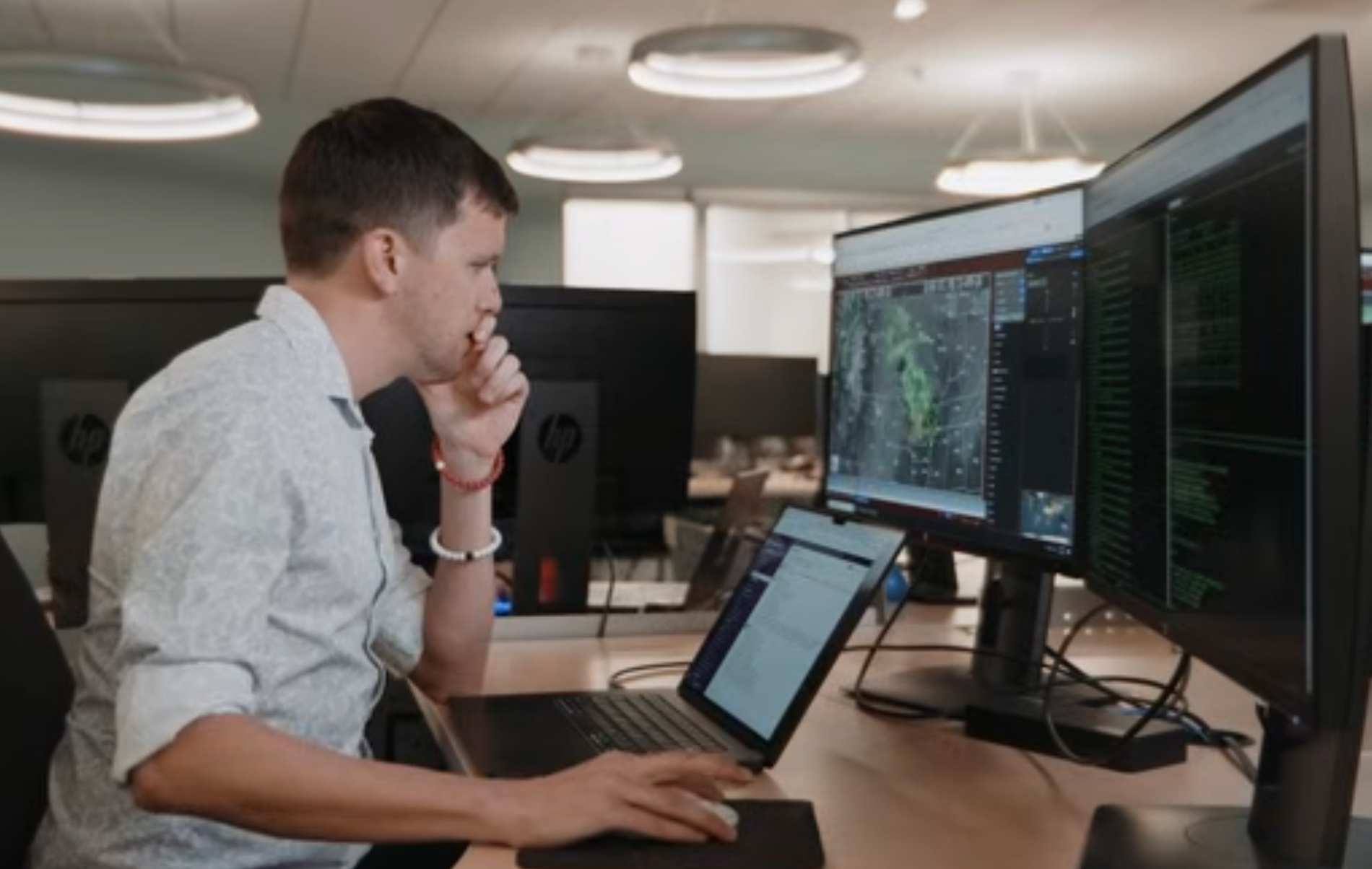
A modern forecaster has to process a flood of data: model outputs, satellite imagery, radar, observations, and ensemble guidance. That volume can lead to cognitive overload, even for the best meteorologists. AI helps cut through the noise. It surfaces the signals that matter, summarizes the range of outcomes, and frees our forecasters to do what humans do best: apply judgment, context, and accountability.
The result is a partnership. AI handles scale and speed. Humans handle nuance and decision support. Neither alone is as good as the two together.
What this looks like for enterprise
The Weather Company serves more than consumers. Aviation weather forecasting is one area where the stakes are highest, and our enterprise clients span logistics, retail, and beyond. Better forecasts translate into better decisions across the operation:
- Logistics and retail: Companies like The Home Depot use weather intelligence to position inventory ahead of demand spikes and reroute around disruption.
- Aviation: Precise wind, storm, and visibility forecasts keep flight planning, ground operations, and crew scheduling on track.
- Energy: Utilities and renewable operators use wind and temperature forecasts to balance load, schedule maintenance, and protect infrastructure.
- Agriculture: Growers and food producers use freeze, frost, and rainfall guidance to protect yield and time field operations.
- Insurance: Carriers use hazard forecasts to pre-position resources and communicate with policyholders before events.
In every case, the upgrade is the same: site-specific guidance, probabilistic confidence, and human expertise on top.
The bottom line
How is AI improving weather forecast accuracy? By combining physics-based science with real-time machine learning, AI can continuously refine predictions against the freshest available data, closing the gap between what models expect and what the atmosphere actually does. Weather is one of the few business risks you cannot negotiate with. But you can negotiate with uncertainty. AI weather forecasting, combined with the physics-based science that has anchored meteorology for decades and the human forecasters who put it all in context, gives leaders sharper, more local, and more honest information about what’s coming.
The forecast gap is closing. The question is whether your operations are ready to take advantage of it.
Let's talk
To learn more about harnessing the power of weather to make better, more informed decisions across industries, contact our experts today.
Contact us